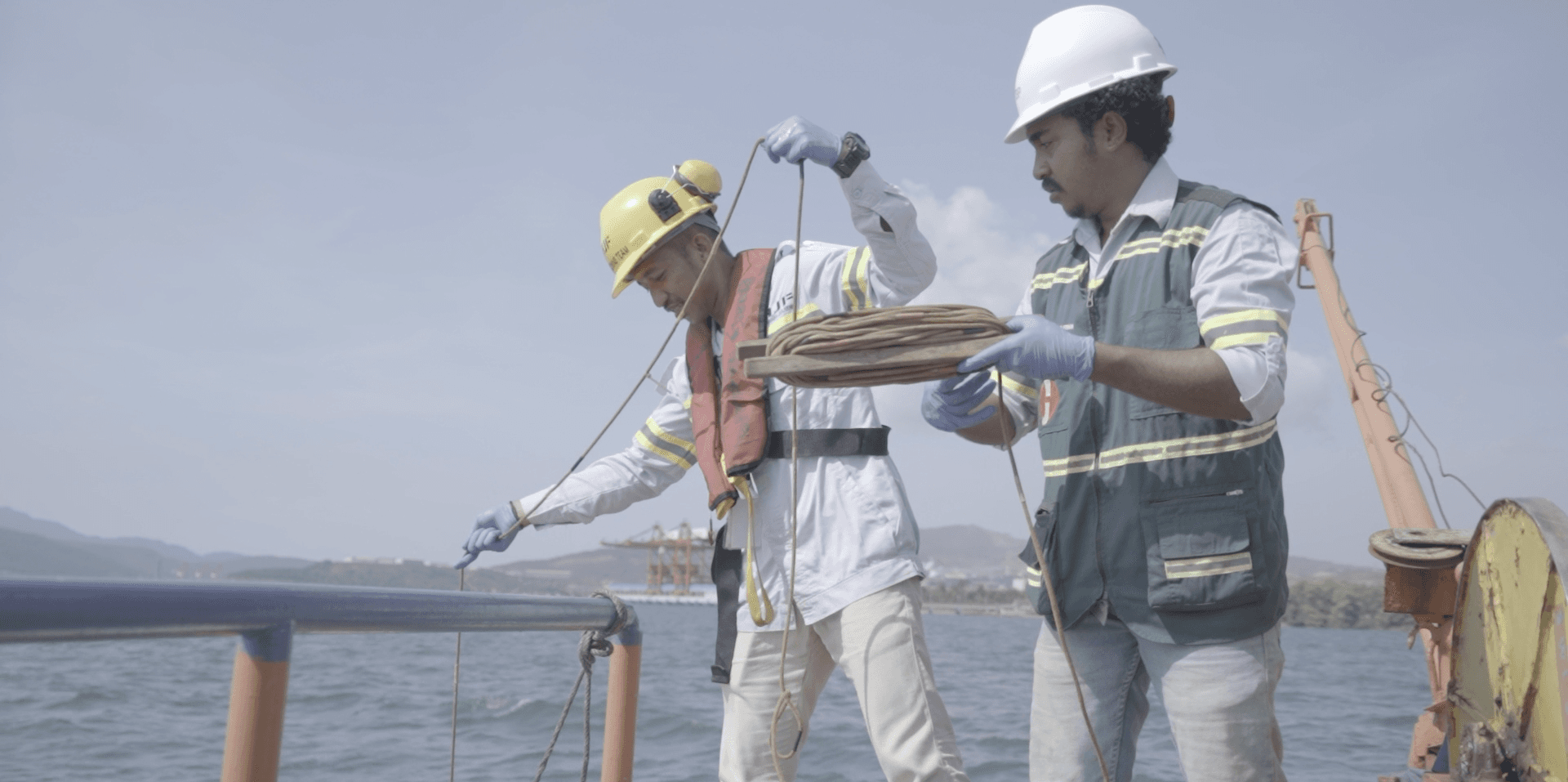
Liputan6.com, Jakarta - When diving in the waters surrounding Obi Island, Risky has often encountered various species of sharks and turtles. “Environmental management is Harita Nickel’s strongest commitment,” he says. “We never give up in carrying out environmental management on Obi Island, especially considering the many baseless accusations out there.”
A young Indonesian with character is one who can innovate, think creatively, be independent, adapt, and compete confidently in a globalized world. More than that, a progressive young Indonesian is someone who can bring positive impact to society across all sectors.
With regard to Indonesia’s younger generation, Harita Nickel — a nickel mining and downstream processing company operating on Obi Island, South Halmahera, North Maluku — continues to prioritize local workers to meet its workforce needs.
Two young local workers who play an active role in the company are Yufita Tuhuteru (27) and Risky Apriyanto Gailea (26). Both are millennials from the surrounding region who joined Harita Nickel and say they are grateful to build their careers close to home.
“Working at Harita Nickel is very enjoyable because it's close to my home village,” said Yufita, who is from Soligi Village in South Halmahera. Soligi can be reached by a fast boat in about 45 minutes from Harita Nickel’s mining operations in Kawasi Village.
Yufita has a Batchelor’s degree in Chemical Engineering (BSc) from the Indonesian Muslim University and a Master’s in Metallurgical Engineering (MSc) from Gadjah Mada University. In light of her academic background, she was placed in the production division when she first joined Halmahera Persada Lygend (HPL), one of the companies under Harita Nickel.
She now works in an oversight capacity, monitoring the leftover materials from the High Pressure Acid Leach (HPAL) processing of limonite nickel ore ( “dry tail”), overseeing operations at the wastewater treatment plant (IPAL), and supervising the construction of levees and sluice gates.
“Even though I am now working in a different area, this has actually become an important motivation for the development of my career going forward,” she said.
Another young millennial actively working at the Obi site is Risky Apriyanto Gailea. He joined 9 months ago [at the time of writing] and currently plays a key role in marine environmental monitoring, serving as the Lead for Monitoring, Sampling, and Environmental Management at Halmahera Jaya Feronikel, one of Harita Nickel’s ferronickel smelters.
A graduate of the Faculty of Fisheries and Marine Sciences at Khairun University, Ternate, Risky says that working at Harita Nickel is not only a way to help his family recover financially after the COVID-19 pandemic – it also allows him to help protect the marine environment he calls home, while continuing his hobby of diving.
“I can learn a lot about the environment here,” says Risky. “It matches my field of study, and I can also learn about coastal ecosystems.”
Challenges of Working at Harita Nickel
It is not just businesses that must face challenges and find ways to overcome them. Employees too must also be ready to address and overcome the obstacles in their path.
For Risky, who holds a PADI Divemaster certification, the responsibility of monitoring the marine environment and ensuring proper waste management is not easy. Since joining Harita Nickel, he has gained significant new knowledge through training and capacity building provided by the company — while still being able to apply his diving skills.
The 1996-born native of Falabisahaya shared that, when he first applied, his skills were not fully developed. But he believed that Harita Nickel would provide space for growth, aligned with the company’s commitment to maintaining environmental sustainability amid the rapid expansion of nickel mining and downstream processing on Obi Island.
“When I first joined Harita Nickel, I didn’t yet have strong skills,” Risky told the Liputan6 team, Friday (14/10/2022).”But during the first three months, I received guidance, training, and certification. Now I am one of the frontliners in the company for monitoring the marine environment around Obi,” he added.
For him, adapting through training and development programs has been a challenge he has willingly embraced. He also emphasized that environmental management is the company’s top priority.
“Environmental management is the company’s biggest commitment. We do not give up in carrying out environmental management, especially considering the many baseless accusations out there,” he said firmly.
Regarding sustainable environmental practices, Risky noted that Harita Nickel applies responsible and well-regulated operational standards. Environmental monitoring and control are carried out according to government regulations, with precautionary principles taken into account.
“As someone who sees conditions in the field every day, I can confirm that the allegations of pollution on Obi Island are not true. The waters of Obi are fine and meet government quality standards,” Risky stated. According to him, this condition is also supported by valid data from routine monitoring conducted by the company.
Local Workers from Obi Island
Over 13 years of building and operating nickel processing facilities and mining operations on Obi Island, Harita Nickel has consistently prioritized local workers from North Maluku, especially Obi Island.
“Currently, we have more than 11,000 employees, and 65% of them are from North Maluku,” explains Stevi Thomas, Head of External Relations at Harita Nickel. “This is in addition to around 6,500 contractor workers,” he added, before noting that these workers are involved in mining activities and operations across three nickel processing facilities.
Seeing the scale of employment opportunities, Yufita emphasized that opportunities for young people in North Maluku are wide open.
“I always tell friends in North Maluku, we are local people but we need the right mindset and awareness to recognize opportunities. We have huge job opportunities here in Obi. I want to encourage young people from this region to be at the forefront,” she said.
However, she also acknowledged that many young people from Obi still lack technical skills.
“Local youth from Obi Island often have limited educational backgrounds, especially in chemical, civil, or metallurgical engineering. I have shared with both local youth associations and the company management the importance of providing training paths for non-skilled youth so they can gain skills,” Yufita explained.
“Young people must be productive, innovative, and able to compete positively in any work environment,” she said.
Risky agreed. Having dived in Obi’s waters at depths of up to 20 meters, he expressed his gratitude that Harita Nickel prioritizes local workers.
“Harita Nickel has several business units. Many of the workers are from the surrounding villages. I am very grateful because the company prioritizes local workers,” he said — recalling his encounters with sharks and turtles while monitoring the waters near the company’s operations.
This commitment is also supported by the North Maluku Provincial Manpower Office.
“Harita Nickel always involves local workers from the surrounding mining areas in South Halmahera through proper recruitment and verification steps,” said Nurlaila Nuhammad, Head of the North Maluku Manpower Office.
Source Link: https://m.liputan6.com/bisnis/...