

Mangroves are one of the coastal ecosystems whose roles often go unnoticed, even though their impact is significant for both the environment and the communities living nearby. In Indonesia, mangrove forests grow across many regions, including Obi Island, which is characterized by coastal landscapes and rich biodiversity.
On Obi Island, mangrove ecosystems can be found along both the southern and northern coasts, with notable presence in Soligi Village, Anggai Village, and West Madapolo Village. These areas have become focal points for conservation efforts through the planting of endemic North Maluku mangrove seedlings.
With many settlements located directly along the coastline, mangroves on Obi Island are not merely an environmental feature, they are an integral part of daily life for coastal communities.
What Are Mangroves?
Mangroves are plants that grow in coastal areas where land and sea meet. They are able to survive in extreme conditions, such as high salinity, muddy soils, and low oxygen levels conditions in which most other plants cannot thrive.
The Food and Agriculture Organization (FAO) describes mangroves as a unique ecosystem with high adaptability and complex ecological functions.
Some key characteristics of mangroves include:
-
Having aerial roots (pneumatophores) that emerge above the soil surface
-
Growing in tidal areas
-
Tolerating high levels of salinity
Functions and Benefits of Mangroves on Obi Island
1. Protecting Coastlines as a Natural Greenbelt
One of the most visible functions of mangroves is protecting coastlines from abrasion and wave impact. Their strong root systems act like natural anchors, preventing soil erosion while reducing wave energy before it reaches the land.
On Obi Island, where most economic activities and settlements are located along the coast, this function is essential for maintaining long-term coastal stability.
2. Serving as Habitat for Marine Life
Beyond their physical role in protecting coastlines, mangroves also play an ecological role as habitats and breeding grounds for various species of fish, crabs, and other marine organisms. This ecosystem contributes to the sustainability of local fisheries.
3. Absorbing Large Amounts of Carbon (Blue Carbon)
Mangroves are known as one of the most effective carbon-absorbing ecosystems in the world.
According to the United Nations Environment Programme (UNEP), mangroves can store significant amounts of carbon, particularly in soil sediments. This capability makes them part of the blue carbon ecosystem, which plays an important role in climate change mitigation.
Mangrove conservation therefore contributes not only to local environmental health but also to global efforts to reduce carbon emissions.
4. Maintaining Coastal Water Quality
Mangroves also function as natural filters. Sediments and pollutants carried by currents are trapped before reaching the open sea, helping maintain better water quality in mangrove areas compared to coastal regions without vegetation cover.
Read More: The State of Obi Island Waters and the Harita Nickel’s Environmental Management
Mangrove Conservation Efforts on Obi Island
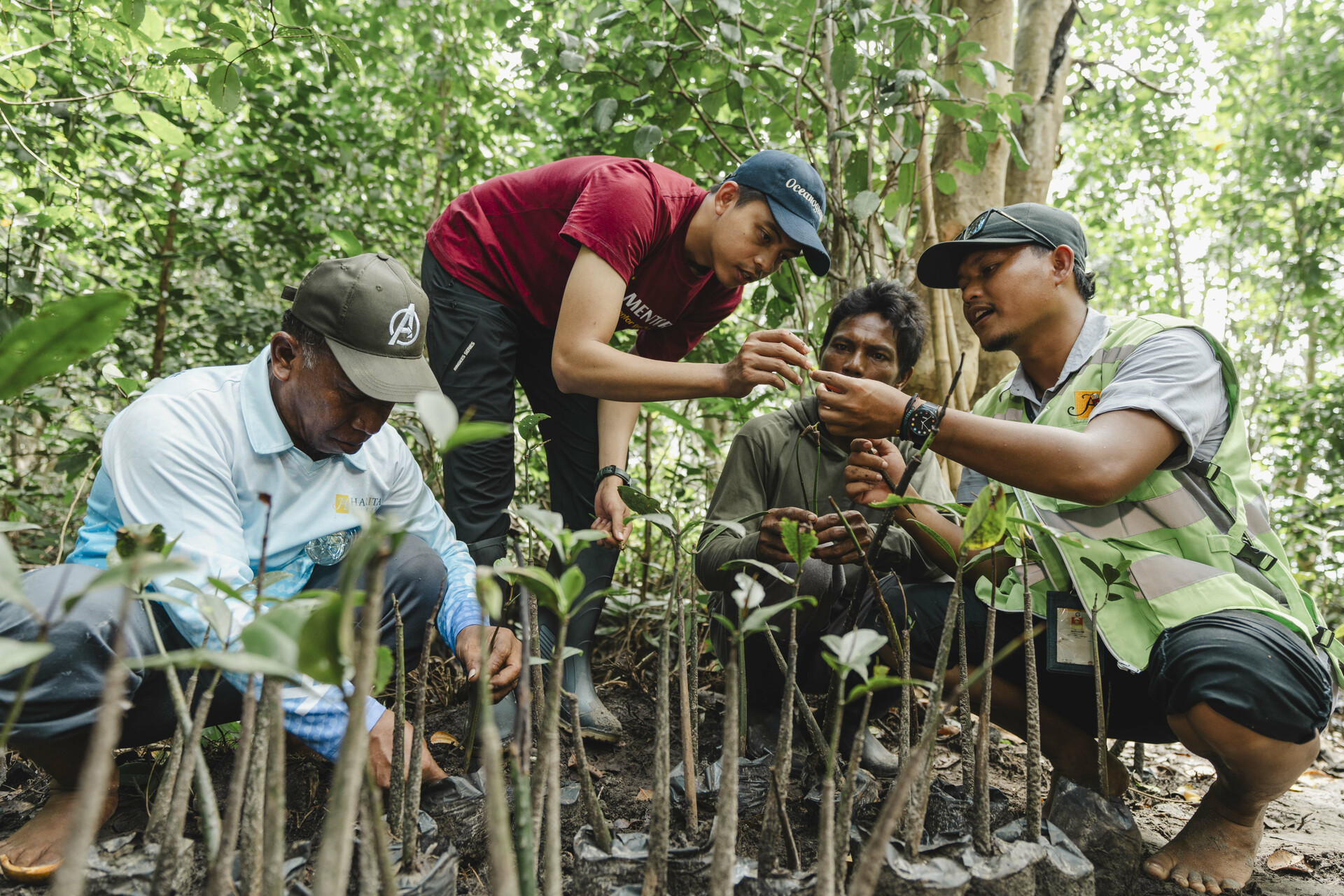
Mangrove conservation is essential for sustaining coastal ecosystems. Efforts include rehabilitation, replanting, and sustainable environmental management.
In Indonesia, mangrove rehabilitation is also part of the national agenda promoted by the Ministry of Environment and Forestry.
On Obi Island, conservation efforts are focused in Soligi Village, Anggai Village, and West Madapolo Village. These efforts are not only driven by formal programs but also by strong local community initiatives.
One example is community groups such as the Tongke Group in Soligi Village, which since 2019 has independently protected and managed mangrove forests in their coastal area.
This group emerged from community awareness of the importance of mangroves for both the environment and livelihoods. With approximately 23 hectares of mangrove forest in the Soligi area, the presence of this community plays a crucial role in maintaining the sustainability of coastal ecosystems.
Collaborative Mangrove Conservation on Obi Island
Over time, mangrove conservation efforts on Obi Island have been strengthened through collaboration between communities and various stakeholders.
As part of its operational area, Harita Nickel contributes through a community-based approach.
This collaboration includes:
-
Mentoring community groups such as the Tongke Group
-
Training on nursery development and mangrove planting techniques
-
Ongoing ecosystem monitoring and evaluation
This approach is designed to ensure that communities are not only participants but also capable of independently managing and sustaining mangrove ecosystems in the future.
Protecting Mangroves Means Protecting Life
Mangroves are vital ecosystems with multiple functions, from protecting coastlines as natural greenbelts to absorbing large amounts of carbon as part of the blue carbon ecosystem.
On Obi Island, protecting mangroves means protecting livelihoods. Their presence not only maintains environmental balance but also supports the daily lives of coastal communities. Through conservation efforts involving local communities and support from various stakeholders, including Harita Nickel, mangroves are expected to continue thriving and providing benefits for future generations.