
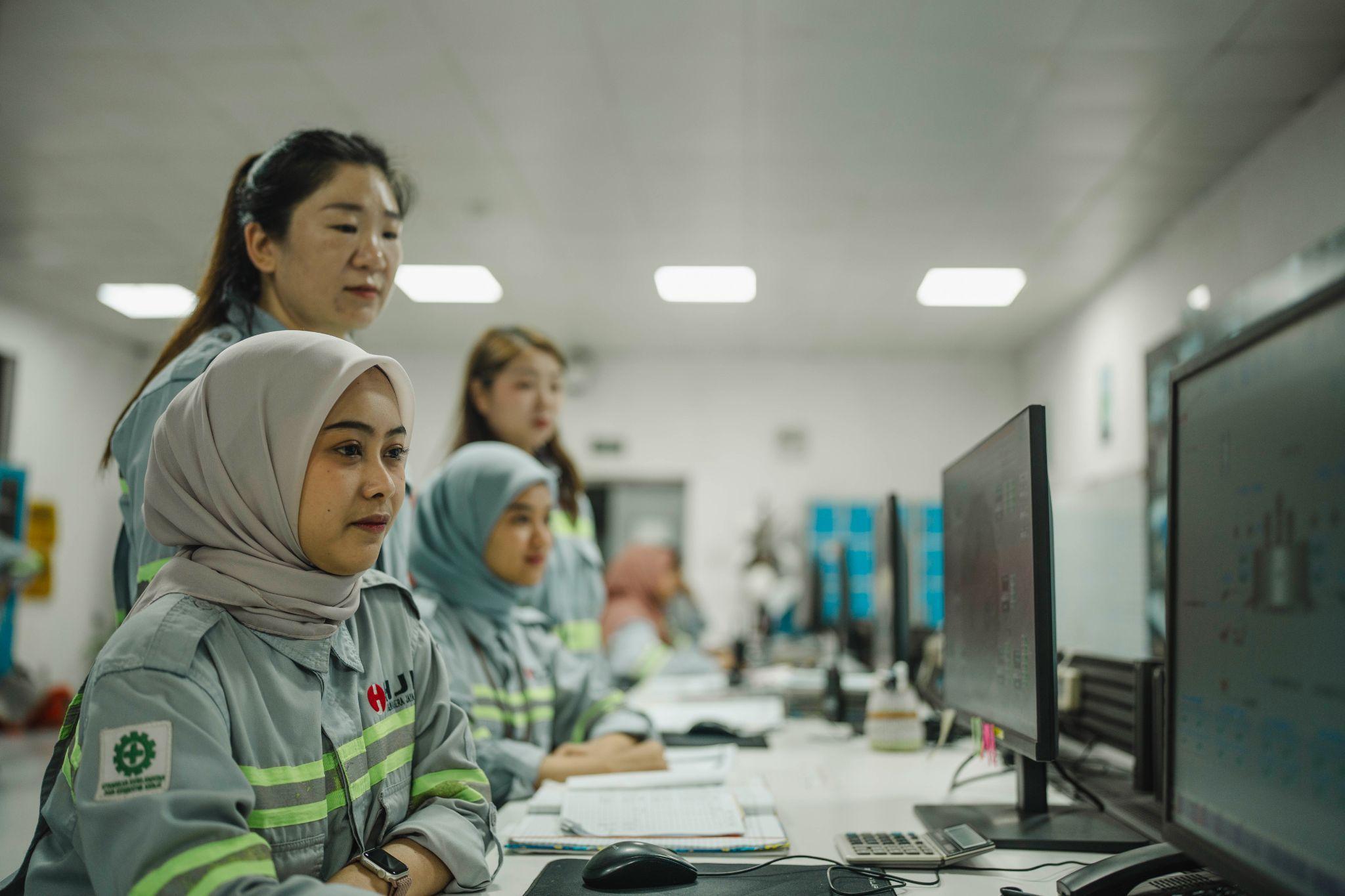
At Harita Nickel, knowledge and technology transfer is more than just a policy on paper — it’s a daily reality. Through close collaboration between Foreign Workers (TKA) and Indonesian Workers (TKI), local employees are becoming increasingly independent and now play key roles in the operation of smelters at the Obi Island site.
In the control room, they exchange insights on furnace operation; in the production area, local employees perform their tasks confidently without waiting for direction from foreign counterparts. From these everyday interactions, Harita Nickel’s commitment to real technology transfer takes shape.
According to Li Shi Zhong, Production Superintendent at PT Halmahera Jaya Feronikel (HJF), knowledge transfer happens directly on the ground, starting from the most technical work levels. “For example, on the fifth floor in the electrode paste section, local workers must understand essential concepts such as the suspension system and how to adjust electrode height to maintain smelting stability,” he explained.
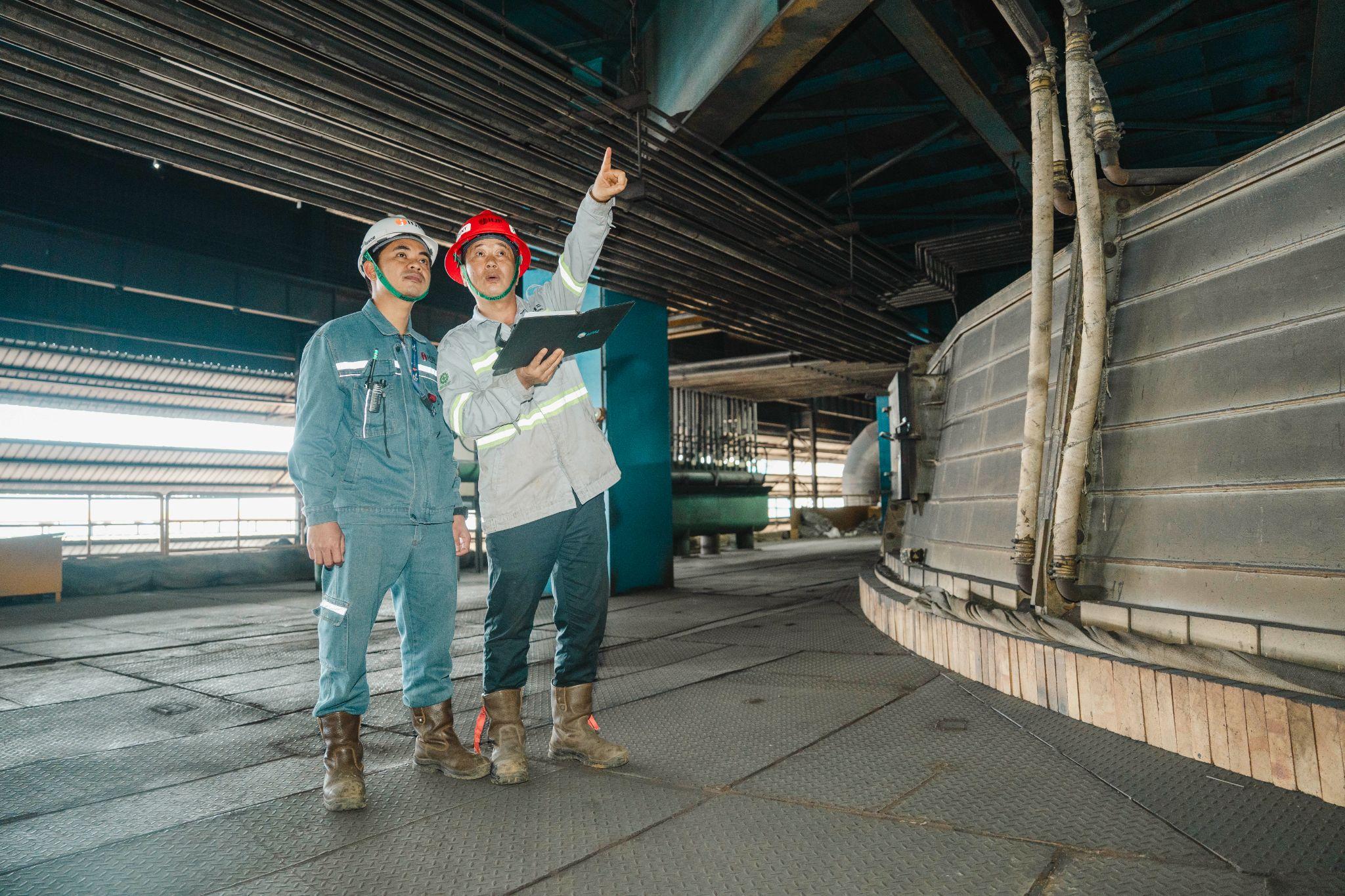
Li Shi Zong, Production Superintendent of PT HJF, is providing technical instructions to Indonesian employees in the production area.
Beyond mastering technical operations, local employees are trained in daily measurements, workplace cleanliness, and operational reporting. In material processing, intensive coaching is provided so that employees can recognize material surface conditions, control negative pressure, determine hourly discharge volumes, and regulate vertical flow inside the furnace — ensuring they fully understand every operational aspect.
“Tasks like iron tapping and slag discharge, which used to be handled only by Chinese workers, are now entirely managed by local employees,” Li said.
He added that teamwork among operators in the field has also grown stronger. “Even crane and calcine inspection operators can now coordinate and work independently, without direct supervision from foreign workers,” he continued.
Li noted that this progress is also supported by the local workforce’s adaptability and growing communication skills. “Previously, translators were needed for coordination. Now, local employees can communicate directly in Mandarin, which has made work much more efficient,” he explained.
“In the control room, for instance, one Chinese supervisor can now oversee two furnaces at once, while all the operators are local employees. We only review the final data and reports,” Li added.
The impact of this transfer is also reflected in the declining number of foreign workers. “Previously, there were more than 300 Chinese employees in this area. Now, only about 70 remain, and some of them will soon be reassigned. There’s almost no new recruitment of foreign workers, the focus now is on hiring and developing local talent,” Li emphasized.
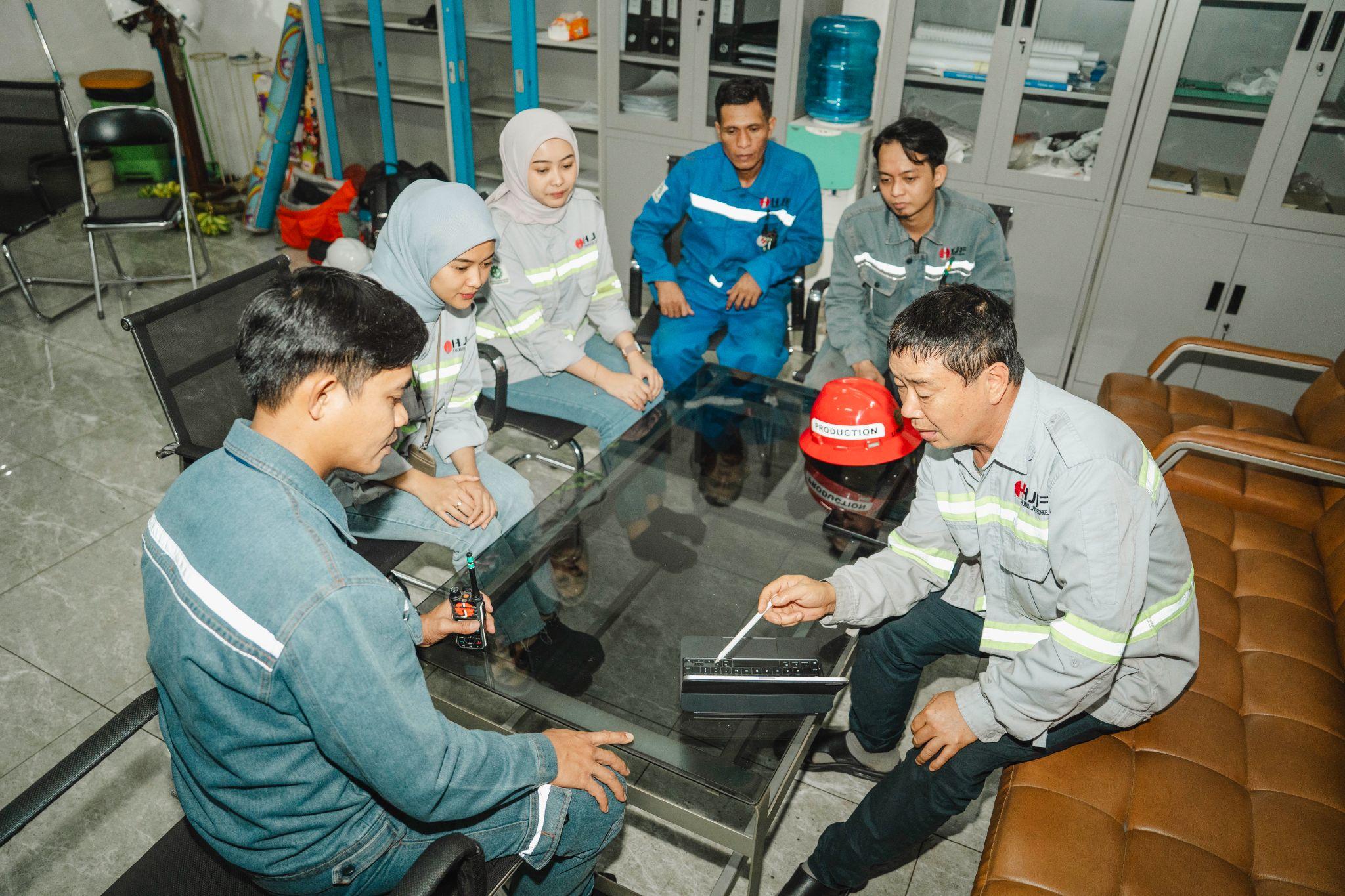
Local employees attentively receive technical guidance from subject-matter experts to strengthen their understanding of operational procedures.
The story of Hirawati, a production staff member from Makassar, is a testament to this success. A graduate of the Management Trainee program, she now works in the Central Control Room after nearly three years of cross-cultural learning. “At first, I didn’t know anything. But through mentorship and hands-on experience, I’ve become more independent and can now communicate directly with foreign colleagues,” she shared.
For Ira, learning Mandarin became a turning point in her career. “At first, I didn’t understand a single word, but daily interaction helped me learn on my own. Now, communication is easier and work runs more smoothly,” she said.
The daily collaboration between foreign and local employees at Harita Nickel proves that technology transfer is not just a promise — it’s happening on the ground. From the production floor to the control room, the results are clear: Indonesian employees are becoming increasingly self-reliant and ready to take on bigger roles in smelter operations.