
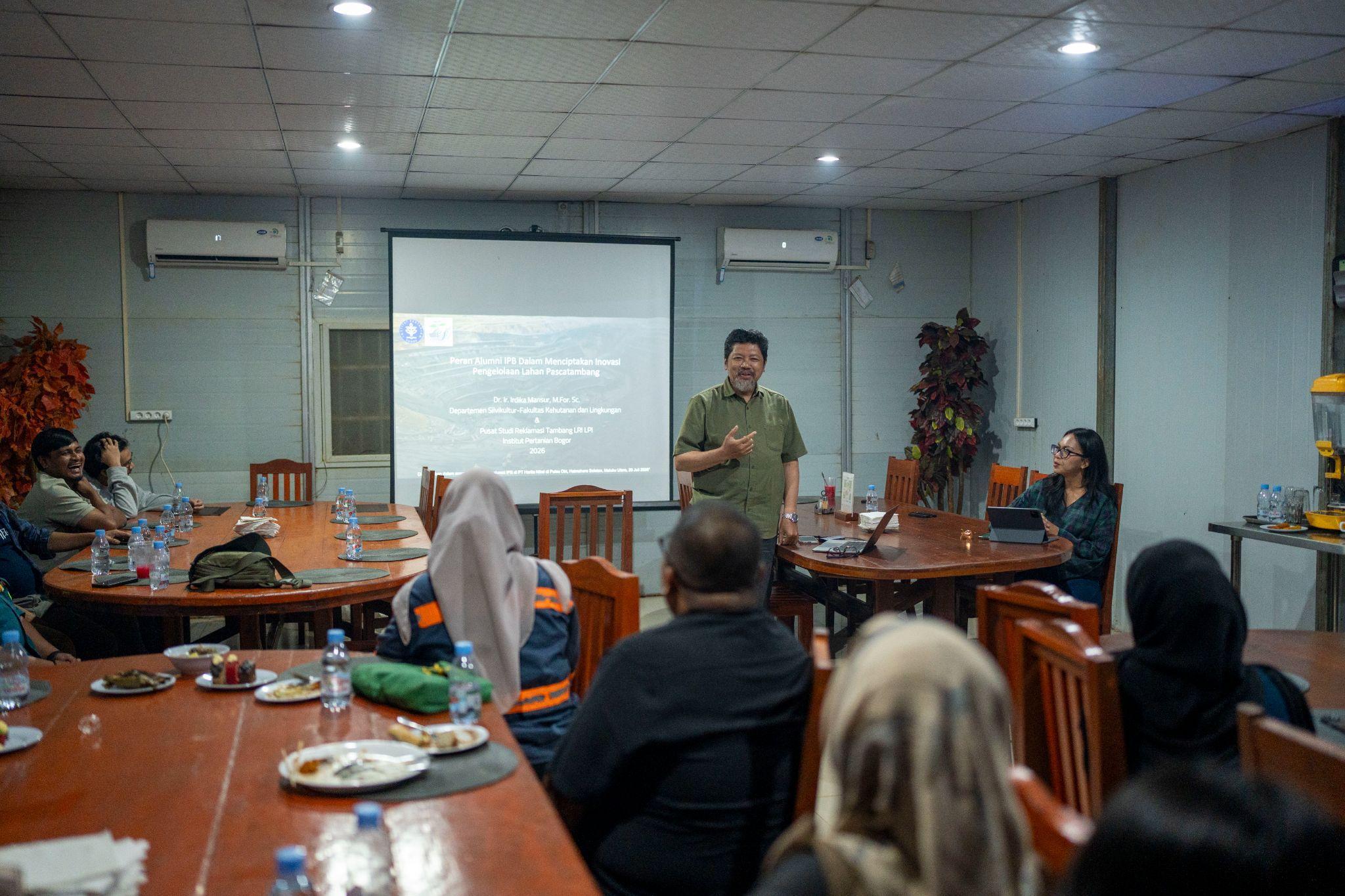
Innovation in mining is driven not only by hands-on experience but also by the convergence of practice and scientific knowledge. That spirit was at the heart of a knowledge-sharing session, The Role of IPB Alumni in Driving Innovation in Post-Mining Management, featuring Dr Irdika Mansur, Head of the Mine Reclamation Study Centre at IPB University, at the Obi Industrial Estate (KIO).
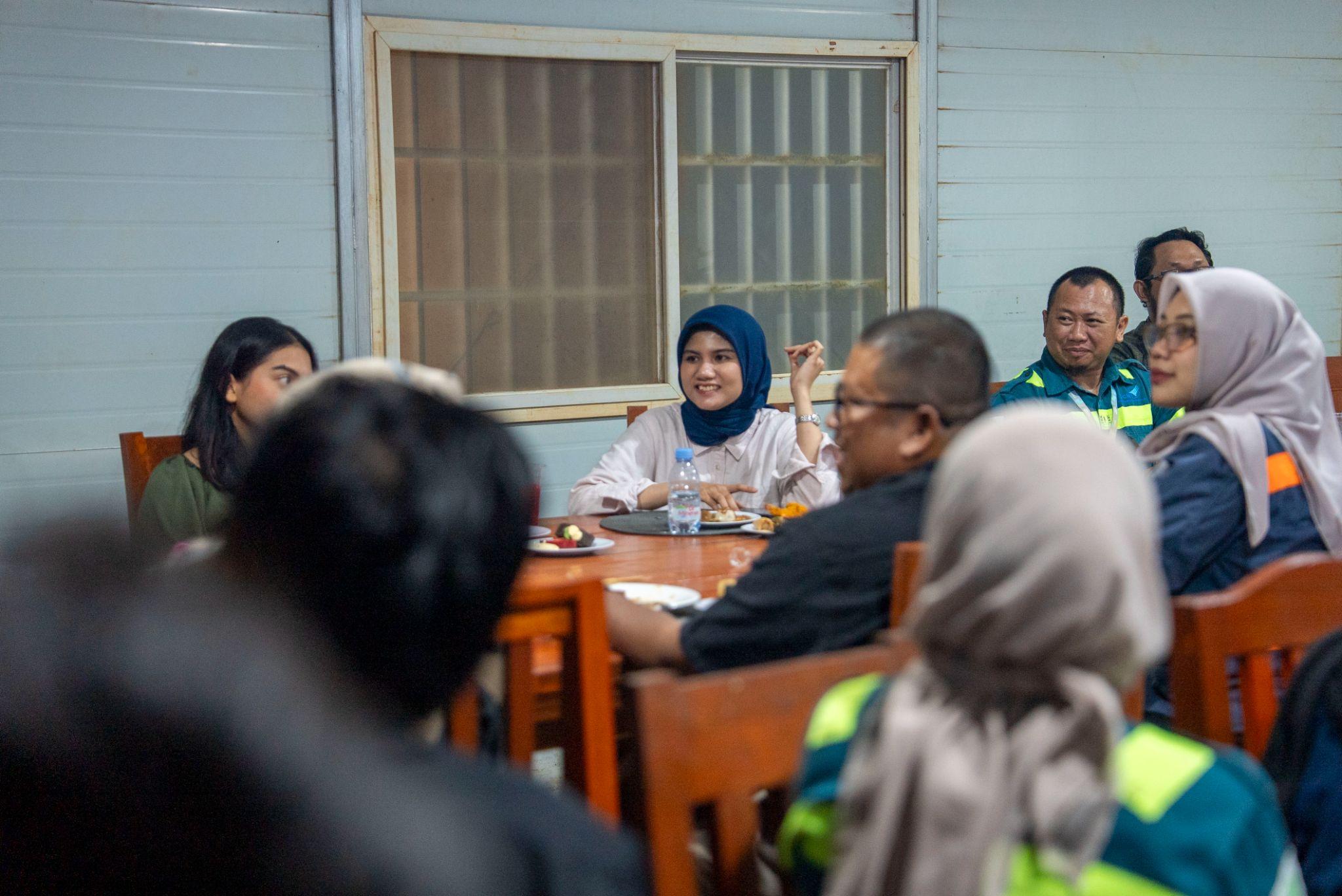
Held in late July 2026, the forum brought together 20 IPB University alumni from across Harita Nickel's business units. More than a reunion, it served as a platform where academics and industry practitioners exchanged ideas on post-mining management, the application of research, and approaches to creating lasting environmental and social value.
Dr Irdika emphasised that universities and industry play complementary roles in addressing today's mining challenges. Academic research, he said, has the potential to generate practical solutions across a broad spectrum of issues, from environmental management and mine reclamation to community development.
"The Mine Reclamation Study Centre fulfils three key roles: conducting research to drive innovation, supporting the government in developing regulatory frameworks, and assisting mining companies in implementing those regulations," he said.
He added that mine reclamation is no longer simply about restoring land to a green landscape. Instead, post-mining areas should be developed as productive landscapes capable of creating long-term value through agriculture, fisheries, livestock farming, and locally based commodities.
That philosophy is reflected in the work of Lukmanul Hakim, Community Development Supervisor at Harita Nickel. A graduate of IPB University's Faculty of Fisheries and Marine Science, Lukman applies his academic background to design community development programmes tailored to the needs of villages surrounding the company's operations.
One example is the Farmers and Fishers Business Centre (SUTAN) initiative, which supports fishing communities in Kawasi and Soligi villages by improving productivity, expanding market access, and increasing the value of their catch through modern fish-processing facilities.
"The knowledge I gained at IPB has been instrumental in helping me understand the potential of coastal resources and the needs of local communities. It provides the foundation for designing community development programmes that reflect local conditions, strengthening community capacity while fostering long-term economic independence," Lukman said.
According to Lukman, successful community development depends on a thorough understanding of local potential and community needs. A science-informed approach, he added, is essential to ensure that every initiative delivers meaningful and lasting impact.
For Harita Nickel, Lukman's experience illustrates that partnerships with universities extend well beyond knowledge exchange. They foster a culture of continuous learning while generating practical solutions that create value for both the business and the communities it serves.
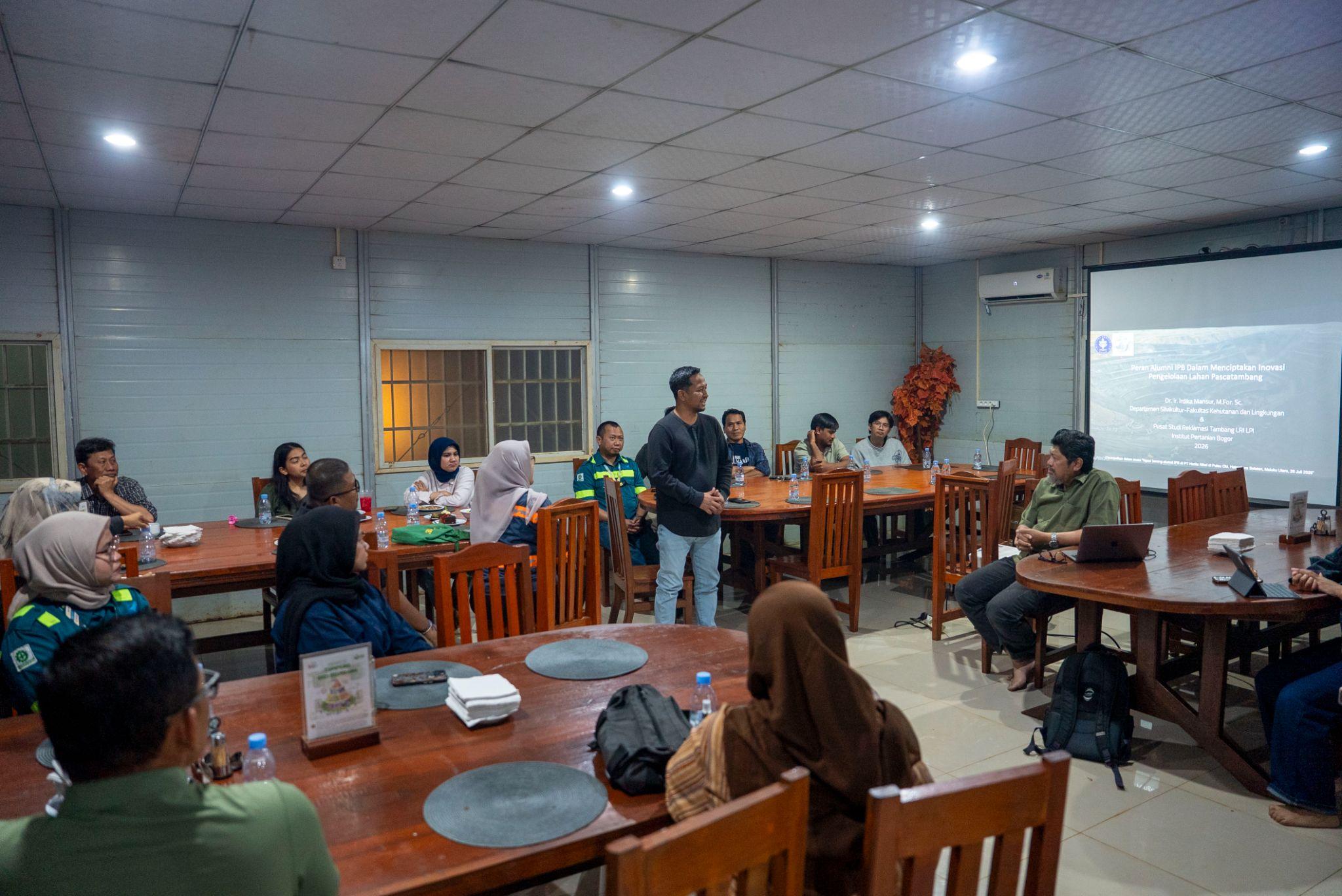
For Andi Muhammad Fajri Nur Ramzy Makarratte, Environment Marine Foreman at Harita Nickel, the discussion offered a broader perspective on mine reclamation.
"The discussion broadened my understanding of reclamation. It is not only about restoring land, but also about creating productive landscapes that deliver lasting benefits for communities," Ramzy said.
The discussion at the Obi site demonstrated that meaningful ideas do not emerge solely from laboratories or boardrooms. They also take shape through shared experience, the exchange of knowledge, and a collective commitment to continuous learning.[]