
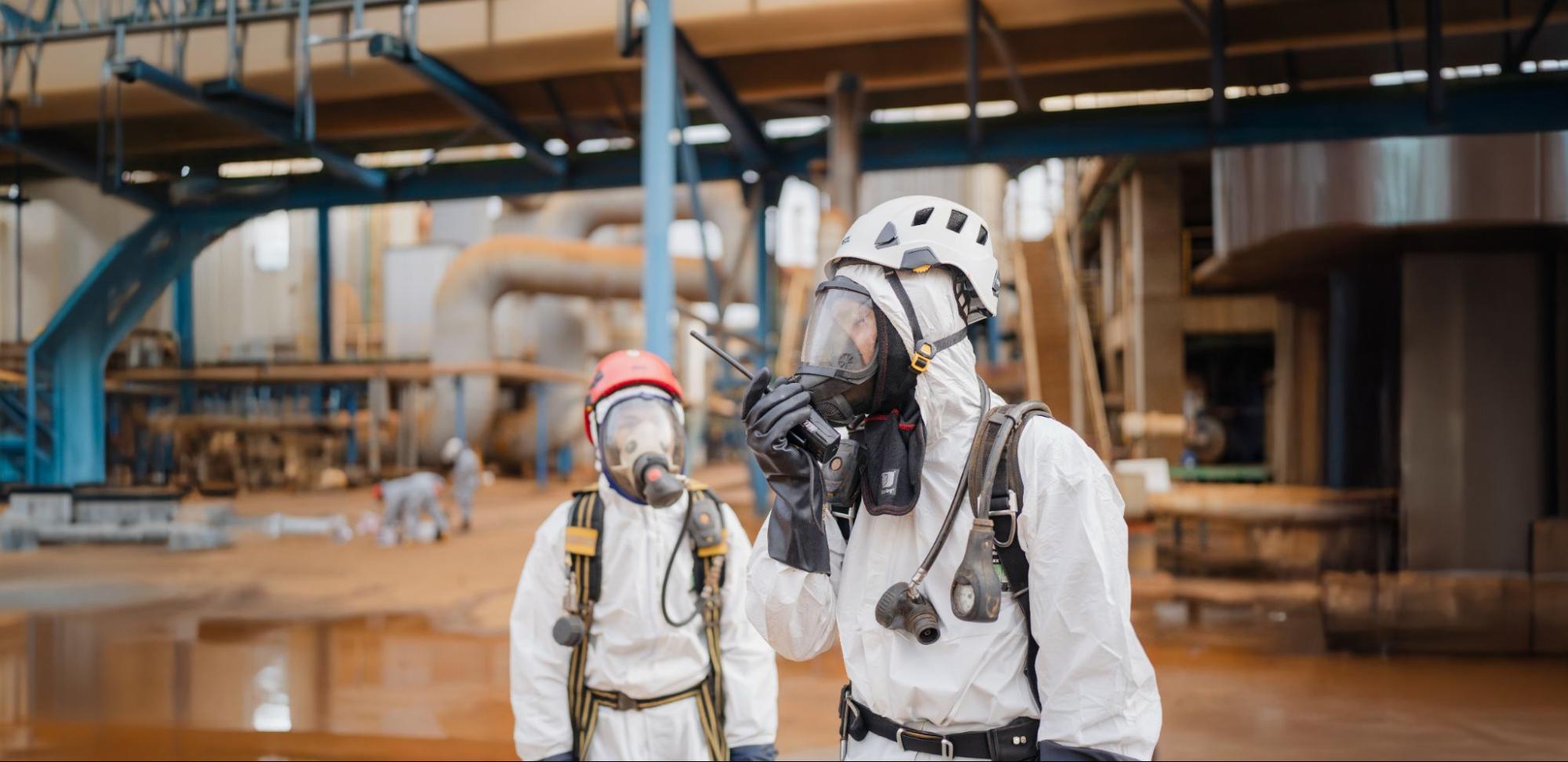
Mining and processing activities sometimes involve high-risk materials, including hazardous and toxic substances (Bahan Berbahaya dan Beracun, or B3). If not properly managed, these materials can pose risks to workers, communities, and the environment due to properties such as flammability or corrosiveness. Therefore, managing hazardous materials is an important part of Harita Nickel’s Critical Safety Compliance Protocol (CSCP).
To ensure that work is carried out safely, every Harita employee must understand and apply the six CSCP safety aspects before, during, and after work. These aspects cover competency, document readiness, hazard and risk control, equipment and requirements, critical aspects management, and management review.
First, competency. Hazardous materials must be handled by workers who have received the necessary training and hold certifications appropriate to their job requirements. Training covers hazardous material identification, B3 waste management, spill and B3 waste handling, and emergency response. Work involving radioactive materials and ionizing radiation also requires specialized training in accordance with applicable requirements. Ensure that you understand the hazards associated with the materials you handle, how to handle them safely, and what actions to take in an emergency. Do not perform work beyond your competence or authorization.
Second, document readiness. Standard Operating Procedures (SOPs) for hazardous material and B3 waste management, as well as emergency response, must be available and understood by relevant personnel. Environmental documents, permits, inventory records, B3 waste balance records, Material Safety Data Sheets (MSDS), and B3 waste manifests must also be available as required. Before starting work, ensure that the necessary documents are available and used as references for understanding material hazards, safe handling practices, and the steps to follow in the event of a spill or emergency.
Third, hazard and risk control. Inventories and stock records for B3 materials, as well as B3 waste balance records, must be updated regularly to ensure that material types, quantities, and records remain accurate. Ensure that materials are clearly labeled and stored in accordance with applicable requirements. Routine inspections of storage areas must also be conducted to verify that containers are not damaged or leaking, floors are in good condition, signs are properly displayed, and spill control facilities are available and ready for use in accordance with SOPs. If you find a leaking container, an unclear label, or an unsafe storage condition, report it promptly to the relevant personnel and secure the area in accordance with applicable procedures before the condition results in exposure or environmental contamination.
Fourth, equipment and requirements. Ensure that supporting facilities and equipment are available, functioning properly, and inspected in accordance with applicable requirements. These include portable fire extinguishers, spill kits for spill response, secondary containment to contain leaks and prevent them from spreading, emergency washing facilities such as emergency showers and eyewash stations, rescue equipment, and calibrated gas-testing instruments. Storage facilities and all supporting equipment must be maintained according to schedule. Before starting work, ensure that the required equipment is available and ready for use. In the event of a spill or exposure, follow emergency response procedures and use the equipment in accordance with your training and authorization.
In B3 storage areas, ventilation systems must function properly to help prevent the accumulation of hazardous gases or vapors. Gas testing must also be conducted in accordance with established procedures to detect hazardous gases at an early stage. Do not assume an area is safe simply because hazardous gases or vapors cannot be seen or smelled. Follow gas-testing results and applicable safety requirements before entering or working in the area.
Fifth, critical aspects management. Hazardous material management affects not only workers in operational areas but may also affect surrounding communities and the environment. Therefore, B3 and B3 waste storage locations must comply with applicable regulatory requirements regarding their distance from residential areas. As part of emergency preparedness, the company also conducts awareness sessions, training, and emergency response drills involving communities and relevant stakeholders. These activities are coordinated by the External Relations Team, with support from the Emergency Response Team (ERT) in emergency response, the Environment Team in managing environmental impacts, and the Security Team in securing areas and controlling access. This collaboration aims to ensure that each party understands its role and can respond in a coordinated manner if an incident occurs, such as a hazardous material spill or leak that could affect areas beyond the operational site.
Sixth, management review. CSCP implementation must be reviewed regularly, including whenever changes in regulations, business strategies, or other conditions may affect operational safety, social aspects, or the environment. The review covers B3 and B3 waste management, spill control, and emergency preparedness. Audits and assessments must also be conducted at least once a year by personnel who have received the required training and formal assignment letters. All findings must be followed up to strengthen the effectiveness of controls, reduce the likelihood of recurring incidents, and continuously improve safety performance.
By ensuring that workers have the appropriate competencies, documents are available and understood, hazards are controlled, equipment is ready for use, and emergency preparedness is maintained, every Harita employee can contribute to ensuring that hazardous materials are managed safely and responsibly.
Understand the risks. Control the hazards. Stop work if it is unsafe.