

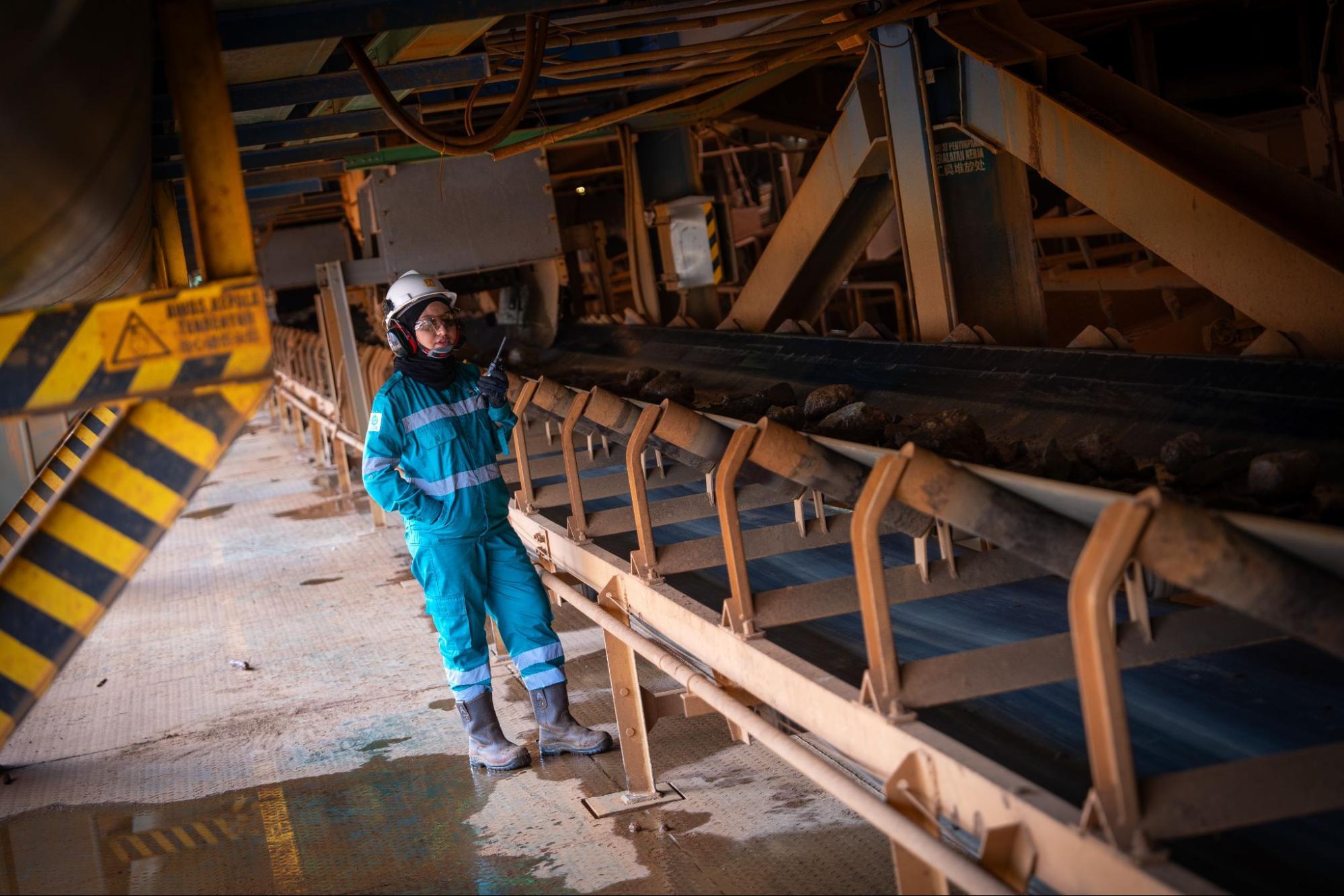
Various types of powered and mobile equipment support Harita Nickel’s daily operations. This equipment uses energy sources such as electricity, hydraulic power, pneumatic power, or engines to perform its functions. However, these energy sources and moving parts can also pose safety risks, including entanglement in rotating components, pinch injuries, being struck by equipment, or loss of control. Therefore, equipment safety must be properly managed through the Critical Safety Compliance Protocol (CSCP).
To control these risks, every Harita employee must understand and apply the six safety aspects of CSCP before, during, and after work. These aspects cover competency, document readiness, hazard and risk control, equipment and requirements, critical aspects management, and management review.
First, competency. Before operating or working on equipment, personnel must have the competence required for their assigned tasks. Operators must have completed the required training, hold the necessary certifications, including a valid Surat Izin Operator (SIO) where required, and understand how to operate equipment safely. Technicians and mechanics must also have the appropriate competencies and certifications for their respective duties. Do not operate or work on equipment without the necessary authorization and competence.
Second, document readiness. Standard Operating Procedures (SOPs), along with operating, inspection, and maintenance documents, must be available, valid, and understood by relevant personnel. Assignment letters for operators, technicians, and mechanics, personnel lists, and equipment inspection records must also be properly maintained. Before work begins, ensure that the required documents are available at the workplace and used as practical references for carrying out the work safely, rather than being treated merely as administrative requirements.
Third, hazard and risk control. All equipment in use must be identified and recorded, including its type, location, power source, and function. Identify potentially hazardous parts, such as rotating components and pinch points, and ensure that warning signs are clearly displayed. Routine inspections and maintenance must be carried out in accordance with the applicable SOPs or manufacturer’s manuals, including checks of brakes, warning lights, horns, and hydraulic systems. If any damage or unsafe condition is identified, report it and ensure that appropriate corrective action is taken before the equipment is returned to service, in accordance with applicable procedures.
Fourth, equipment and requirements. Ensure that equipment is fitted with the required safety features. Rotating components must be equipped with guards to prevent direct contact with moving parts. Energy isolation points must be available so that energy sources can be isolated before work requiring isolation is performed. Equipment must also be equipped with an emergency stop mechanism to stop operations in hazardous situations. In addition, all equipment must undergo commissioning—the process of checking and verifying that equipment is ready for operation—before being put into service, in accordance with applicable requirements.
Fifth, critical aspects management. Safety concerns not only operators and equipment but also people in the surrounding work area and communities that may be affected. The use of equipment near residential areas must take into account potential impacts on safety and the social environment. Equipment must also be secured as necessary to prevent unauthorized access and maintain safety throughout operations.
Sixth, management review. CSCP implementation must be reviewed regularly to ensure that safety controls remain effective. Reviews must also be conducted when there are changes in regulations, business activities, or other conditions that may affect safety and social aspects. The review covers equipment condition and maintenance, inspection results, and the competencies of operators, technicians, and mechanics. Audits and assessments must be conducted at least annually by personnel who have received the required training and formal assignment letters. Findings must be followed up to improve the effectiveness of controls, prevent similar issues from recurring, and continuously improve performance.
Powered and mobile equipment plays an important role in Harita Nickel’s daily operations. Its safe use depends on competent personnel, readily available and valid documentation, effective hazard control, equipment that meets safety requirements, and consistent evaluation. Every Harita employee has a role in ensuring that work is carried out safely and that unsafe conditions are addressed before they lead to an incident.
Understand the risks. Control the hazards. Stop work if it is unsafe.