
.jpg&w=3840&q=75)
Behind its contribution to national development and economic growth, the mining industry carries inherently high occupational risks. Every worker in mining operations faces real hazards on a daily basis—from extreme working environments and the use of heavy machinery to exposure to materials that may be harmful to health.
Occupational Health and Safety (OHS) serves as the foundation for managing these risks and preventing workplace accidents and health-related incidents. Through an effective management system, potential hazards can be controlled — which is why OHS plays a crucial role in mining operations.
In this article, we will explore what OHS is, how it is applied within the mining industry, and how Harita Nickel integrates OHS as part of its identity and work culture across all operational lines.
What is OHS?
OHS, which is known in Indonesia as K3 (Keselamatan dan Kesehatan Kerja), means Occupational Health and Safety in English. This term encompasses all policies, procedures, and efforts to protect workers from physical and psychological dangers, as well as from hazardous work environments.
In Indonesia, the legal basis for OHS implementation includes:
-
Law Number 1 of 1970 concerning Occupational Safety, which outlines employer and employee obligations in ensuring workplace safety.
-
Government Regulation Number 50 of 2012 concerning the Occupational Health and Safety Management System (SMK3).
-
Minister of Energy and Mineral Resources Regulation Number 26 of 2018 concerning Good Mining Engineering Practices, which specifically regulates mining safety, occupational health, and environmental management.
With these legal foundations, OHS is not merely a moral obligation or internal policy — it is a mandatory requirement that ensures companies maintain a safe and healthy working environment.
Why is OHS Essential in the Mining Industry?
The mining industry has unique workplace characteristics, including heavy machinery use, remote operational areas, and rapidly changing geological and weather conditions. Several reasons make OHS critically important in this sector:
-
Workers as main assets: Mining workers are at the frontline of operations and are key contributors to industrial success. Their safety and health must therefore be a top priority.
-
High levels of hazards and risks: Activities such as mining, blasting, hauling, and mineral processing carry significant risks of accidents and occupational illnesses if not properly managed.
-
Interaction between humans, equipment, and technology: Mining relies heavily on machinery and technological systems, yet human involvement remains decisive. This interaction can create safety risks if not carefully controlled.
-
Operational sustainability: Modern mining companies are evaluated not only on production output, but also on how safely and responsibly they operate.
-
Building a strong safety culture: Consistent implementation of OHS fosters a disciplined, collaborative, and caring work culture that supports long-term productivity and sustainability.
Implementation of OHS at Harita Nickel
Harita Nickel applies Occupational Health and Safety (OHS) as an integral part of all operational activities. This commitment is demonstrated through structured management systems, safety culture reinforcement, and strategic collaboration. Examples include:
a. International Management System Certifications
Harita Nickel has obtained ISO 14001:2015 and ISO 45001:2018 certifications, confirming that its environmental and occupational health and safety management systems meet international standards. This reflects the company's commitment to implementing best practices within its Integrated Management System.
b. Training and Capacity Building
Capacity building related to OHS is a priority at Harita Nickel, starting from safety induction to specialized internal training and competency development based on job functions. Knowledge and awareness of OHS are essential foundations for creating a strong safety culture. One example includes seminars and discussion forums conducted in collaboration with the University of Indonesia.
c. Strengthening Commitment and Awareness
Harita Nickel runs programs aimed at reinforcing corporate OHS commitment and increasing safety awareness across all business units. These efforts include hazard identification, routine inspections, safety standard implementation, and safety campaigns. The 2025 National OHS Month served as a momentum to disseminate safety messages widely and emphasize collective responsibility across the organization.
d. Strategic Collaboration and Continuous Improvement
Harita Nickel continuously collaborates with academic institutions to enhance scientific and technical approaches to OHS. In 2025, the company conducted a large-scale emergency response drill in collaboration with the Disaster Risk Reduction Center (DRRC) of the University of Indonesia, involving management teams, emergency units, employees, and government representatives.
e. Strengthening the Culture of “Safety is Everyone’s Role”
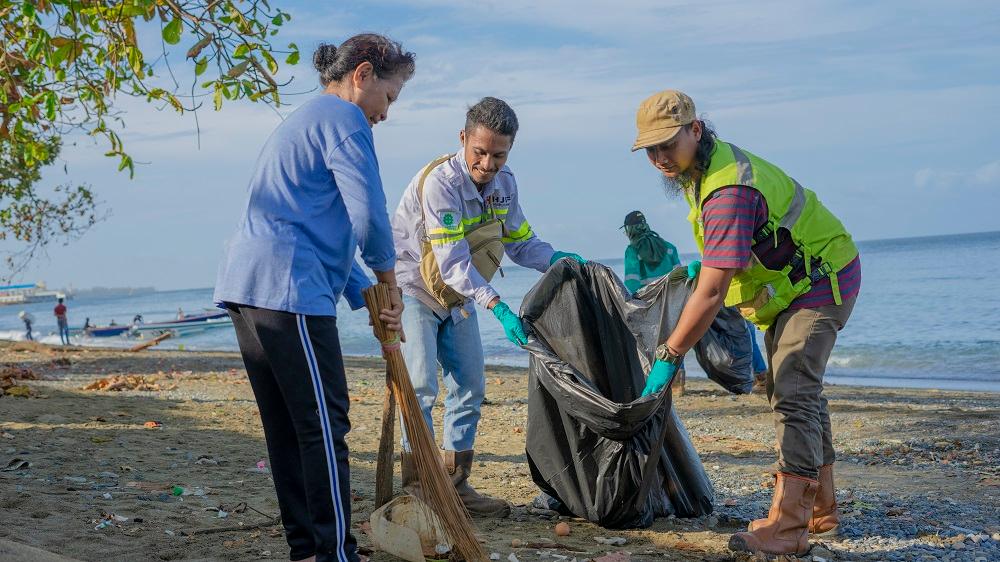
In daily operations, Harita Nickel emphasizes that OHS is not solely the responsibility of the Health, Safety & Environment (HSE) function, but of every individual. OHS is embedded as a core company value aligned with the spirit of “Satu Harita, Saling Menjaga.” Practices such as reporting potential hazards, proper use of PPE, and self-inspection are part of daily work routines aligned with the philosophy that “working safely means going home safely.”
The implementation of OHS in the mining industry is not merely about regulatory compliance, but also about upholding human values, protecting lives, and ensuring operational continuity. Harita Nickel demonstrates that through a comprehensive approach ranging from international standards to daily work culture, Occupational Health and Safety can be embedded into the core values of a company.