A recent field visit by Perkumpulan Telapak, a non-governmental organization focused on environmental and social governance, together with a team of academics from Khairun University (Unkhair) Ternate, has confirmed that the marine ecosystem surrounding Harita Nickel’s operational area on Obi Island remains well-preserved and in good condition.
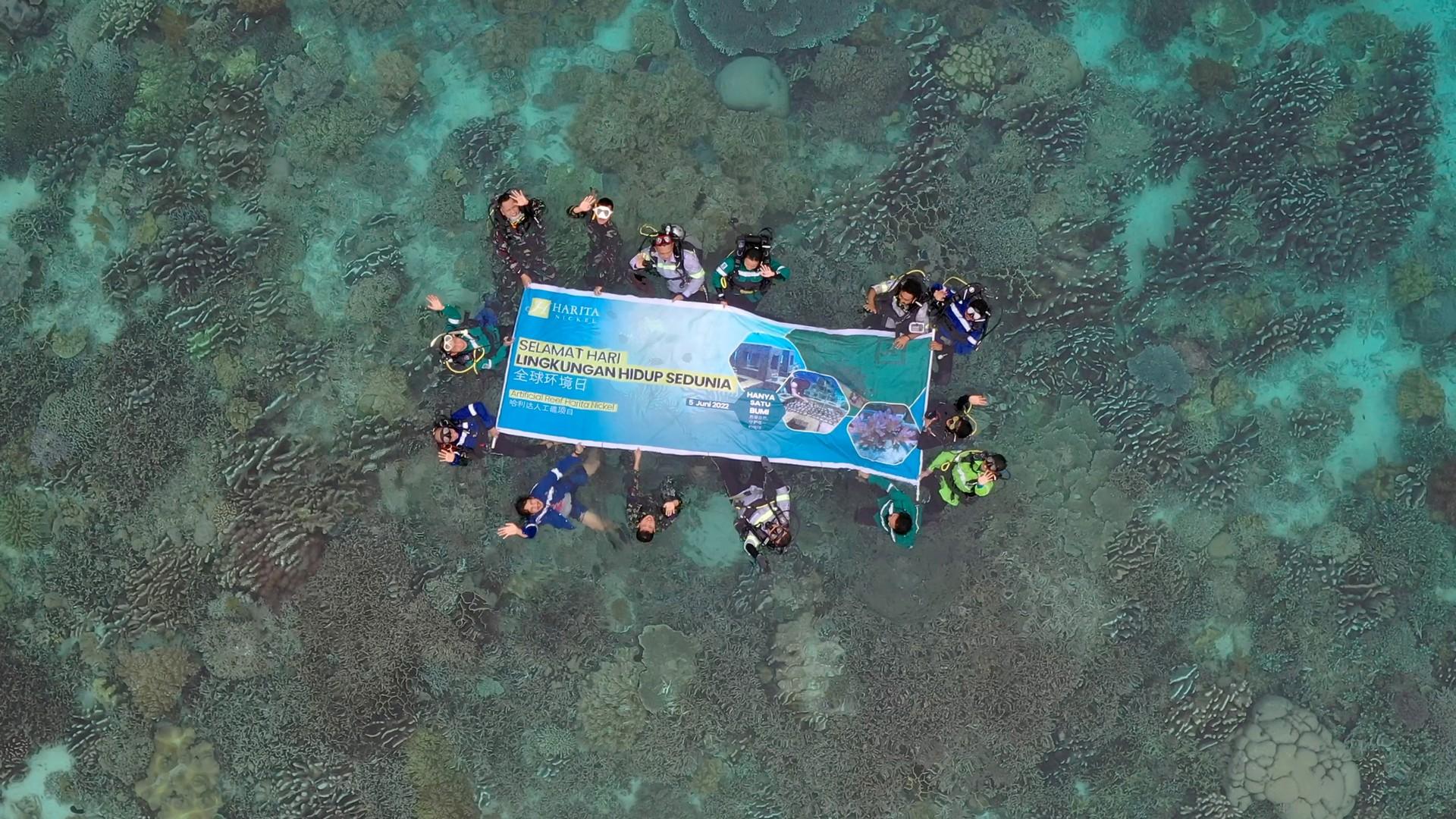
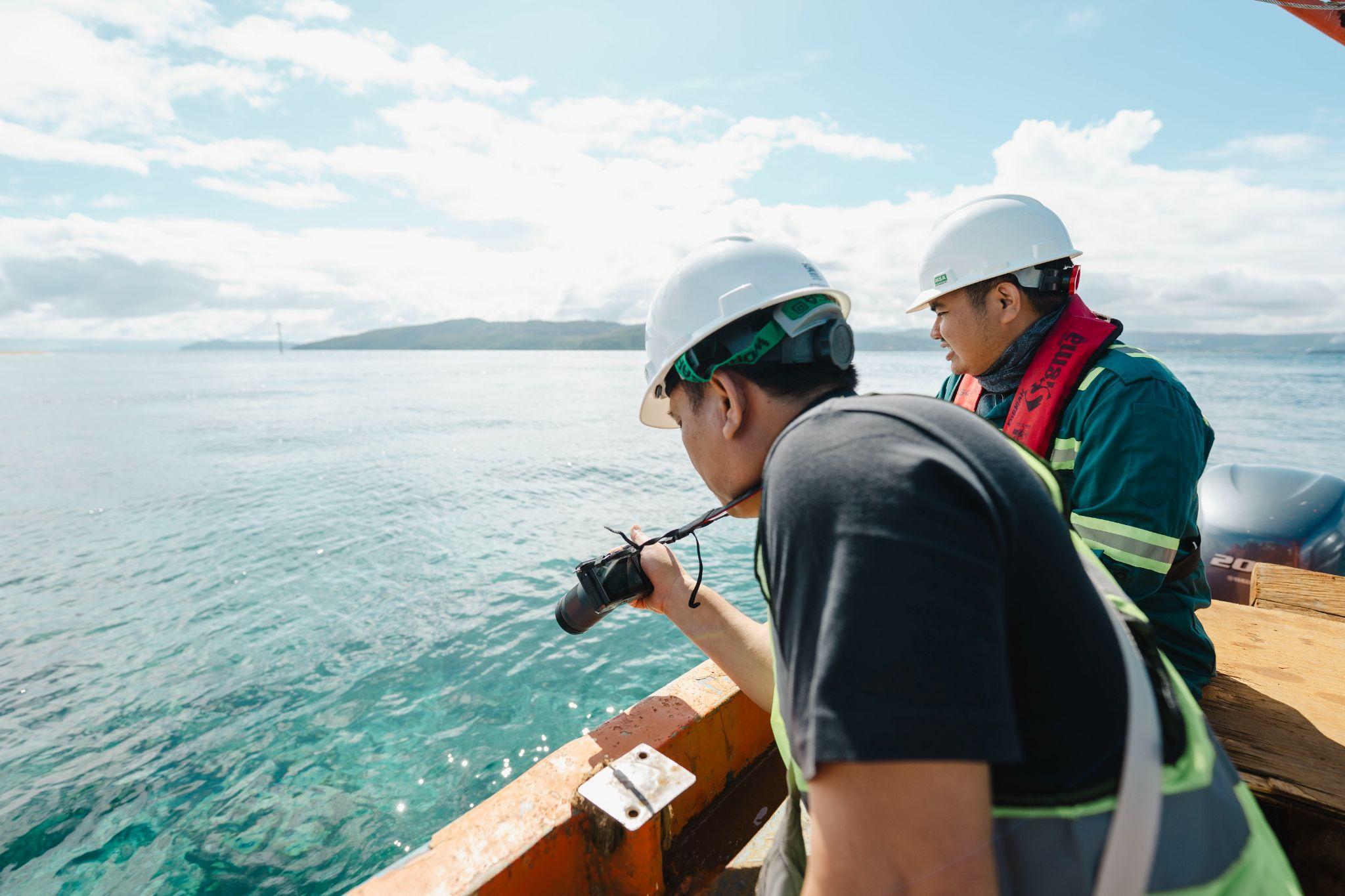
The joint team conducted observations at several points, including one located approximately 500 meters from the shoreline and another about five kilometers offshore. The results revealed clear seawater conditions, with artificial reefs developed from processed nickel slag showing natural coral growth.
According to Dickson Aritonang, Vice Chairman of Perkumpulan Telapak, the clarity of the surrounding waters reflects Harita Nickel’s strong environmental management performance.
“The water clarity is remarkable. Even at a depth of four to five meters, we could clearly see the artificial reefs developed by Harita Nickel already covered with naturally grown corals,” said Dickson, adding that the nickel slag-based reefs showed no signs of disrupting the surrounding marine ecosystem.
Dickson also observed the wastewater management infrastructure on land. He mentioned two main sediment ponds he observed, namely the Bunaken and Tuguraci ponds, covering approximately 20 and 40 hectares, respectively. Both are equipped with a Wastewater Treatment Plant (IPAL) and SPARING, a water quality monitoring tool directly connected to the Ministry of Environment.
"If the water quality isn't up to standard, the device will immediately send data to the Ministry. There's no grey area there," he explained. He assessed that the drainage and sedimentation system for mine runoff and wastewater at Harita Nickel demonstrates a solid oversight structure.
While acknowledging that mining activities have an impact, he emphasized the importance of appreciating the recovery measures. "Harita Nickel must remain open to independent evaluation. Because sustainability is not just about business performance, but also about social and environmental responsibility."
The findings of Dickson and the Telapak team align with the observations of the Unkhair academic team led directly by Prof. Dr. M. Janib Achmad, S.Pi., M.Sc. He also observed that Harita Nickel's operational activities are carried out with socially, economically, and environmentally responsible principles. "Observation results show that all the physical parameters of seawater we monitored meet quality standards. This indicates that the ecological pattern in the waters is maintained," he said.
Prof. Janib stressed the importance of using technology and implementing approaches oriented towards sustainable development. "These principles must continue to be upheld, so that the benefits truly reach the wider community, not just the industrial sector," he asserted.
Despite coming from different backgrounds, both Dickson Aritonang and Prof. Janib voiced the same common thread: environmental protection must be carried out with firmness, transparency, and oversight. And if this consistency is maintained, it is not impossible that what Harita Nickel is building on Obi Island today will become an important reference for more sustainable mining governance in the future.