
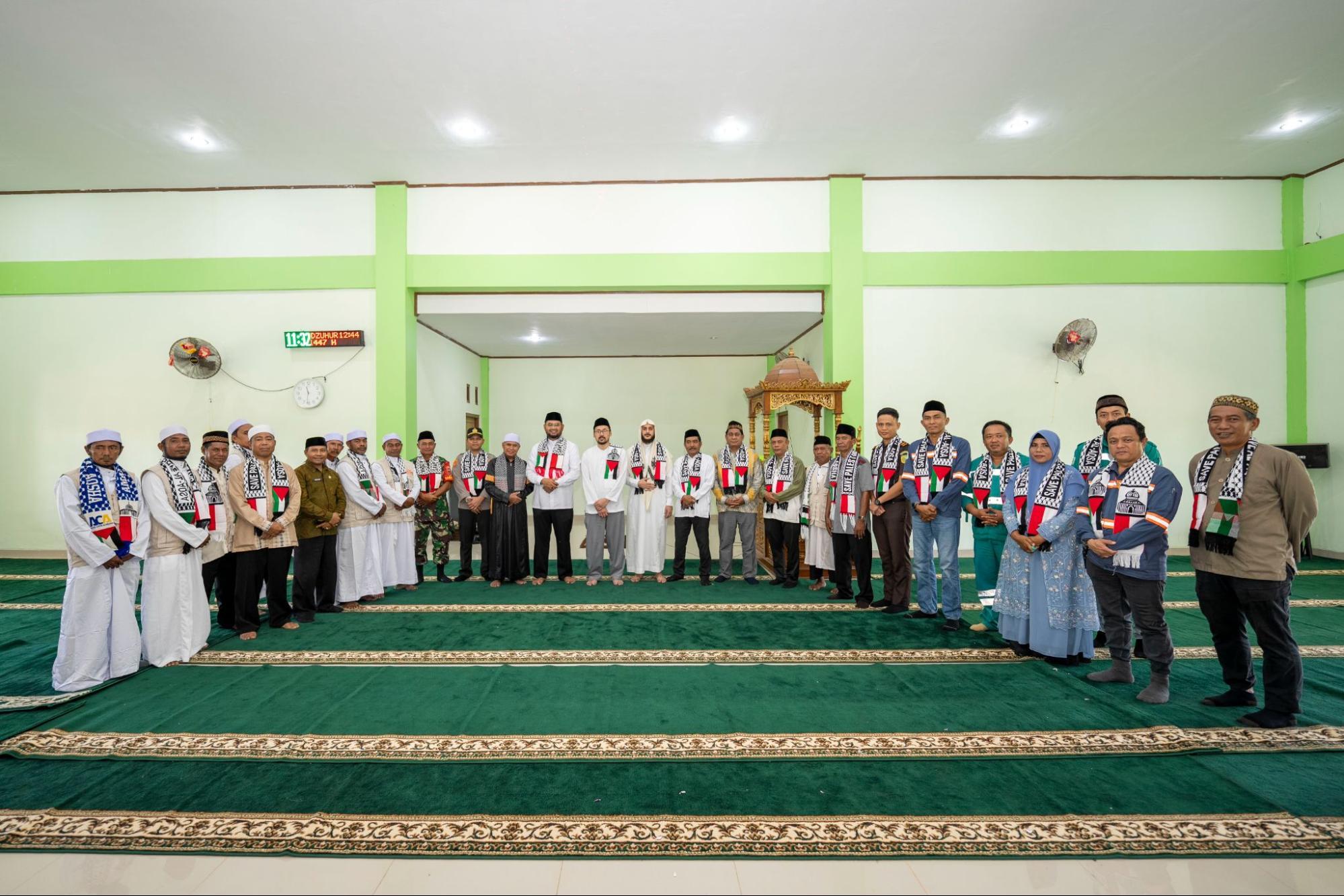
The Regent of South Halmahera, Hasan Ali Bassam Kasuba, officially inaugurated the Madinatul Hijrah Mosque, located in the new residential area of Kawasi Village, Obi District, on Thursday (22/1). The inauguration, held in conjunction with the commemoration of Isra Mi’raj of the Prophet Muhammad (peace be upon him) 1447 H, forms part of the regional government’s efforts to strengthen the spiritual and social life of the Obi Island community.
The inauguration was marked by a ribbon-cutting ceremony and the signing of a commemorative plaque by Regent Bassam Kasuba, accompanied by the Sultan of Bacan, Muhammad Irsyad Maulana Syah, and members of the South Halmahera Regional Leadership Coordination Forum (Forkopimda).
In his remarks, Regent Bassam Kasuba emphasized the philosophical meaning behind the name Madinatul Hijrah. He interpreted the relocation of Kawasi residents to the new settlement as a form of social hijrah, drawing a parallel to the migration of the Prophet Muhammad (peace be upon him) to Medina, which began with the construction of a mosque as the center of Islamic civilization.
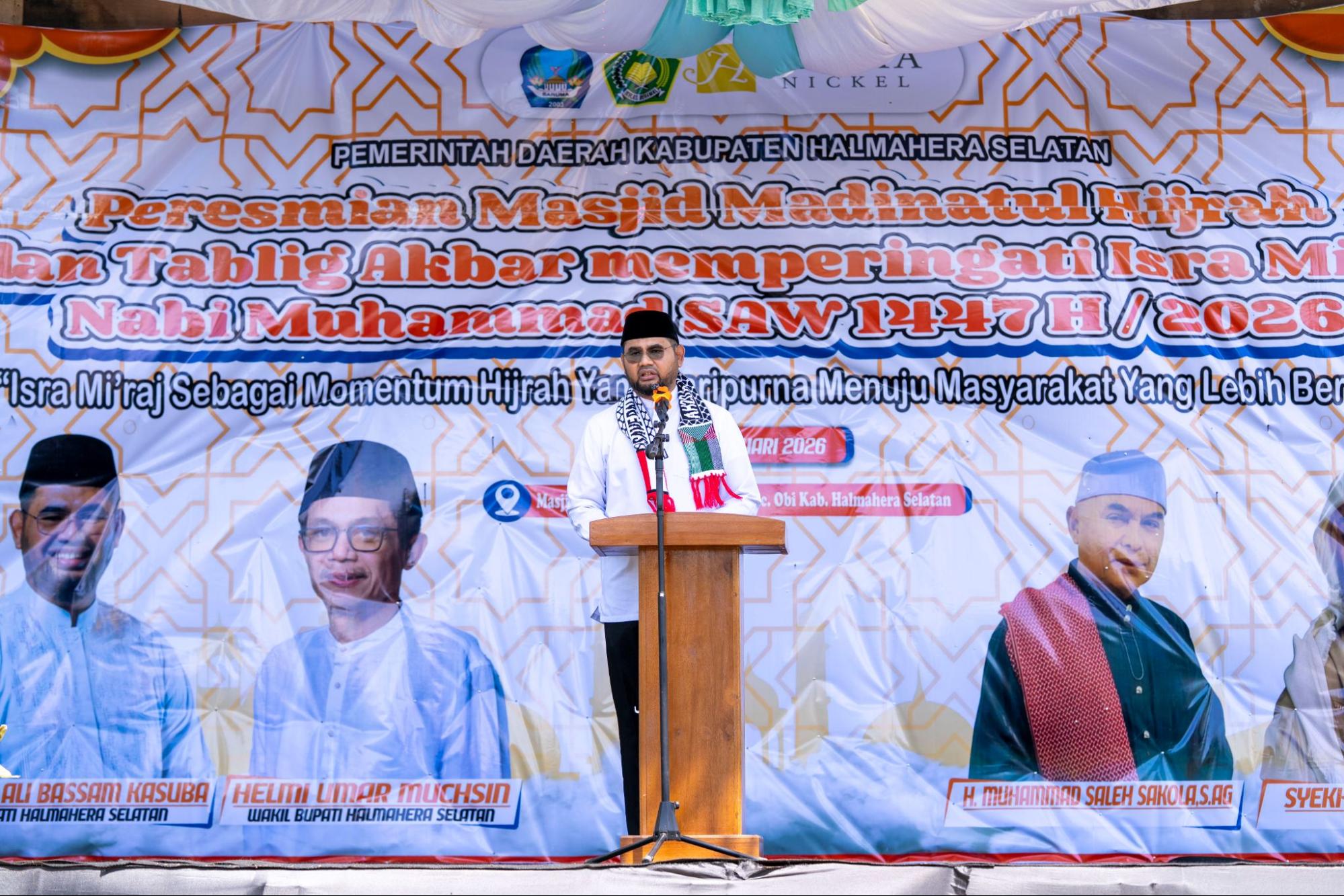
The Regent explained that mosques serve as the foundation of Islamic civilization, as they integrate religious values with social life. He expressed hope that the relocation to the new settlement would be embraced as a spirit of hijrah that encourages improvements in faith as well as in social and community life.
“Our great hope is that this mosque will become a center of togetherness and unity for the people of Kawasi, enabling them to synergize with all stakeholders in developing Obi Island and South Halmahera,” he stated.
Worship Facilities in the New Settlement
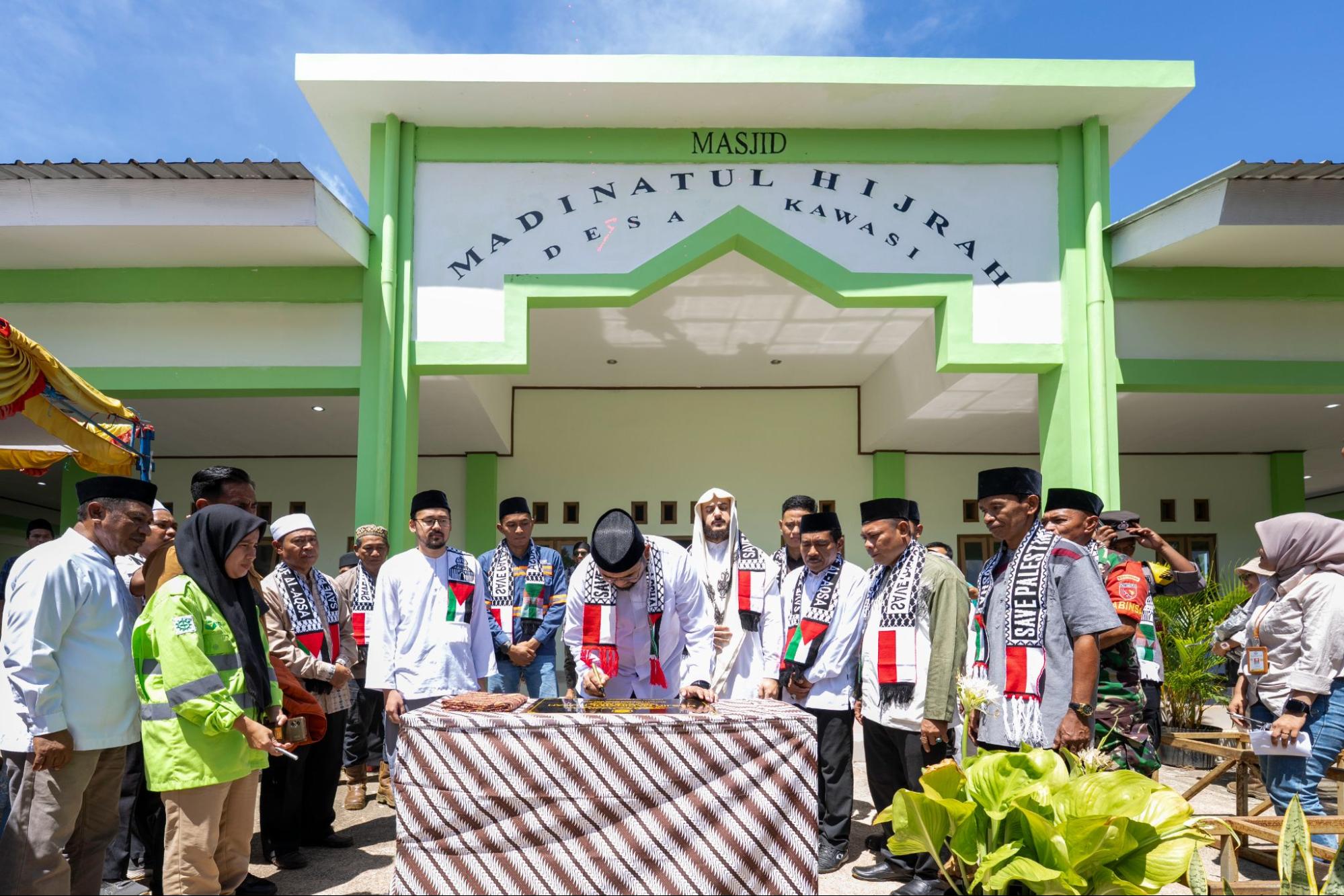
The Madinatul Hijrah Mosque was constructed starting in November 2021 and completed in July 2022. Built on a land area of 2,267 square meters, the mosque has a building area of 26 meters and can accommodate up to 750 worshippers. Supporting facilities include separate ablution areas and toilets for men and women with a clean water supply, as well as an adequate parking area.
Representing Harita Nickel management, Topan Prasetyo stated that the company supports the regional government’s efforts to develop well-planned and integrated residential areas, including the provision of worship facilities for the community.
“Harita Nickel is committed to working hand in hand with the regional government and the community. Our support extends beyond economic and infrastructure aspects to strengthening spiritual values and social harmony among the residents of Kawasi Village,” he said.
Positive Community Response
The new settlement, equipped with worship facilities, has received positive feedback from local religious leaders. The Chairwoman of the Madinatul Hijrah Majelis Taklim, Siti Muhammad, expressed her comfort living in the new settlement, which she considers more conducive to religious activities, including children’s education.
“In my opinion, there is no reason to refuse living in the new settlement, because in every aspect it is far better and more comfortable. Religious activities are more vibrant, and the women are becoming more united,” she said.
A similar sentiment was expressed by Ahmad Osalia, Imam of the Madinatul Hijrah Mosque, who noted that religious activities at the mosque have been ongoing for the past two years since residents began moving into the new settlement. With the official inauguration of the mosque, he hopes it will further motivate residents to strengthen their faith and piety.
“I hope this mosque will be enlivened not only for the five daily prayers, but also for various social and community activities, especially in welcoming the upcoming holy month of Ramadan,” he said.
The inauguration ceremony proceeded in a solemn and festive atmosphere, featuring a traditional Cakalele dance performed by children, recitations of shalawat, and a Tabligh Akbar delivered by Sheikh Abdullah Saleh Mohammed Jaber and Ustadz M. Saleh Sakola. The event also included the formal appointment of the mosque’s takmir body and the management of the majelis taklim, marking the beginning of community-led management of the mosque.