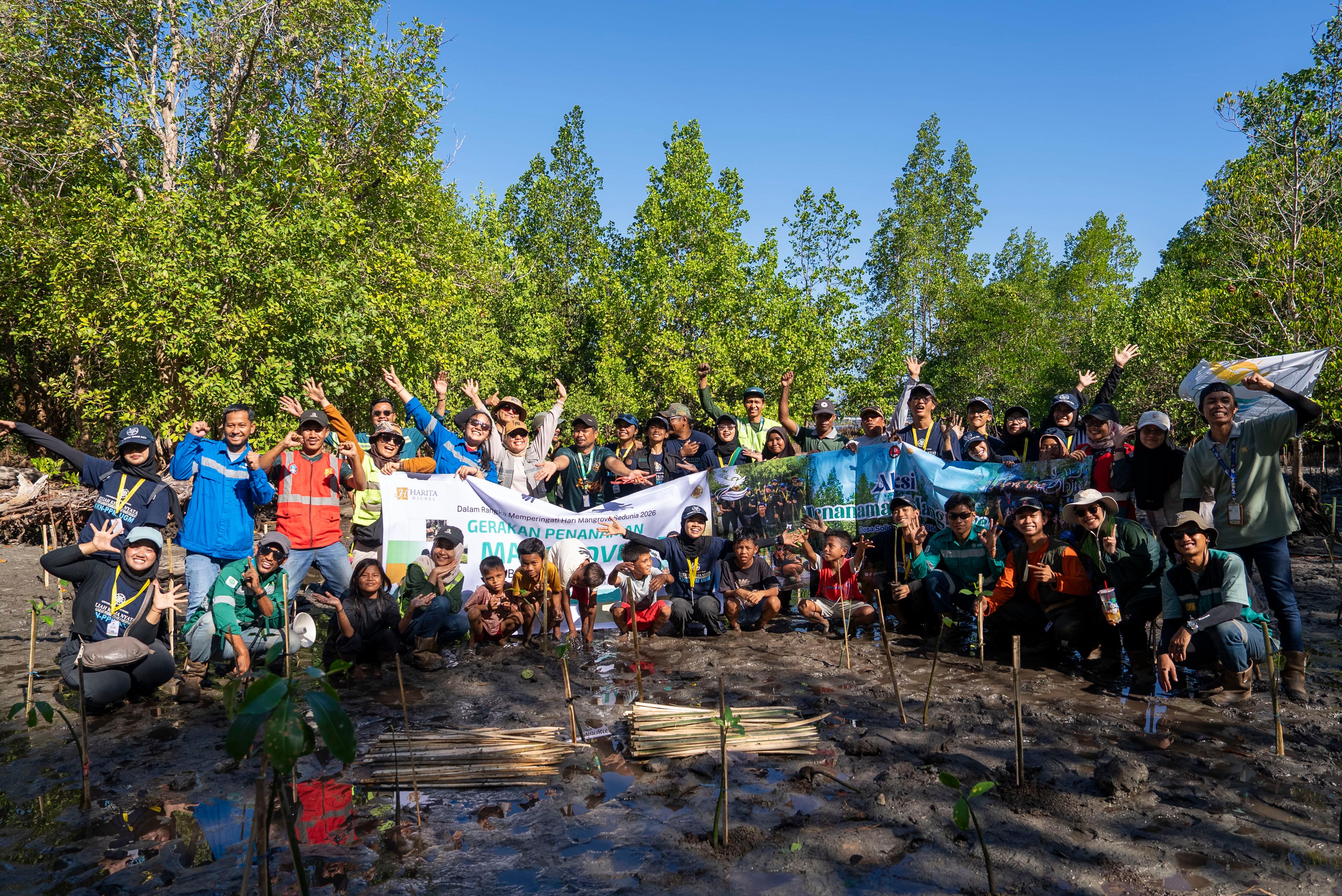
Along the coastline of Soligi Village on Obi Island, coastal erosion has become an increasing concern for local communities. To help strengthen the village's natural coastal defences, students from Universitas Gadjah Mada's (UGM) Community Service Programme (KKN) joined forces with Harita Nickel, the Soligi Village Government, the Tongke Community, and local school students to plant 380 mangrove seedlings in commemoration of the International Day for the Conservation of the Mangrove Ecosystem.
For the people of Soligi, mangroves are far more than coastal vegetation. They act as a natural buffer against erosion, provide habitat for marine and coastal biodiversity, and help sustain the livelihoods of communities that depend on healthy coastal ecosystems.
Soligi is home to approximately 23 hectares of mangrove forest, parts of which have been degraded over the years due to the harvesting of mangrove roots for firewood. Restoring these ecosystems has therefore become an important step in rebuilding the coastline's ecological functions while improving its resilience to erosion.
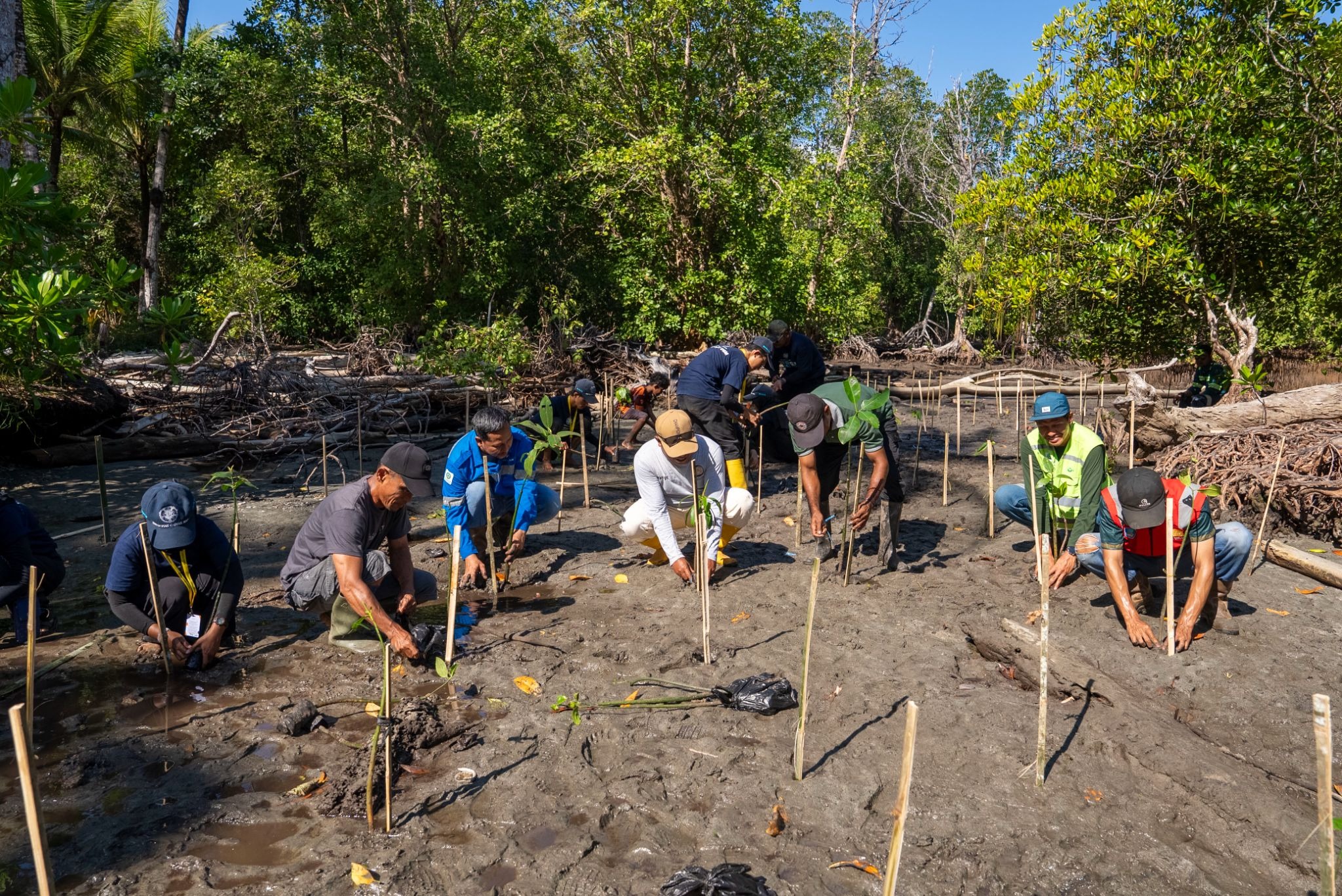
The initiative originated from research conducted by UGM's KKN team before their deployment to Obi Island. Based on their findings, the students identified mangrove rehabilitation as one of the most relevant and practical ways to address Soligi's coastal challenges.
Shofwah Nur Aziza, a Forestry student at UGM, said the team's field research shaped the programme's focus.
"Before coming to Obi Island, we studied Soligi's coastal conditions and recognised the need for practical measures to reduce erosion risks. Mangrove planting became our way of contributing to the protection of both the coastline and the local community," she said.
The rehabilitation effort also builds on work already underway within the community. The Tongke Community has established and manages a local mangrove nursery, where all seedlings used in the programme were propagated and nurtured by local residents. As a result, the restoration process began well before planting day and will continue through long-term maintenance and monitoring.
Planting the seedlings, however, is only the first step. The long-term success of mangrove rehabilitation depends on whether the young trees survive, mature, and eventually develop into healthy coastal ecosystems. Regular monitoring and replacement planting where necessary are therefore integral parts of the programme.
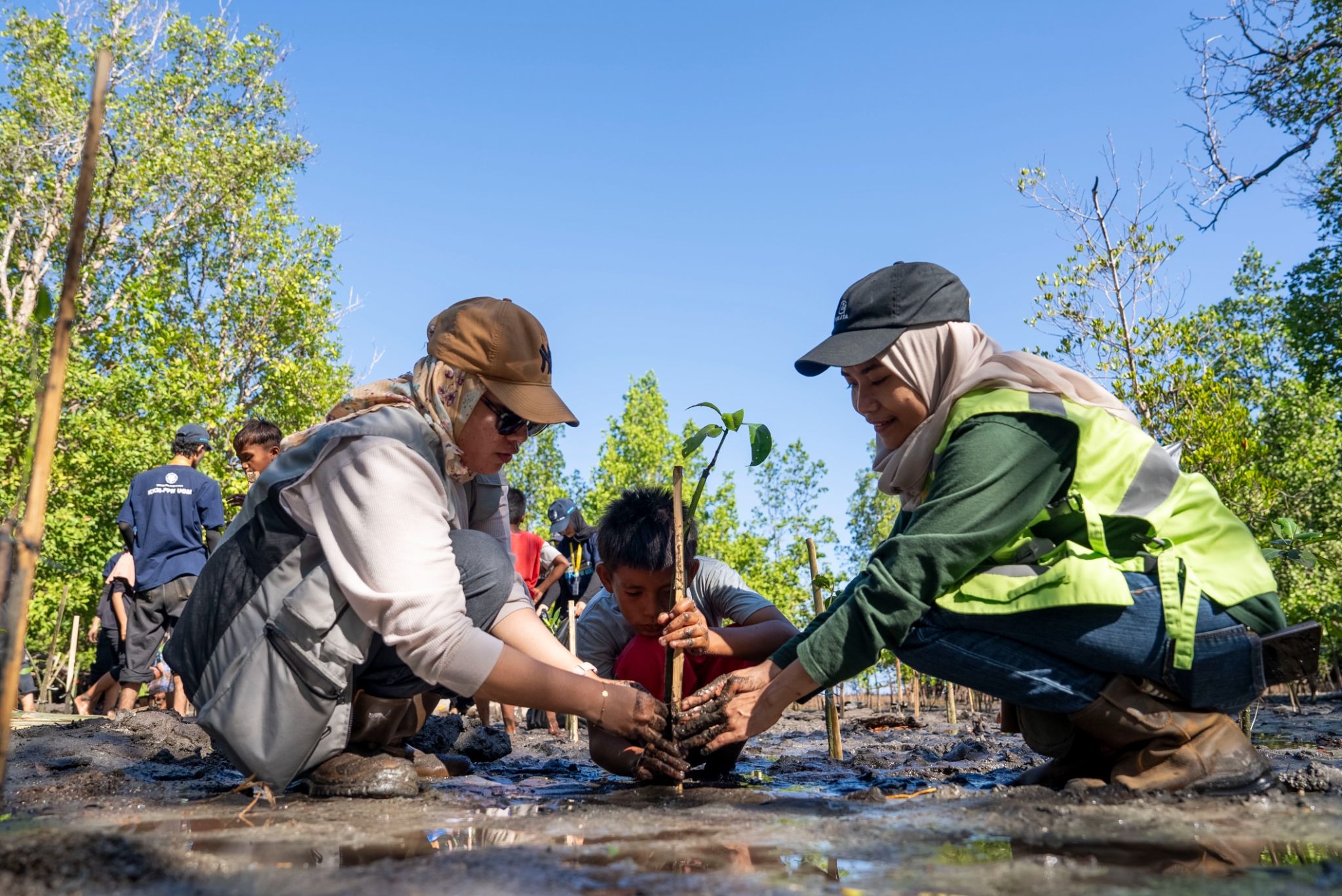
Aldico Satria Ganesa, Marine Environmental Monitoring Foreman at Harita Nickel, said newly planted mangroves require continuous care during their early stages of growth.
"Young mangroves are still vulnerable to waves, currents, and floating debris. We will continue monitoring their growth and replace any seedlings when necessary. As the mangroves mature, they will provide long-term protection for Soligi's coastline and deliver lasting benefits for the surrounding community," he said.
Rusman Baharudin, founder of the Tongke Community and a teacher at SMP Negeri 39 South Halmahera, believes long-term collaboration is essential to the success of mangrove restoration.
"Coastal erosion is a challenge that cannot be addressed by one group alone. Through our community nursery, we will continue supporting the care of these seedlings until they become a strong natural defence for Soligi's coastline," he said.
The Soligi planting initiative forms part of Harita Nickel's broader mangrove rehabilitation programme, which has been underway since 2021. To date, the company has planted more than 67,000 mangrove seedlings across four locations in South Halmahera Regency, while supporting the entire restoration cycle, from nursery development and planting to ongoing maintenance and monitoring, to promote long-term ecosystem recovery.
The seedlings planted today may still be small, but over time they are expected to grow into thriving mangrove forests that help reduce coastal erosion, restore habitats for marine life, and strengthen the resilience of coastal communities. Through collaboration between local communities, government, academia, and the private sector, Soligi is laying the foundations for a more resilient coastal future.