

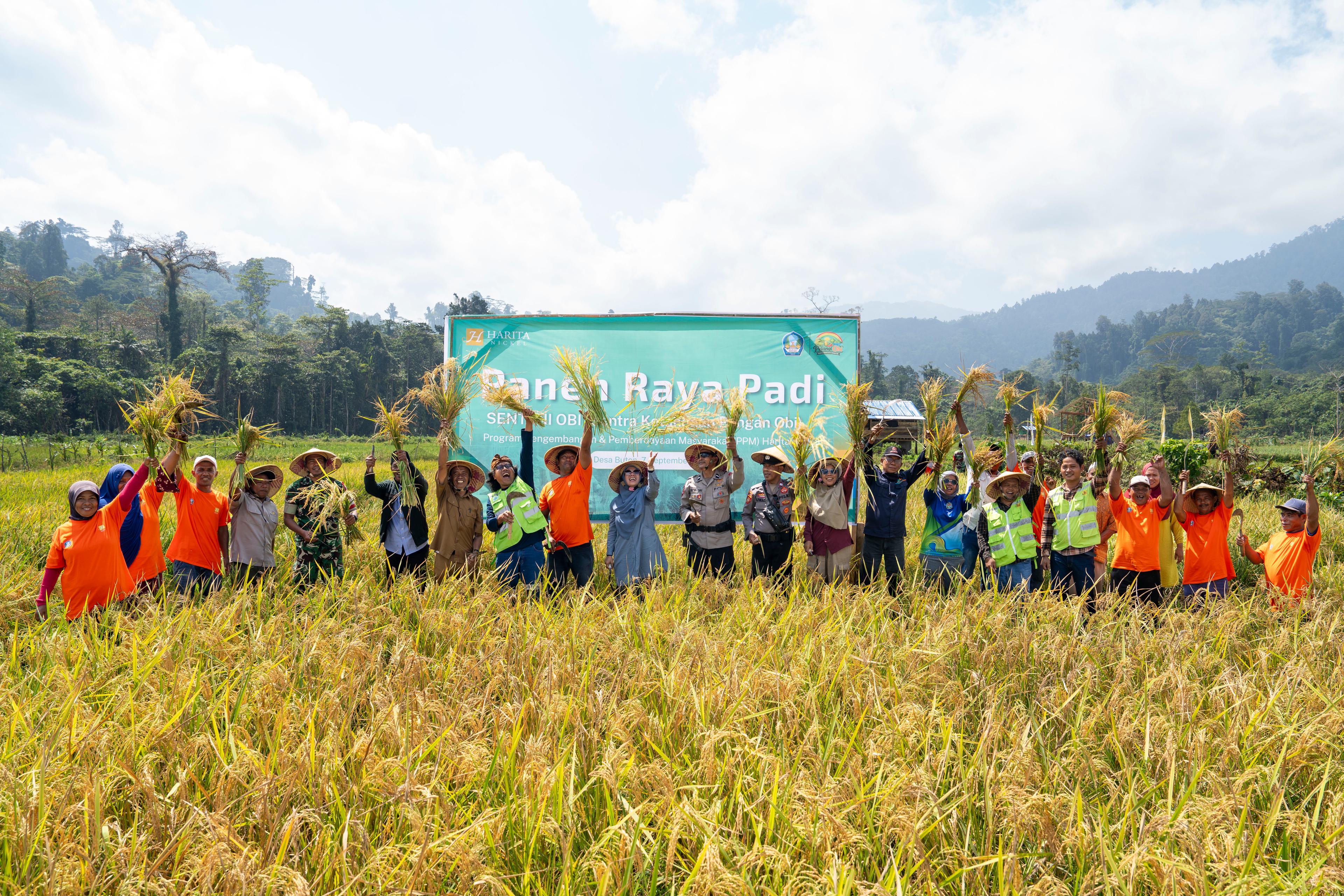
Amid a prolonged dry season and unpredictable weather, the Millennial Farmers’ Group in Buton Village, Obi District, has achieved a rice yield of at least 6.5 tonnes per hectare, exceeding the national target of 5.7 tonnes per hectare.
The harvest covered 12.5 hectares of farmland and was part of the “Synergy to Build the Nation” Rice Harvest Festival held on Monday (7 September). The event brought together South Halmahera Agriculture Agency Head Suryatmi Aldjokja, representatives of the Obi Agricultural Extension Centre (BPP), the sub-district leadership coordination forum (Forkopincam), and village government representatives.
Based on crop-cutting sample results conducted by the field support team, yields reached at least 6.5 tonnes per hectare across several varieties, including Inpari, upland rice and Mentik Wangi. The harvest marked the first for the Millennial Farmers’ Group, which was established earlier this year.
Group Head Ruslan Kasman said the achievement came despite challenging weather conditions. The group’s initial planting was lost after heavy rainfall, while replanting was followed by a prolonged dry season.
“We almost gave up. We are grateful for the continued support from the government and the company, including assistance with irrigation, which has helped ensure a steady water supply,” Ruslan said.
Suryatmi said the first harvest demonstrated the group’s rapid progress while contributing to food security efforts in South Halmahera. She said agricultural development is aligned with the South Halmahera Government’s Agromaritime concept, which integrates the region’s agricultural, marine and fisheries potential in a coordinated and sustainable manner.
“Support and collaboration from various stakeholders, including the private sector, are essential. We are committed to improving farmers’ welfare,” Suryatmi said, while expressing her appreciation for Harita Nickel’s continued support for local food security initiatives.
The support is provided through the Obi Food Security Centre (SENTANI). The initiative has grown from two initial farmers’ groups to three: Milenial, Akemoriri and Batu Putih. Together, they have 42 members cultivating 30 hectares of farmland.
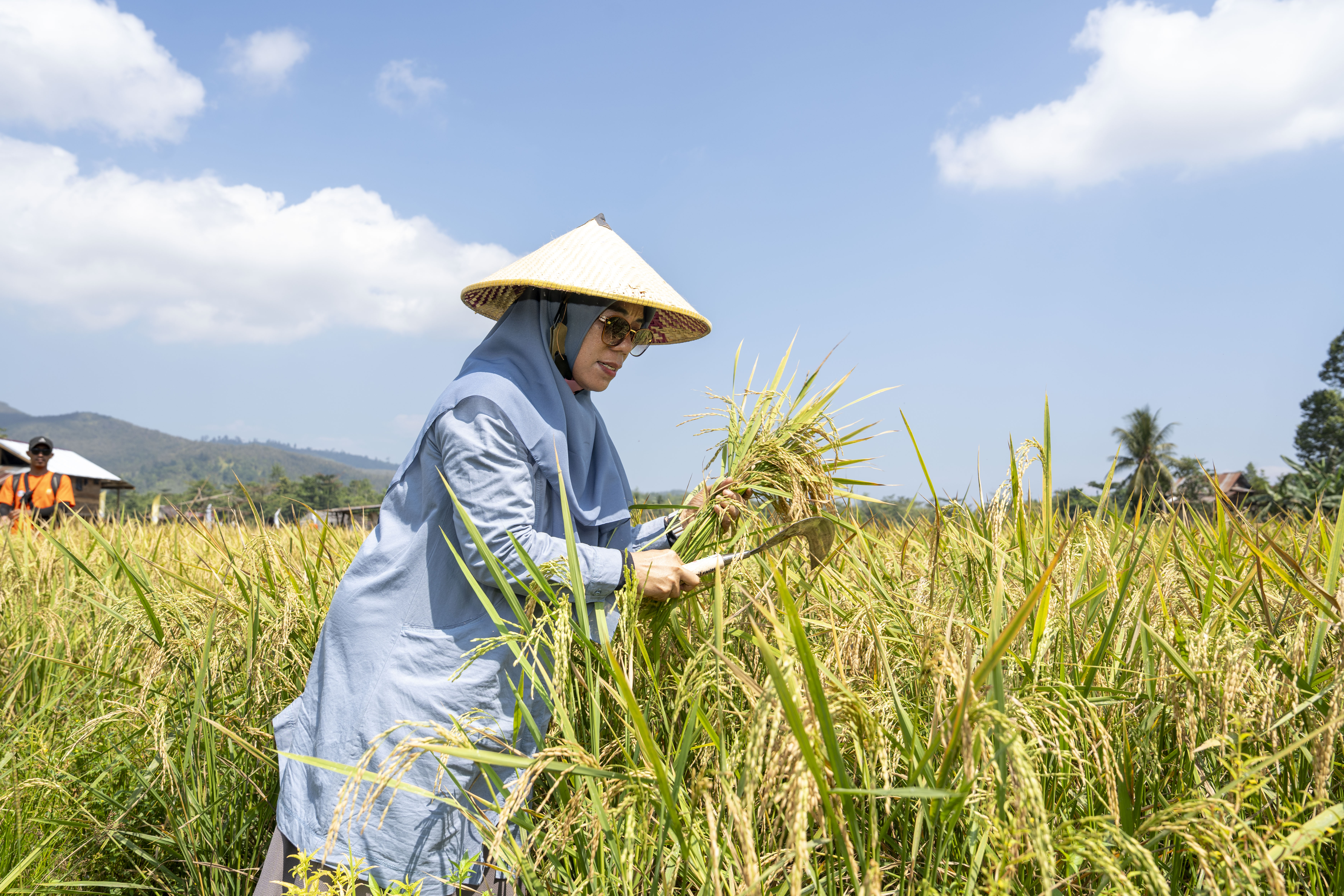
This harvest season, the three groups are expected to harvest around 25 hectares. In addition to the Millennial group, Akemoriri and Batu Putih are also scheduled to harvest, with crop-cutting results from some plots exceeding 8 tonnes per hectare.
Harita Nickel Community Development Manager Broto Suwarso said the harvest amid abnormal weather conditions highlighted the importance of climate-resilient agriculture supported by local knowledge.
“Obi’s farmers have valuable local knowledge for reading weather patterns, understanding land conditions and managing water availability. This knowledge needs to be further developed to make agriculture more climate-resilient and strengthen food security,” Broto said.
Adaptation measures include selecting varieties suited to local conditions, managing irrigation on a rotational basis and using dryland areas for secondary crops. Interest in farming is also growing, with around 15 residents planning to establish a new farmers’ group.
Darwan Aduhasan, Chairman of the Pelangi Community (Pioneers of Obi Food Sovereignty) and a pioneer of agriculture in Buton Village, said this growing interest needs to be supported by an ecosystem that gives farmers greater confidence to invest in and expand their agricultural activities.
“For us, agriculture is the future, not the past. We want to build modern farmers and an agricultural sector that brings greater prosperity to the community,” he said.
The Millennial Farmers’ Group’s first harvest offers an early indication of Obi’s agricultural potential. With cross-sector collaboration, local knowledge and sustained support, agriculture can become an increasingly important contributor to food security and new economic opportunities for communities in Obi.