
Obi Island, North Maluku – In recent years, Obi Island has drawn significant national and international attention. As a hub for integrated nickel downstream processing, the island is often associated with two contrasting narratives: on one hand, as a driver of economic growth and the global energy transition; on the other, as an industry perceived to have environmental impacts.
Amid these competing narratives, the public deserves a comprehensive picture based on verified and up-to-date facts. This article presents findings from independent observations, environmental management data, and transparency measures implemented by Harita Nickel.
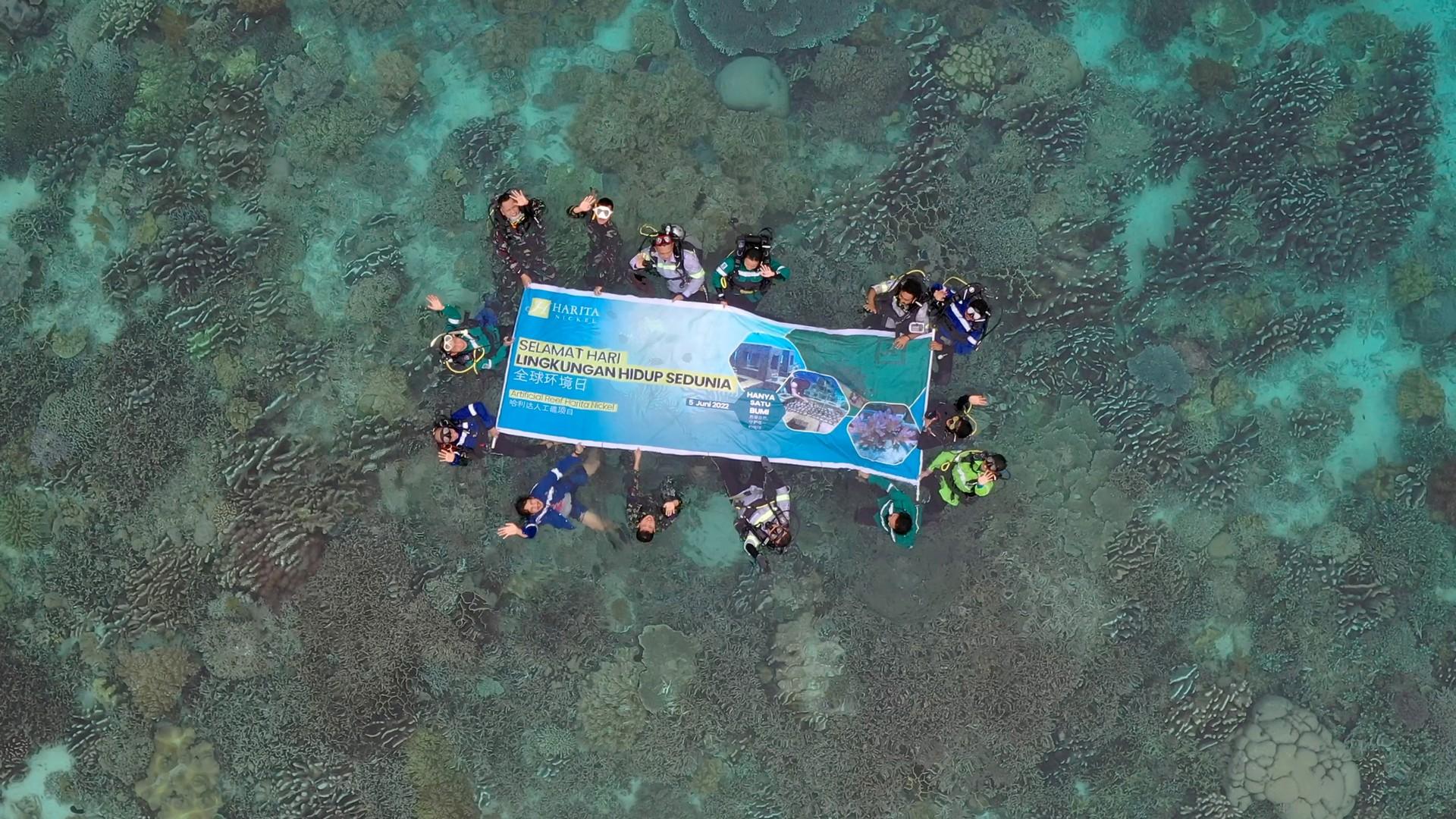
Perkumpulan Telapak, a non-governmental organization focused on sustainability since 1997, conducted an observation in June 2025 together with a research team from the University of Indonesia (UI). Their assessment recorded an important finding that has rarely received media attention:
“Overall, the waters of Kawasi remain in good condition. Telapak did not find any changes in water quality or ecological damage caused by the company’s activities.”
(Telapak Environmental Observation Report, June 2025)
The report also highlighted that fishermen around Kawasi and Soligi continue to operate normally and maintain productive catches. The community’s routine fishing activities provide tangible evidence that local water quality continues to support marine ecosystems.
Water Management Facts
One of the most frequently discussed issues is mine water management. Since the beginning of its operations, Harita Nickel has established an integrated water management system designed to ensure that water returned to the environment meets applicable quality standards.
The company currently operates 58 settling ponds that function to clarify runoff water (rainwater that passes through mining areas) before it is discharged into the environment. Two major ponds Tuguraci (43 hectares with 11 compartments) and Bunaken (20 hectares with 5 compartments)—are capable of storing millions of cubic meters of water. At these facilities, water is treated using coagulant and flocculant technologies to ensure suspended particles settle effectively.
What distinguishes Harita Nickel’s approach is its strict separation principle: no drainage channels, sedimentation ponds, or discharge systems intersect with natural drinking water sources or rivers. This principle reflects the company’s commitment to ensuring that mining infrastructure does not interfere with community water resources.
To ensure transparency, Harita Nickel is also connected to SPARING (Continuous and Online Industrial Wastewater Quality Monitoring System). This system is directly integrated with Indonesia’s Ministry of Environment and Forestry (KLHK). Water quality data at final discharge outlets can be monitored by regulators in real time, ensuring compliance with environmental standards.
“Transparency is not merely about publishing annual reports. Transparency means providing regulators with real-time access to monitor operational aspects of water management. That is exactly what we do through SPARING.”
(Tonny Gultom, HSE Director, Harita Nickel)
Tailings Management Facts
When discussing water and environmental management, one question frequently arises: Does Harita dispose of tailings into the ocean? This allegation is often raised. What are the facts? Harita Nickel does not practice Deep Sea Tailings Placement (DSTP). All tailings are managed on land through a Dry Stack Tailings Facility (DSTF), which utilizes multiple protective layers, including geomembranes and vertical drainage systems, to minimize environmental risks.
In its High Pressure Acid Leach (HPAL) process, Harita Nickel applies a proprietary methodology developed with technical partners to reduce the formation of hexavalent chromium (Cr6+). This innovation was first disclosed in the company’s 2023 Sustainability Report and continues to be refined. Third-party studies have shown that the resulting tailings are non-explosive, non-flammable, non-reactive, non-corrosive, and non-toxic according to applicable LC50 and LD50 standards.
Facts About Fish and Fishermen in Obi
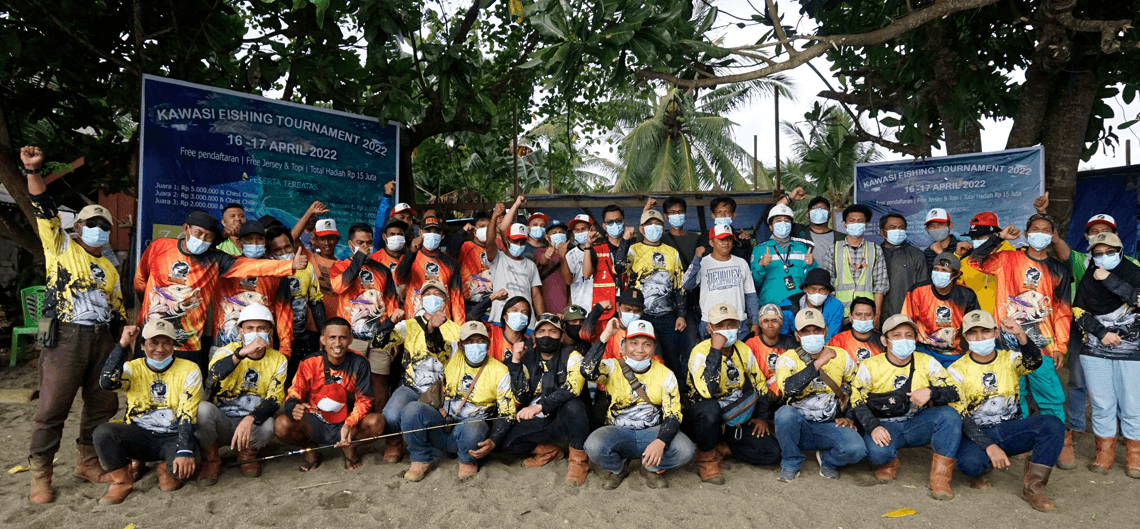
A healthy environment should provide tangible benefits to local communities. Since 2023, Harita Nickel has regularly organized the Obi Fishing Tournament. In 2025, the event attracted 135 participants and resulted in catches of large fish species such as grouper and snapper, species known to be sensitive to changes in water quality. This serves as an important indicator that the marine ecosystem surrounding the operational area remains productive.
The company also initiated the SUTAN Program (Fishermen Fish Processing Center) in Kawasi and Soligi. The program supports fishermen through cold storage facilities and marketing assistance, enabling direct integration of catches into the company’s supply chain. Throughout 2024, SUTAN fishing groups supplied 28.5 tons of fish, creating a stable economic value chain and supporting long-term social sustainability.
Facts About the New Kawasi Settlement
The relocation of Kawasi Village residents has often attracted public attention. It is important to understand that this process was government-led and entirely voluntary.
In 2018, Kawasi Village was categorized as an underdeveloped village, frequently affected by flooding, vulnerable to sea-level rise, and exposed to extreme weather events.
Harita Nickel supported the development of a 103-hectare residential area integrated with public facilities, including 24-hour electricity access, elementary and junior high schools, a mosque, a church, community halls, sports facilities, and commercial areas. Productive land surrounding the settlement is supported by agricultural training facilities to strengthen residents’ economic self-sufficiency.
Yunince, one of the first relocated residents, shared a testimony reflecting the tangible impact of the relocation:
“When it rains, the roads are no longer muddy. When it is hot, there is no dust. Here we have electricity and water 24 hours a day. In my old house I didn’t use air conditioning, but here I’ve installed three AC units.”
(Yunince, Resident of New Kawasi)
Another resident, Nur Eneng Rahmat, who once returned to her former home, recognized a significant difference. She explained that her old house was very noisy because it was located near the main road. In the new settlement, she feels much more comfortable. The neighborhood is better organized, interactions with neighbors are more frequent, and religious activities are active. She has also been able to open a small grocery business generating daily revenues of IDR 1–2 million.
On 19 November 2025, Ikbal Hi. Mustafa, Head of the South Halmahera Public Housing and Settlement Agency, officially handed over land certificates to Kawasi residents living in the new settlement, providing legal certainty of land ownership.
Global Standards: IRMA and RMI RMAP
Harita Nickel’s commitment to going beyond regulatory compliance is being tested through its willingness to undergo audits against global standards. The company became the first mining company in Indonesia to voluntarily undergo an audit under the Initiative for Responsible Mining Assurance (IRMA), the world’s most rigorous responsible mining standard, consisting of more than 400 assessment criteria.
As stated by IRMA Executive Director Aimee Boulanger:
“We are not here to hand out green labels. We are here to change industry expectations.”
The ongoing IRMA audit includes comprehensive assessments of water management, biodiversity, human rights, and community relations. Audit results will be published openly as part of the company’s commitment to transparency.
In addition to IRMA, Harita Nickel is also participating in the Responsible Minerals Initiative – Responsible Minerals Assurance Process (RMI RMAP) to ensure responsible supply chain practices aligned with human rights and transparent governance principles, based on the UN Guiding Principles on Business and Human Rights, ILO Core Conventions, and OECD Guidelines.
Environmental and Social Investment Facts
In 2024, Harita Nickel invested significant resources in environmental management and sustainability initiatives. Community programs ranging from women-led cooperatives to local food security initiatives delivered measurable outcomes, achieving an average Social Return on Investment (SROI) of 2.62.
This means that every one rupiah invested generated more than double its value in social benefits. Community satisfaction with these programs averaged 89 out of 100, categorized as “very good.”
Facts About Continuous Improvement
Harita Nickel is committed to turning every challenge into an opportunity for continuous improvement.
By opening its operations to international audits and independent research conducted by universities such as IPB University, the University of Indonesia, and Khairun University, Harita Nickel demonstrates that its governance practices on Obi Island are grounded in data and verified field assessments—an indication that coastal ecosystems remain relatively well preserved.
The journey toward responsible mining is an ongoing process, and every step forward reflects a commitment to learning, improving, and strengthening performance over time.
Frequently Asked Questions (FAQ)How does Harita Nickel manage mine water?Harita Nickel has constructed 58 settling ponds to manage runoff water. Water quality is monitored in real time through the SPARING system, which is directly connected to the Ministry of Environment and Forestry (KLHK). Each settling pond is designed according to its catchment area capacity. For example, Tuguraci Pond 2 can accommodate between 10,000 and 50,000 m³ per hour, with a retention time of 10–15 hours to support optimal sedimentation. What is IRMA and why is it important?IRMA (Initiative for Responsible Mining Assurance) is the world’s most rigorous mining audit standard, with more than 400 ESG indicators covering environmental, social, human rights, and governance aspects. Harita Nickel is the first mining company in Indonesia to voluntarily undergo an IRMA audit, demonstrating a commitment that goes beyond regulatory compliance. The audit is conducted by independent international auditors. How has the local economy developed after 15 years of operations?Harita Nickel’s economic empowerment programs in 2024 recorded significant achievements: transactions with 65 local MSMEs reached IDR 150 billion; the SUTAN program purchased 28.5 tons of fish from local fishermen with revenues of IDR 784 million; the average Social Return on Investment (SROI) reached 2.62 (every IDR 1 invested generated IDR 2.62 in social value); and the Community Satisfaction Index reached 89/100. Programs such as Obi Sehati, HOP Mart, and Kabar Mapan demonstrate measurable economic impact. Do independent studies support Harita’s claims regarding water quality?Yes. A 2022 study conducted by Prof. Dr. Ir. Etty Riani, MS from IPB University found nickel concentrations in fish ranging from 0.01–0.58 mg/kg (FDA limit: 80 mg/kg). The Pollution Index for Obi Island ranged from 4.30–4.72 (lightly polluted), which was better than Bacan (5.41) and Ternate (5.37), both classified as moderately polluted. A 2025 study conducted by Prof. Dr. M. Janib Achmad from Khairun University confirmed that water quality parameters complied with applicable standards and concluded that “mining management has been implemented according to responsible principles.” How does Harita manage potentially hazardous substances in the HPAL process?Tailings are managed through a Dry Stack Tailings Facility (DSTF) with multiple protective layers. Tailings are neutralized and filtered using filter presses to reduce moisture content. Third-party toxicity testing has demonstrated that the tailings are non-explosive, non-flammable, non-reactive, non-corrosive, and non-toxic. The DSTF is supported by drainage systems and leachate collection facilities, where leachate is stored, tested, and treated when necessary. Groundwater monitoring is conducted regularly to ensure compliance with environmental standards. PT TBP has also undertaken comprehensive risk assessments to identify potential risks and mitigation measures across development, operational, and closure stages. Was the relocation of Kawasi Village carried out by force?No. The relocation of Kawasi Village was a government-led process and entirely voluntary. Harita Nickel’s role was to support the process by providing infrastructure and facilities while ensuring that relocation activities respected human rights principles. At Harita Nickel, all employees and security personnel receive human rights training based on the Voluntary Principles on Security and Human Rights. The company also conducts comprehensive Human Rights Due Diligence processes in accordance with the UN Guiding Principles on Business and Human Rights, IRMA Chapter 1.3, and IFC Performance Standards. The relocation process has also been evaluated under IRMA Standard Chapter 2.4. In 2018, the original village was classified as underdeveloped, facing flooding risks and limited access to electricity and clean water. Residents who have relocated report significant improvements in quality of life. On 19 November 2025, the government officially issued land certificates to residents, providing legal certainty of ownership. How transparent is Harita’s environmental monitoring system?Harita’s SPARING system (Continuous and Online Industrial Wastewater Quality Monitoring System), managed by the Ministry of Environment and Forestry, is installed at each sediment pond outlet. |