

Have you ever wondered what happens to land after it’s been mined? Is it just left alone?
Naturally, the answer is no. Mining companies are required to undertake reclamation activities to restore the environment after it's been used. But what exactly is reclamation? Can it really restore nature to its former glory? Let’s take a closer look!
What is Mine Reclamation?
Mine reclamation is an activity that’s done throughout the mining business cycle, in order to organize, restore, and improve the quality of the environment and ecosystem so that it can function properly again.
Reclamation is a mandatory requirement for mining companies, as stipulated in Law Number 3 of 2020 concerning Mineral and Coal Mining (Minerba Law).
In fact, this regulation states that companies are required to submit a reclamation plan, even before they begin their operations!
Objectives of Mine Reclamation
The primary goal of reclaiming former mining sites is to ensure that the land can be used again for its original purpose. More specifically, reclamation has several main objectives:
a. Restore the ecosystem, by replanting suitable vegetation so that the habitats of wildlife affected by mining activities can also be restored;
b. Prevent environmental damage such as erosion, landslides, and pollution; and
c. Support economic sustainability as the former mining land is restored.
The Mine Reclamation Process
1. Planning
Before a mine commences operations, the company is required to develop a 5-year reclamation plan for the mining site. This plan must be approved by the government before a permit is issued.
2. Implementation
Reclamation can generally be divided into three stages:
-
Land Preparation
Formerly mined lands need to be reshaped and stabilized, for example by creating a safe slope. After that, fertile topsoil–which is collected during mining–is spread to allow plants to grow well.
Finally, infrastructure is put in place to control erosion and sedimentation. Some common methods include drainage, drop structures, sediment ponds, permanent drainage, sediment traps, and the use of cover crops.
-
Revegetation
This stage begins with planting cover crops. Good cover crops meet several criteria, including ease of planting, rapid growth, dense growth, symbiosis with beneficial bacteria or fungi, abundant biomass production, and rapid decomposition.
Cover crops play a crucial role in successful reclamation because they prevent erosion, enrich the soil, accelerate weathering, and suppress weed growth.
Next is the planting of pioneer plants. Pioneer plants are usually chosen because they grow quickly and adapt quickly to environmental conditions. Some plants often used for this purpose are gamal (Glycine gliricidia), lamtoro (Leucaena lamtoro), sengon laut (Sea falcataria), turi (Turi bean), johar (Johar), etc.
If the pioneer plants grow well, local plants are also planted, to enrich plant biodiversity.
-
Maintenance
Along with planting, maintenance is carried out in the form of fertilization, replanting, and weeding. In addition, weeds are removed, and diseases affecting the reclaimed plants are treated.
Harita Nickel: An Example of Mining Reclamation
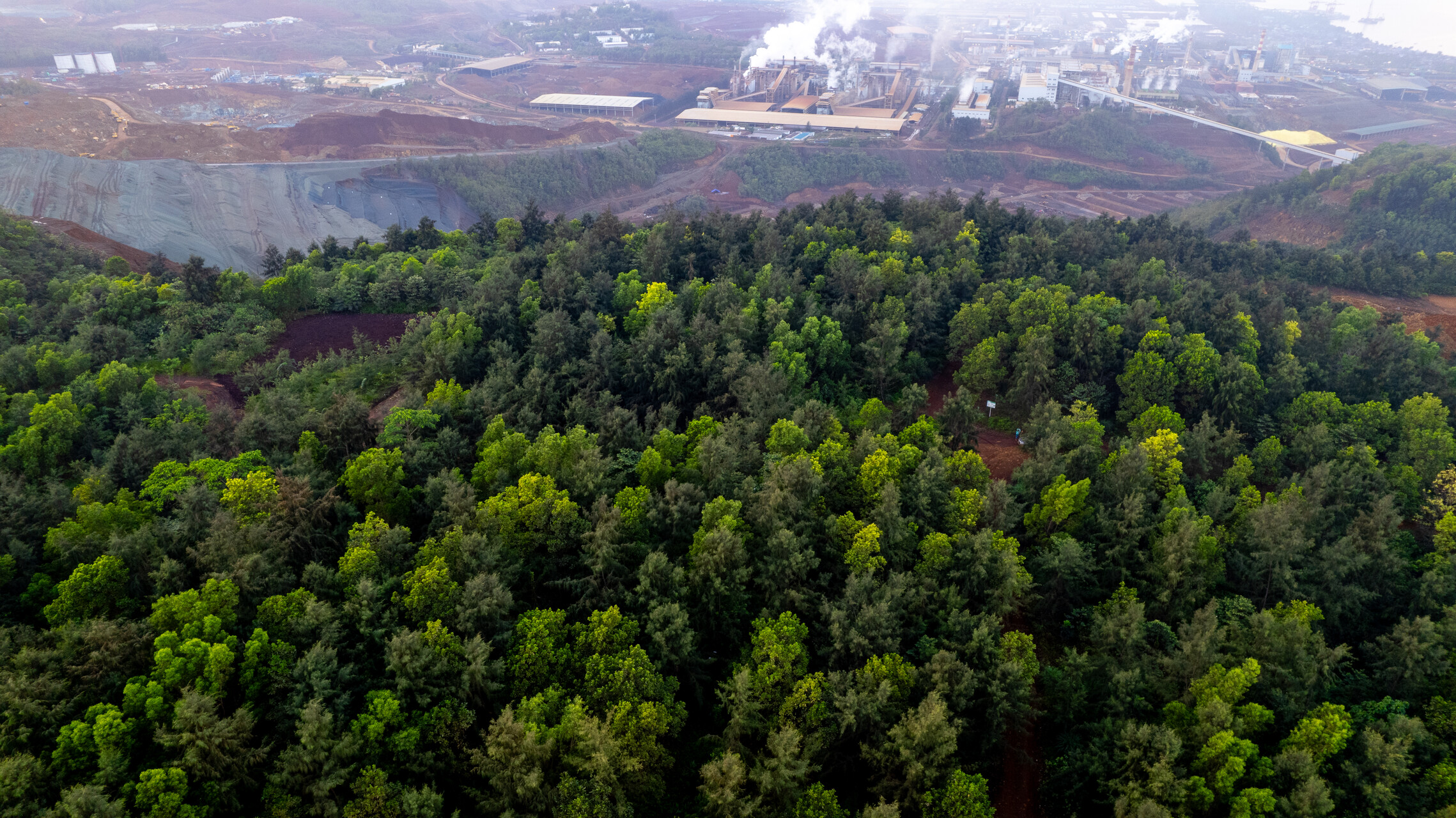
Since before mining operations began, Harita Nickel has been developing a detailed plan to restore the native ecosystem. As of 2024, we have successfully revegetated an area of 231.53 hectares.
In the revegetated area, we are propagating seedlings of local tree species, including nani, bintangur, rain, mersawa, gosale, and cashew. We also regularly maintain the revegetated area.
Moreover, on January 30, 2025, Harita Nickel revegetated and inaugurated the Loji Central Nursery, a modern 2.8-hectare nursery with a capacity of up to 400,000 tree seedlings per year. These seedlings are used to expedite the reclamation process and support ecosystem recovery in areas surrounding the mine.
Harita Nickel is committed to continually reclaiming ex-mining land and monitoring the progress of the reclamation area to ensure it continues to provide a healthy habitat for the flora and fauna of Obi!