

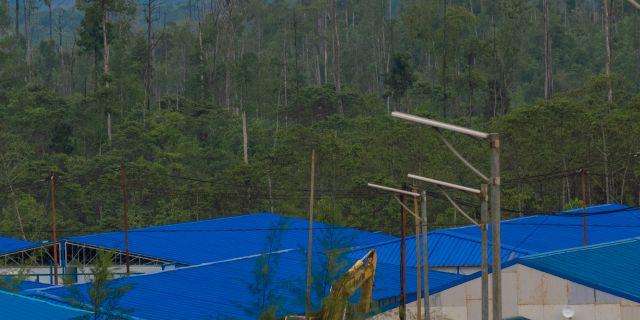

As a material used in battery manufacturing, nickel is a crucial mineral in the global energy transition towards a low-emission economy. At the same time, nickel mining activities can contribute to emissions and potentially affect biodiversity in the areas surrounding operations. To strengthen the management of these risks, Harita Nickel, as a responsible and integrated nickel mining and processing company, has adopted Landscape Level Nature Risk Assessment (LNRA) in its operational practices.
LNRA is an environmental assessment method that helps companies identify and manage biodiversity risks comprehensively, not only limited to operational areas, but also covering surrounding ecosystems. Through the implementation of LNRA, conservation efforts can be planned more holistically.
This approach is the focus of a study conducted by the Harita Nickel Sustainability team regarding the implementation of LNRA within the company. The result of the research titled “Integrating Biodiversity in Mining: From Conceptual to Operational” was published as a proceedings article in the International Conference on Sustainable Energy (ICoSE) 2025 in Atlantis Highlights in Sustainable Development (Atlantis Press).
Harita Nickel’s Sustainability Manager, as well as the research team leader, Klaus Oberbauer, explained that this study examined internal understanding of LNRA implementation through a qualitative approach. “We conducted semi-structured interviews with nine Harita Nickel employees who were selected based on their direct involvement in the implementation of LNRA in operational activities,” he said.
The interview data were analyzed using a grounded theory approach, through initial coding to identify patterns, followed by determining the main themes and grouping the data into conceptual categories.
The results of the study show that Harita Nickel employees across levels and functions understand the application of LNRA as a framework that influences internal planning and collaboration in biodiversity management. The study also highlights areas for improvement so that the implementation of LNRA at the operational level can be further integrated into daily practices.
“The main findings show a strong understanding of the importance of LNRA implementation across various functions and levels within the company. LNRA is perceived as a strategic tool to help companies understand biodiversity risks comprehensively,” Klaus explained.
In its implementation, challenges at the operational level are addressed through continuous education and training, as well as structured and regular discussions between relevant departments, as part of efforts to strengthen the application of LNRA in daily operational practices.
Harita Nickel's commitment to biodiversity conservation does not stop at policies and implementation plans alone. This commitment needs to be tested, evaluated, and accounted for openly. On that basis, the company conducted an LNRA implementation study to document its performance, which was then published through an international scientific forum as a form of transparency and accountability.