No two waves arrive the same way. One day the sea is calm; the next, stronger currents reshape the shoreline. Sediment shifts, coastlines evolve, and estuaries continuously respond to nature's rhythms. Along the coast of Obi Island, such changes are not exceptions—they are part of everyday life.
That is why protecting the coastline is never a one-off undertaking. It requires continuous monitoring, evaluation and improvement to keep pace with an environment that is constantly changing.
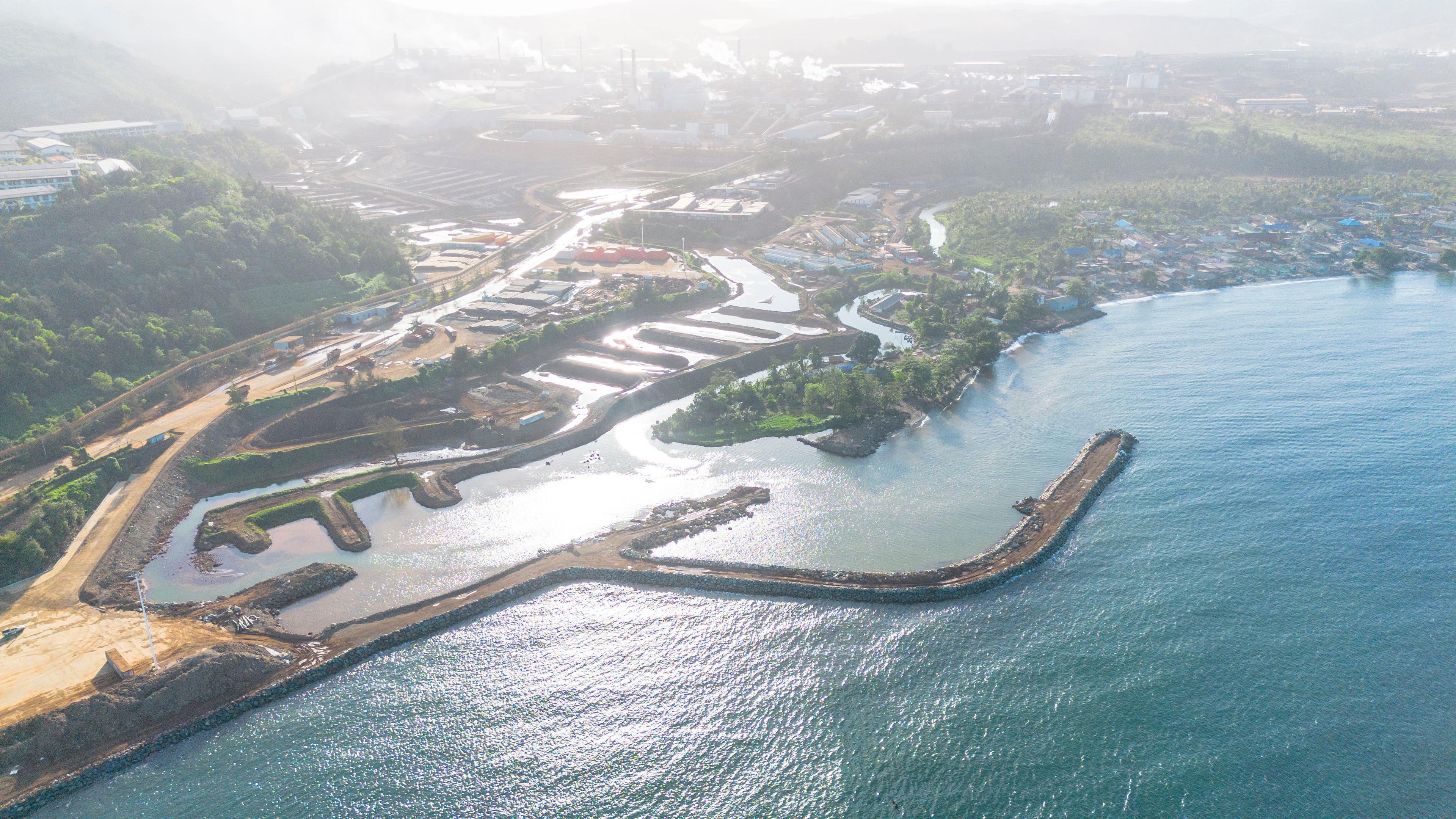
This adaptive environmental management approach underpins Harita Nickel's enhancement of the breakwater system along the Kawasi coastline in 2026. Rather than starting from scratch, the project builds on structures constructed in 2022–2023, refining their design based on years of environmental monitoring and evaluation.
A breakwater is designed to dissipate wave energy before it reaches the shoreline. In Kawasi, it also forms part of an integrated environmental management system connected to the Todoku Canal. The structure helps reduce the direct intrusion of seawater during high tides while supporting water flow management and sediment control in the estuary.
Harita Nickel Environmental Monitoring Supervisor Rifki Surya Nugraha explained that sedimentation in estuarine areas is a natural process. The company's focus, he said, is not to eliminate it, but to manage it in a way that protects both the surrounding environment and community activities.
"The breakwater enables us to carry out routine maintenance of the waterway, ensuring that the navigation route used by local residents remains accessible," Rifki said.
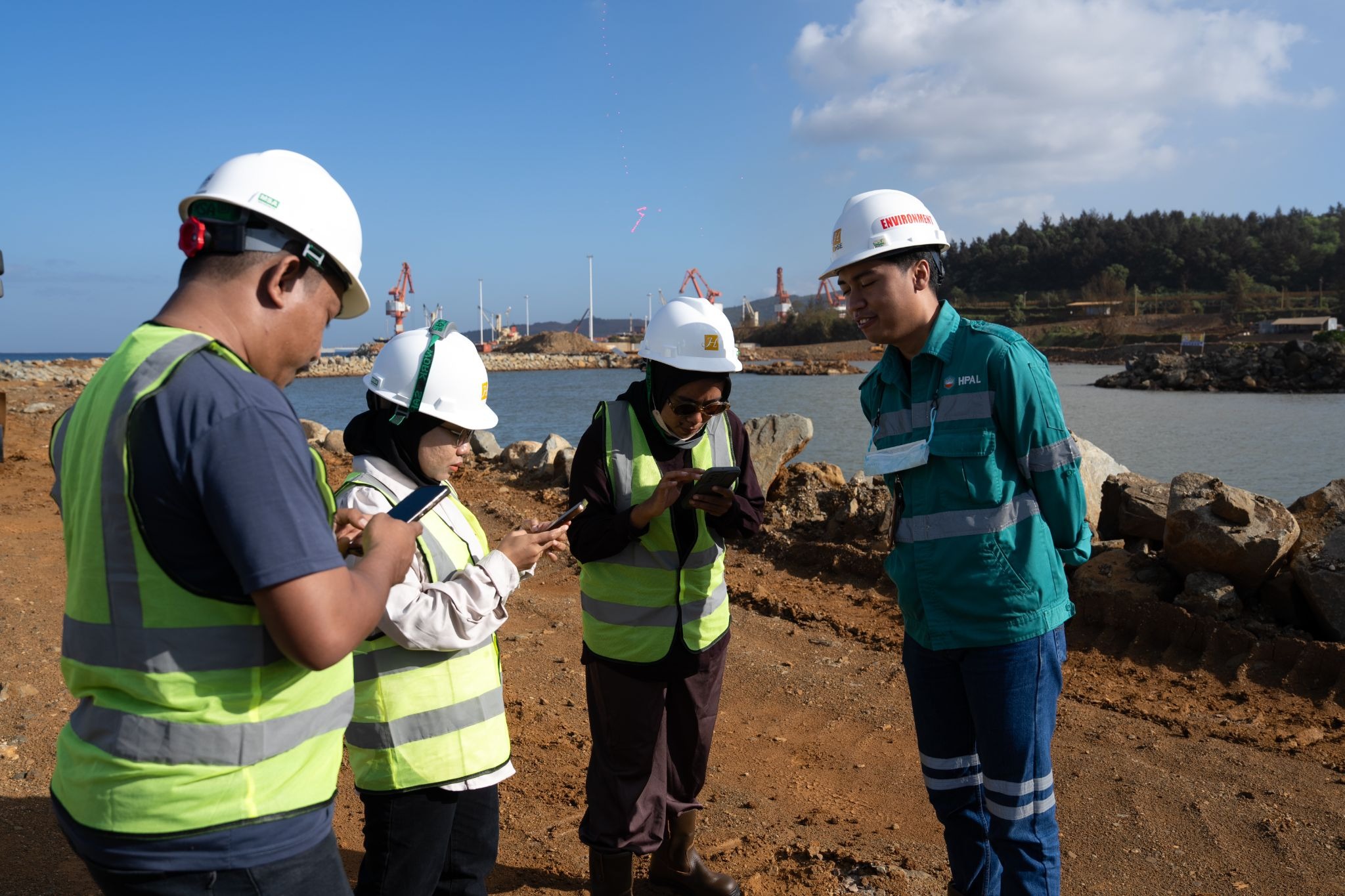
Explanation by Rifky Surya Nugraha regarding the function of a breakwater.
The benefits are also recognised by the local community. Hamja Lewer, a community leader from Kawasi Village, recalled that the Todoku Canal was once too narrow for boats to pass through comfortably, particularly during periods of heavy rainfall. Widening and dredging the canal, together with the construction of the breakwater, are expected to improve water flow while maintaining access for community transportation.
What makes this project noteworthy is that the latest breakwater is the result of an ongoing learning process. Data collected through environmental monitoring of waves, coastal erosion and sedimentation has been used to refine the design, enabling the coastal protection system to better respond to changing natural conditions.
The approach is consistent with the view of Candra Wirawan Arief, a researcher at the Center of Environment and Sustainability Science, Padjadjaran University. According to him, every human activity has the potential to affect the environment. What matters most is not whether risks exist, but how they are monitored, mitigated, evaluated and continuously improved over time.
For Harita Nickel, a breakwater is more than a line of rocks shielding the shore from the sea. It represents an ongoing process of learning—observing how nature changes, assessing what has been achieved, and refining the next course of action.
Because protecting the coastline does not end when construction is completed. On Obi Island, every wave offers a new lesson, and with each lesson comes another opportunity to strengthen the protection of its coastal environment.