With the rapid growth of the nickel industry and the increasing global demand for green energy, responsible practices are key to ensuring that Indonesia's nickel industry can compete with global standards. Responsible mining activities not only cover exploration and mineral extraction, but also include processing and post-mining rehabilitation.
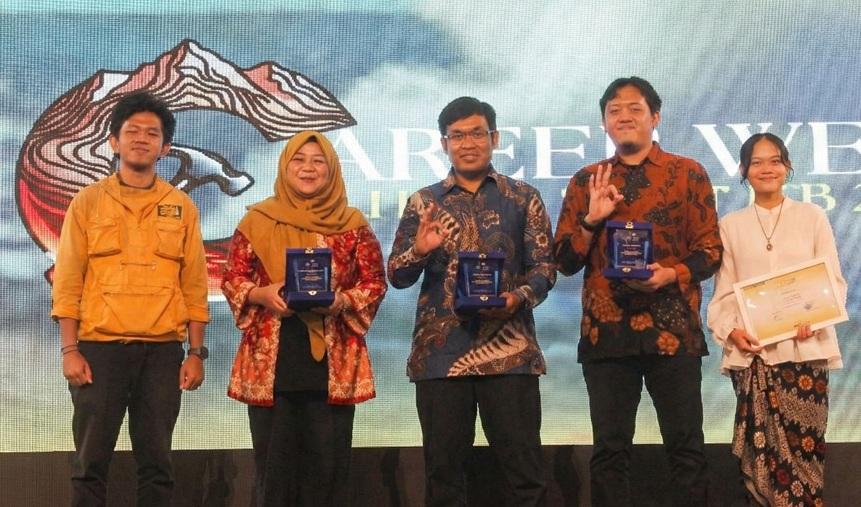
Harita Nickel's commitment to responsible practices was reaffirmed at the 2025 Career Week event organized by the Geological Engineering Student Association (HMTG) and the Indonesian Economic Geology Society (MGEI) at the Bandung Institute of Technology (ITB).
In a panel discussion themed “Strategic Pathways of Nickel Exploration Processing in Supporting Downstream Industry and the Green Energy Transition,” Harita Nickel’s Hydrology and Geotechnical Superintendent, Ichsan Alfan, outlined the company’s responsible mining journey, which covers the entire process.
“The mining journey begins with systematic exploration. We map the geology, conduct core drilling, ensure data quality, and then build an accurate resource model. This stage is then followed by mine planning and phased mining, where ore is extracted according to technical design,” said Ichsan.
He continued that for Harita Nickel, the mining process does not stop at production. After the ore is processed, the management of processing byproducts and post-mining land rehabilitation to restore the ecosystem is also an important part of the mining cycle.
“For us, responsibility does not stop at production. After the ore is extracted, we are responsible for managing all processing byproducts and land reclamation in the post-mining area. Rehabilitation and revegetation are part of the mining cycle that has been planned since the beginning of operations to restore the natural ecosystem,” added Ichsan.
The company's responsible practices also extend to the management of processing byproducts. From the nickel ore processing carried out by the company, there are two types of processing byproducts: tailings from the processing using High Pressure Acid Leaching (HPAL) technology, and nickel slag, byproducts from using Rotary Kiln Electric Furnace (RKEF) technology.
To manage tailings, Harita Nickel implements the Dry Stack Tailings Facility (DSTF) method, which involves drying and storing them in a controlled facility to minimize potential environmental impacts. Meanwhile, slag is managed by reusing it as a construction material and soil conditioner to support post-mining land revegetation activities. The utilization and management of processing byproducts have been planned from the outset as part of the mining cycle and implemented systematically as a responsible practice.
This journey shows that responsible practices do not only occur at the production site, but are built holistically from the outset through a series of scientific, technical, and environmental decisions from the exploration stage to the final land restoration.
Through practices that include sustainable exploration, planned mining, management of processing byproducts, and post-mining rehabilitation, Harita Nickel contributes to supporting responsible national nickel downstreaming, while creating long-term value for the environment and communities around its operational areas.