When rain falls across the mining area, runoff does not simply flow directly into nearby rivers or water bodies. A dedicated water management system is in place to collect runoff, allow sediments to settle, treat the water, and verify its quality before it is released back into the environment.
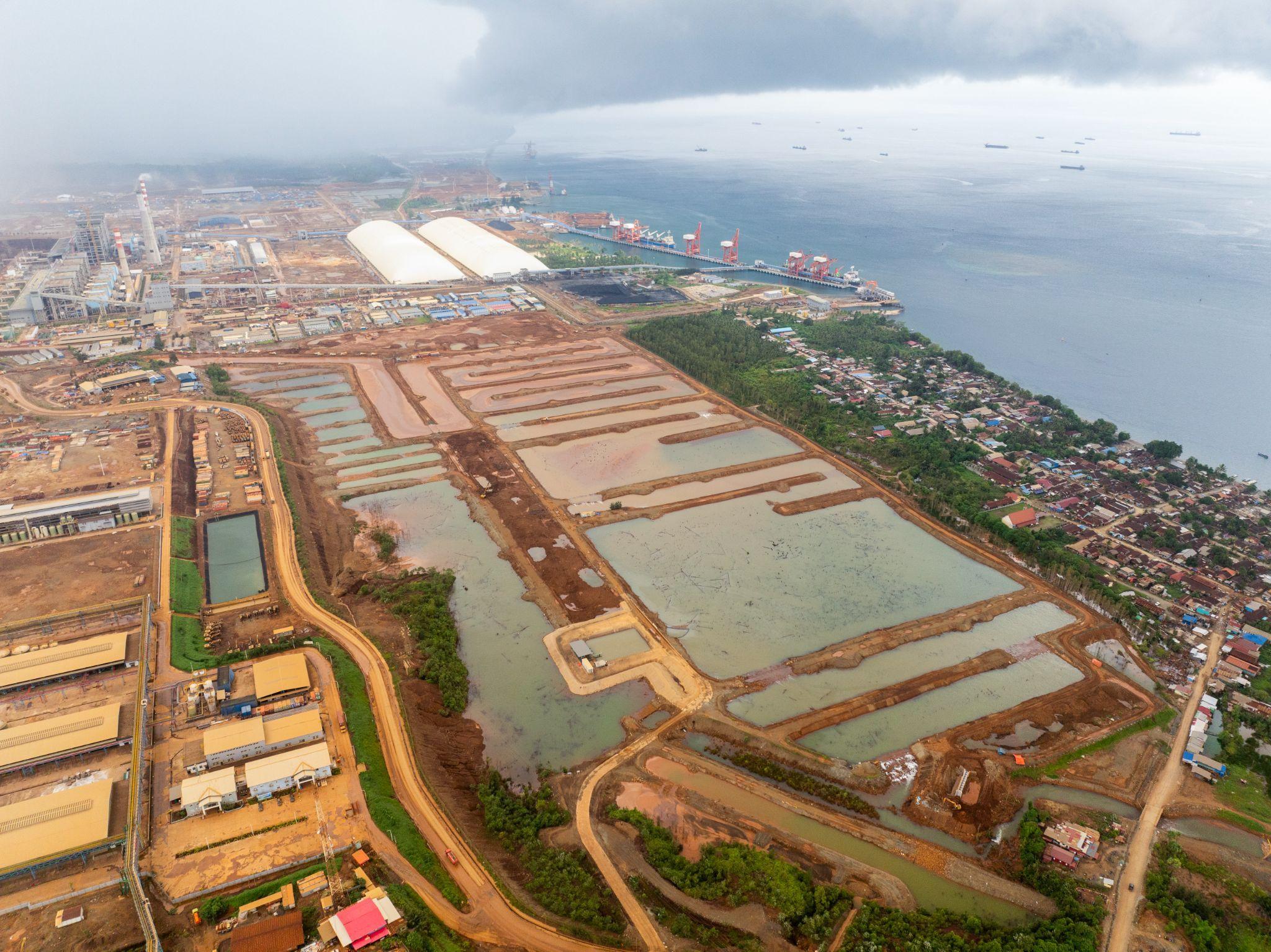
This system is an integral part of water management across Harita Nickel’s operational areas. Currently, there are 52 sediment ponds, comprising 35 ponds within the Mining Business Permit (IUP) area of PT Trimegah Bangun Persada (TBP) and 17 ponds within the IUP area of PT Gane Permai Sentosa (GPS).
One of the largest is Tuguraci (TG) 2, covering approximately 43 hectares with a capacity of up to 1.2 million cubic meters. Runoff from upstream areas is collected here, giving sediment sufficient time to settle naturally before the water undergoes further treatment at the Wastewater Treatment Plant (WWTP).
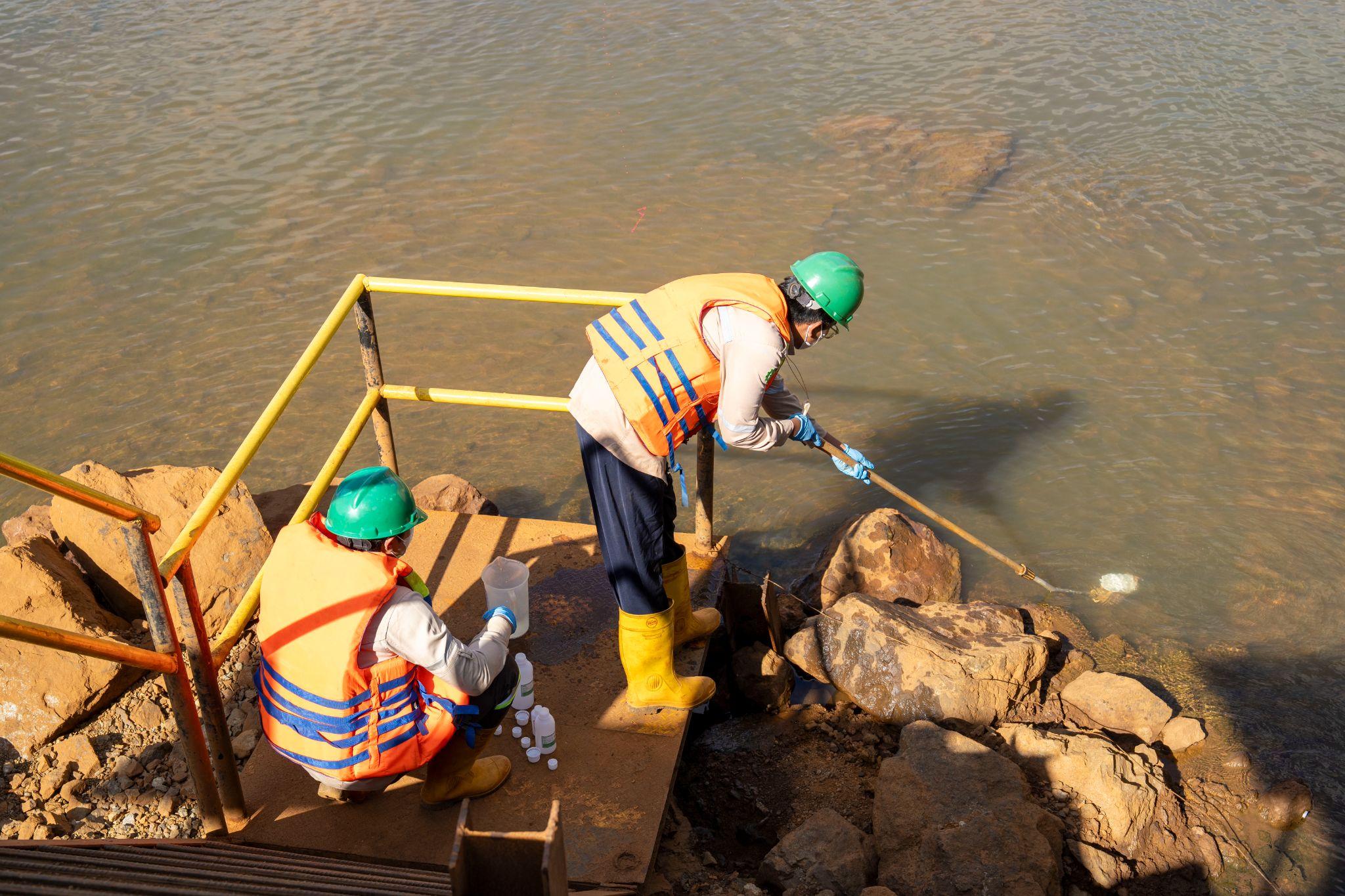
Harita Nickel Hydrology Strategic Compliance Engineer Aryadhani Arihta Sembiring Milala explained that the sedimentation process relies on gravity.
“Runoff is channelled through a series of ponds, allowing sediment particles sufficient settling time. Once the water has undergone sedimentation and treatment and meets the applicable water quality standards, it can then be discharged into the receiving water body,” Arya said.
Some of the treated water is also reused to support operational needs as part of efforts to improve water-use efficiency.
Water quality monitoring continues beyond the sediment ponds. Monitoring is carried out daily through automated systems and manual measurements, covering parameters such as pH, Total Suspended Solids (TSS), water clarity, and flow rate.
Harita Nickel also operates SPARING (Sistem Pemantauan Air Limbah Secara Terus-Menerus dan Dalam Jaringan), Indonesia’s continuous online wastewater monitoring system, which is connected to the Ministry of Environment. Through the system, TSS, flow rate, and pH data are automatically transmitted to the ministry’s server every two minutes.
In the field, the team collects water samples every two hours to verify monitoring results. All testing is conducted by an environmental laboratory accredited to ISO/IEC 17025.
If monitoring results indicate that any parameter could exceed the applicable water quality standards, the discharge gate is temporarily closed. The water remains within the system until the treatment process is optimized and its quality meets the required standards.
Harita Nickel Geotechnical & Hydrology Superintendent Reza Febri said water management also plays an important role in controlling erosion and preventing sediment from reaching nearby rivers and water bodies.
“The goal is not only to meet water quality standards, but also to prevent sediment from being carried into rivers or nearby water bodies. That is why water management has been incorporated into every stage of our mining operations from the outset,” Reza said.
Ultimately, mine water management is about more than simply moving water from one place to another. It is an integrated system of infrastructure, technology, monitoring, and teamwork designed to ensure that water is properly managed before it is released back into the environment.[]