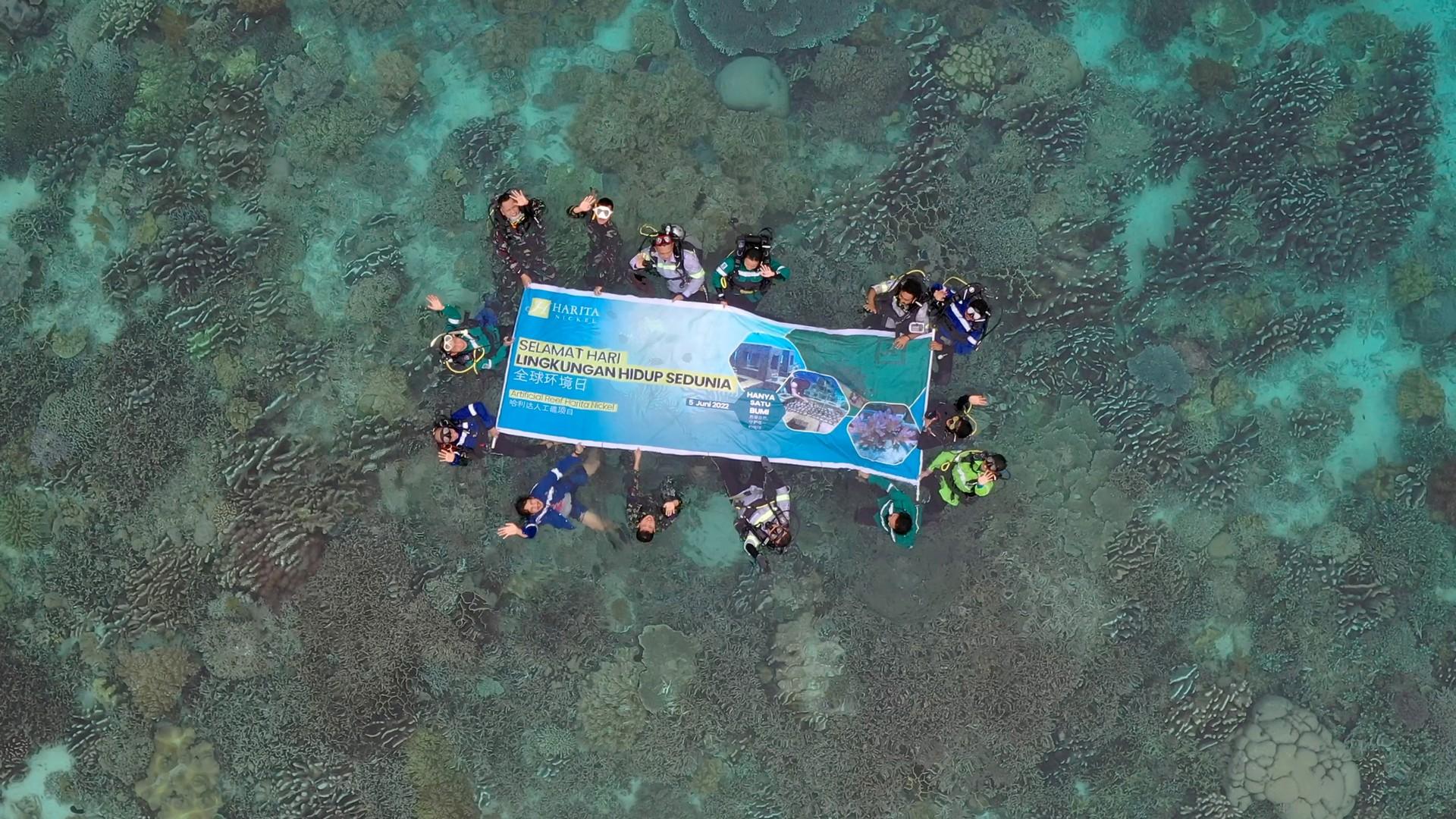
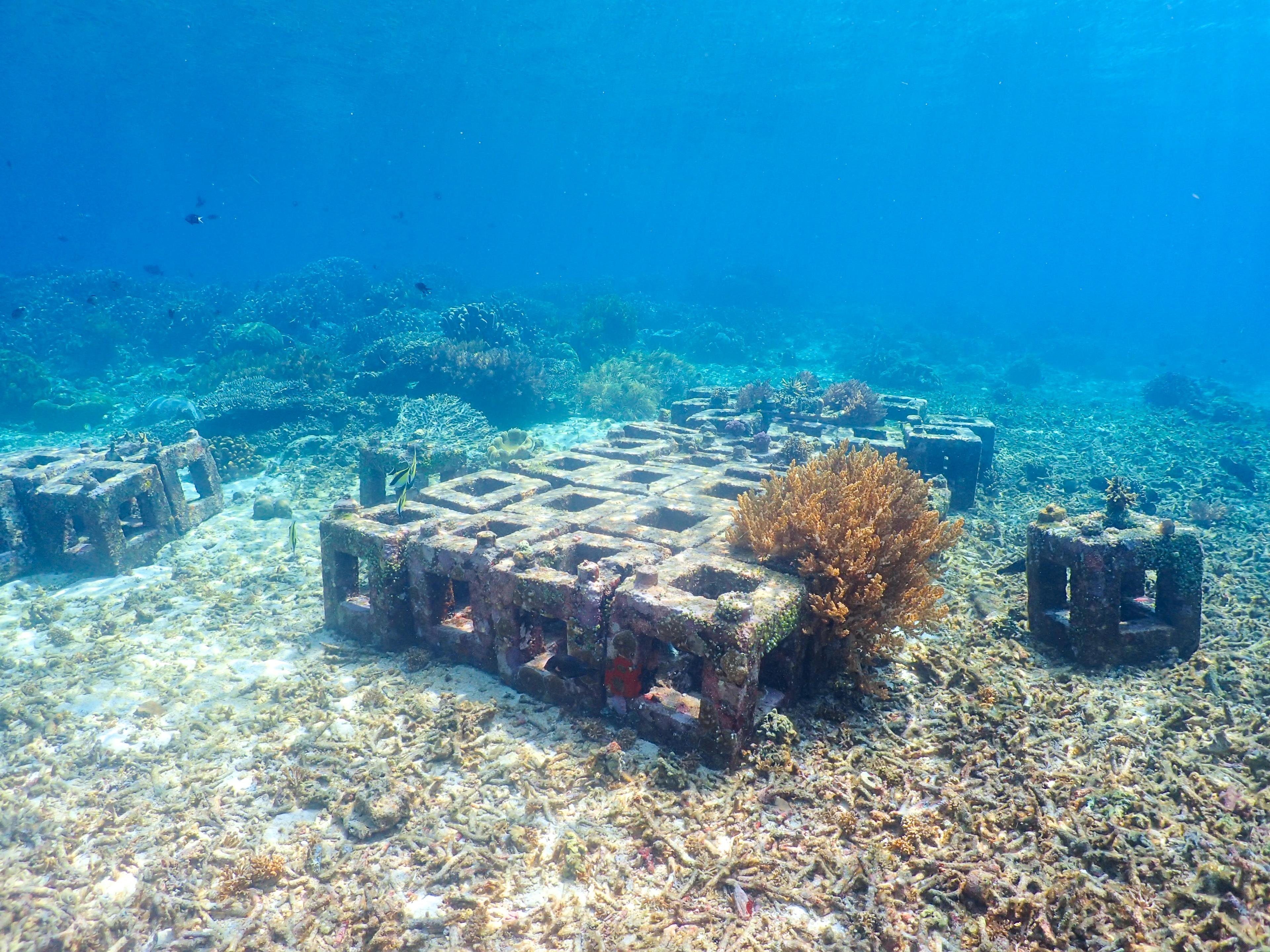
As a home for marine biodiversity, coral reefs are an important part of the ecosystem around Obi Island, South Halmahera. Recognizing this, Harita Nickel presents the reefcube innovation, an artificial, modular-shaped coral reef made from nickel processing byproducts in the form of fly ash and nickel slag.
Interestingly, despite being made from nickel processing by-products, nickel slag is considered non-B3 waste or non-hazardous and toxic material. Based on characteristic tests, this material is not toxic, making it safe to use in the sea. Instead, the minerals in it support the growth of corals and marine life.
Multi-year study by Harita Nickel’s Environment Team published in the DEPIK journal from Syiah Kuala University Aceh with the title "Coral Recruitment Enhancement in Fish Shelter Media Composed of Fly Ash and Nickel Slag on Obi Island, South Halmahera", shows that reefcube is effective for coral recruitment process, which is the process of coral larvae (planula) attaching to a surface and grows into a new colony.
Windy Prayogo, Harita Nickel’s Environmental Marine Compliance Manager, explained that they have produced reefcubes since 2020, deployed 1,696 units, and continue to monitor their effectiveness. “We conduct regular monitoring to record the development of the reefcubes that we have placed, including natural coral growth,” he explained.
The results of a two-year observation showed that coral growth in reefcubes reached 2.4–12.9 centimeters, particularly in the genera Isopora and Pocillopora. Beyond coral growth, the reefcube also successfully attracted 128 species of reef fish and other marine animals, turning it into a lively artificial ecosystem.
The result of this study also shows that the reefcube produced with fly ash and nickel slag provides a strong foundation for the successful coral recruitment process, creating new habitats for marine biodiversity on Obi Island. When responsibly processed, the byproducts from nickel processing can positively impact the marine environment of Obi.
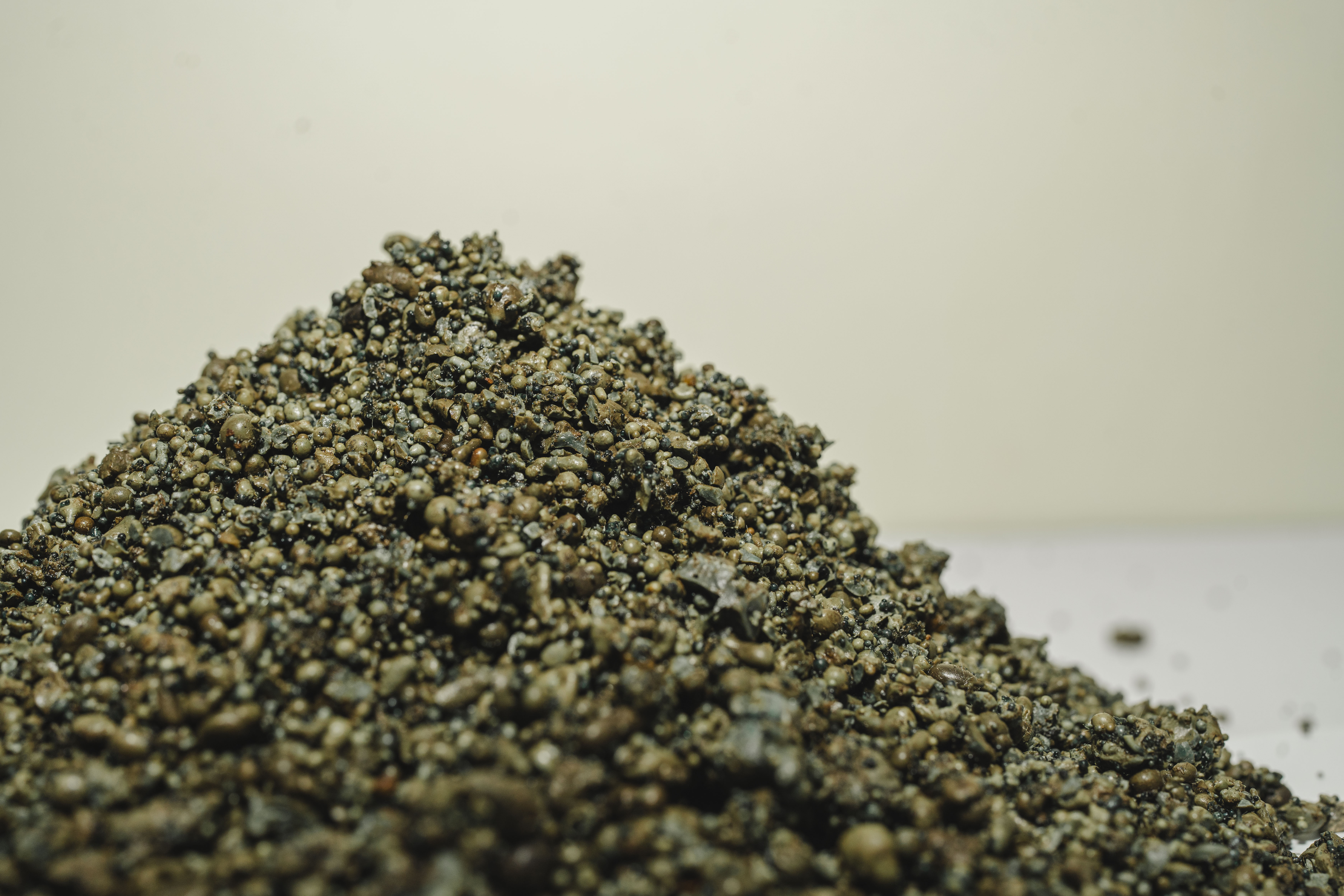
Nickel slag used as the main material for reefcube, Harita Nickel’s artificial coral reef innovation in the waters of Obi Island.
"Reefcube has proven to be effective as a coral recruitment medium because it is made from fly ash and nickel slag, which are rich in calcium, magnesium, and silica. When submerged, these minerals create ideal conditions for coral larvae to attach and grow," said Prasari Riski Hutami, Marine Monitoring Team Diver, Harita Nickel Environment Department.
More than a technical solution, the reefcube demonstrates that mining practices can work in synergy with marine conservation efforts. Nickel slag no longer ends up as waste material, but takes on a new role in supporting marine biodiversity, particularly on Obi Island. This initiative shows that nickel slag, when processed wisely, can become a new foundation for aquatic biodiversity. A testament to Harita Nickel’s commitment to sustainability.