

.jpg&w=3840&q=75)
The collaboration between Harita Nickel and the South Halmahera Regency Government (Halsel) in strengthening local food security has delivered positive results. The two parties held a large-scale rice harvest covering 12 hectares of paddy fields in Buton Village, Obi District, on Friday (23/1), with projections indicating a significant increase in productivity.
South Halmahera Regent Hasan Ali Bassam Kasuba, who attended and led the harvest, emphasized that this achievement disproves the long-held assumption that the Obi area is unsuitable for rice cultivation.
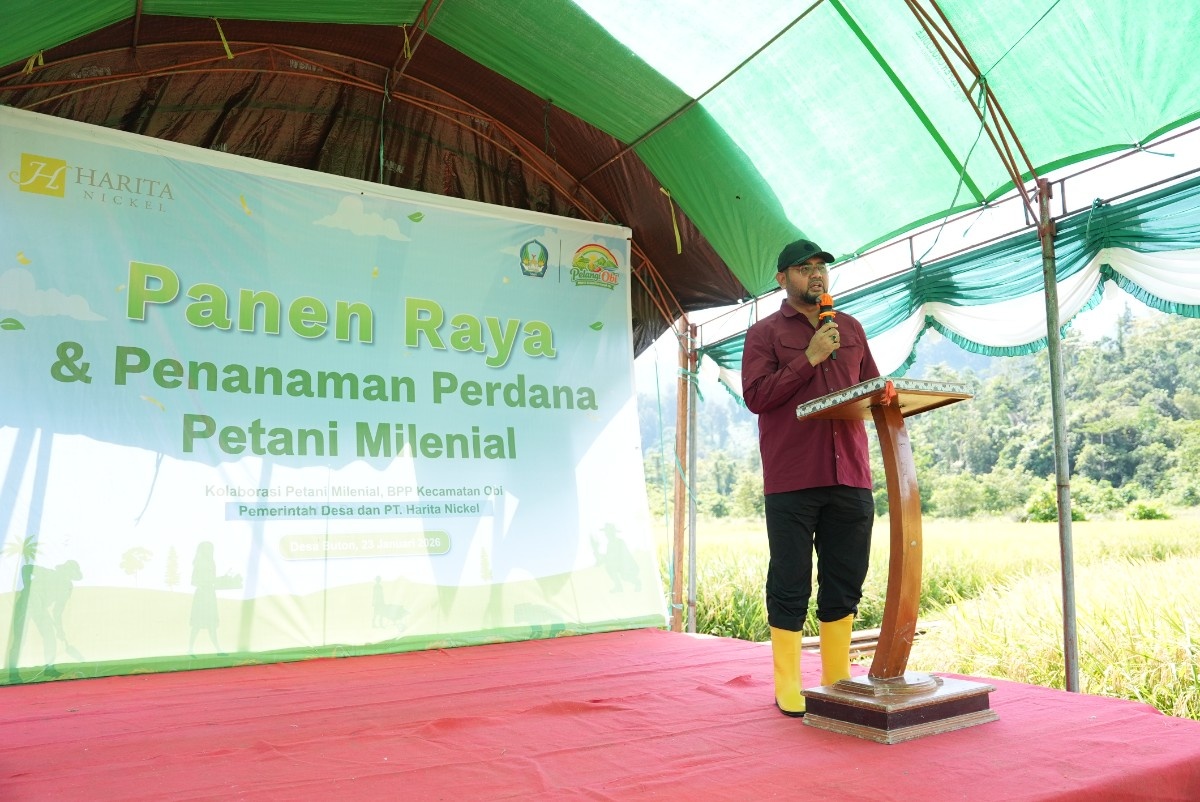
“What has long been associated with other regions has now been proven possible in Obi and is delivering tangible benefits. This demonstrates strong potential that contributes directly to the local economy,” Regent Bassam stated.
He stressed that synergy between the government, local communities, and the business sector is essential in providing infrastructure and farmer assistance. The regional government, he affirmed, remains committed to supporting the development of paddy farming through strengthening supporting infrastructure, providing agricultural facilities and equipment, and offering continuous assistance to farmers to improve productivity.
Sharp Increase in Productivity
Prior to the harvest, crop sampling (ubinan) was conducted by the Obi District Agricultural Extension Center (BPP) together with farmers and the Harita Nickel Community Development team. The results showed a productivity level of 8 tons per hectare.
Acting Head of the South Halmahera Agriculture Office, Suyatmi Aljogja, presented encouraging data on the yield increase. Based on information from farmers, production more than doubled compared to the previous planting season. She noted that the yield exceeded the national average, which typically stands at around 5 tons per hectare.
“The development potential remains very large, considering that Buton Village has up to 100 hectares of paddy fields that have not yet been optimally cultivated,” Suyatmi explained.
According to her, these achievements were made possible through collaboration with the company, adequate technical assistance, effective use of production inputs, and improvements in farmers’ capacity.
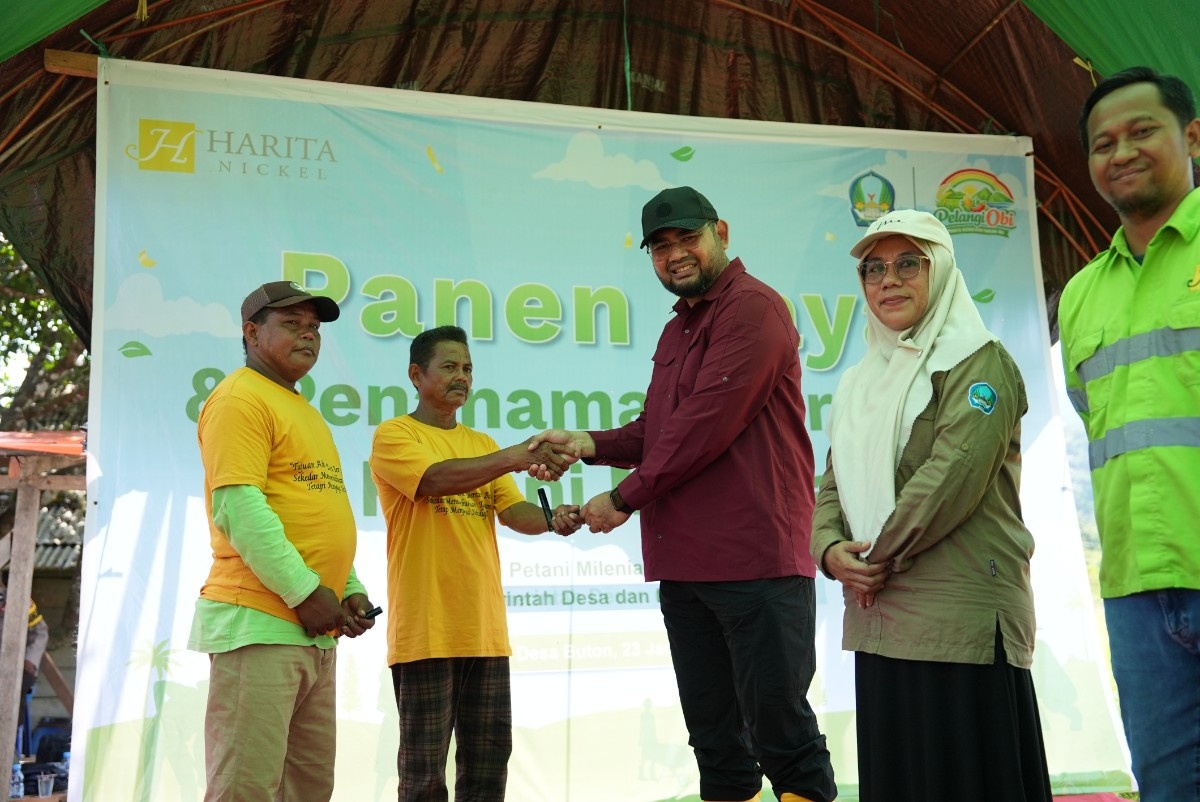
In addition, the South Halmahera Regency Government provided rice threshing machines to improve post-harvest efficiency.
Sustainable Agriculture
This increase in productivity was also supported by Harita Nickel through its Obi Food Security Center program (SENTANI). Harita Nickel’s Community Development Superintendent, Suryo Aji, explained that the program involves 28 active members from two farmer groups—Akemoriri and Batu Putih—along with the Obi Millennial Cooperative and the Buton Village Government.
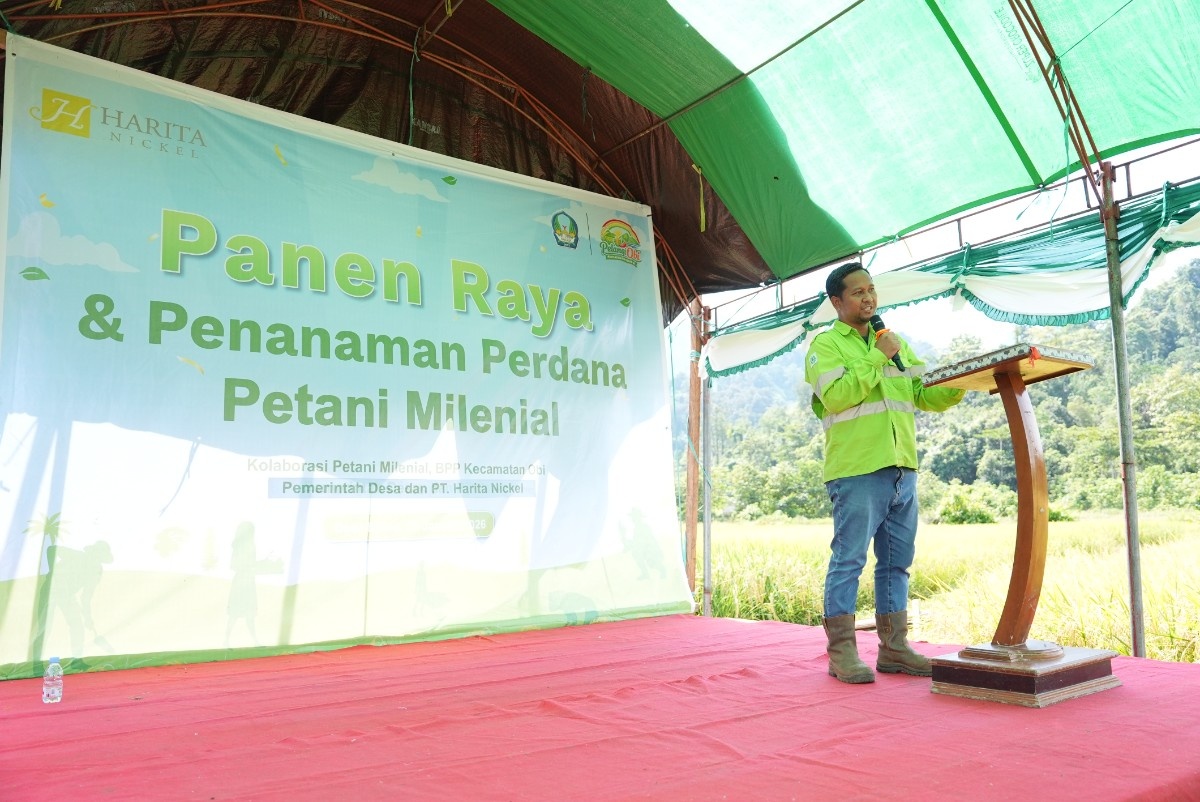
“This harvest is proof of the farmers’ perseverance and hard work. The establishment of the Millennial Farmer Group represents hope and regeneration, while the initial planting symbolizes the future of sustainable agriculture. We believe cross-sector collaboration will position agriculture as a driver of sustainable welfare,” he said.
As a strategic step to ensure sustainability, the Millennial Farmer Group was also officially inaugurated. A total of 17 young people from Buton, Jikotamo, and Akegula villages were appointed to become the driving force of farmer regeneration on Obi Island.
The harvest event concluded with a joint harvesting ceremony followed by the initial planting of paddy rice as a symbol of continuity for the next planting season. Through this cross-sector collaboration, Harita Nickel hopes that the agricultural sector in South Halmahera will continue to grow, contribute to regional food security, and improve community welfare.