Harita Nickel continues to advance its approach to managing processing residues (SHP) as part of its commitment to responsible operations. What was once focused primarily on meeting regulatory requirements has evolved into efforts to find ways to reuse and create value from materials generated during the production process.
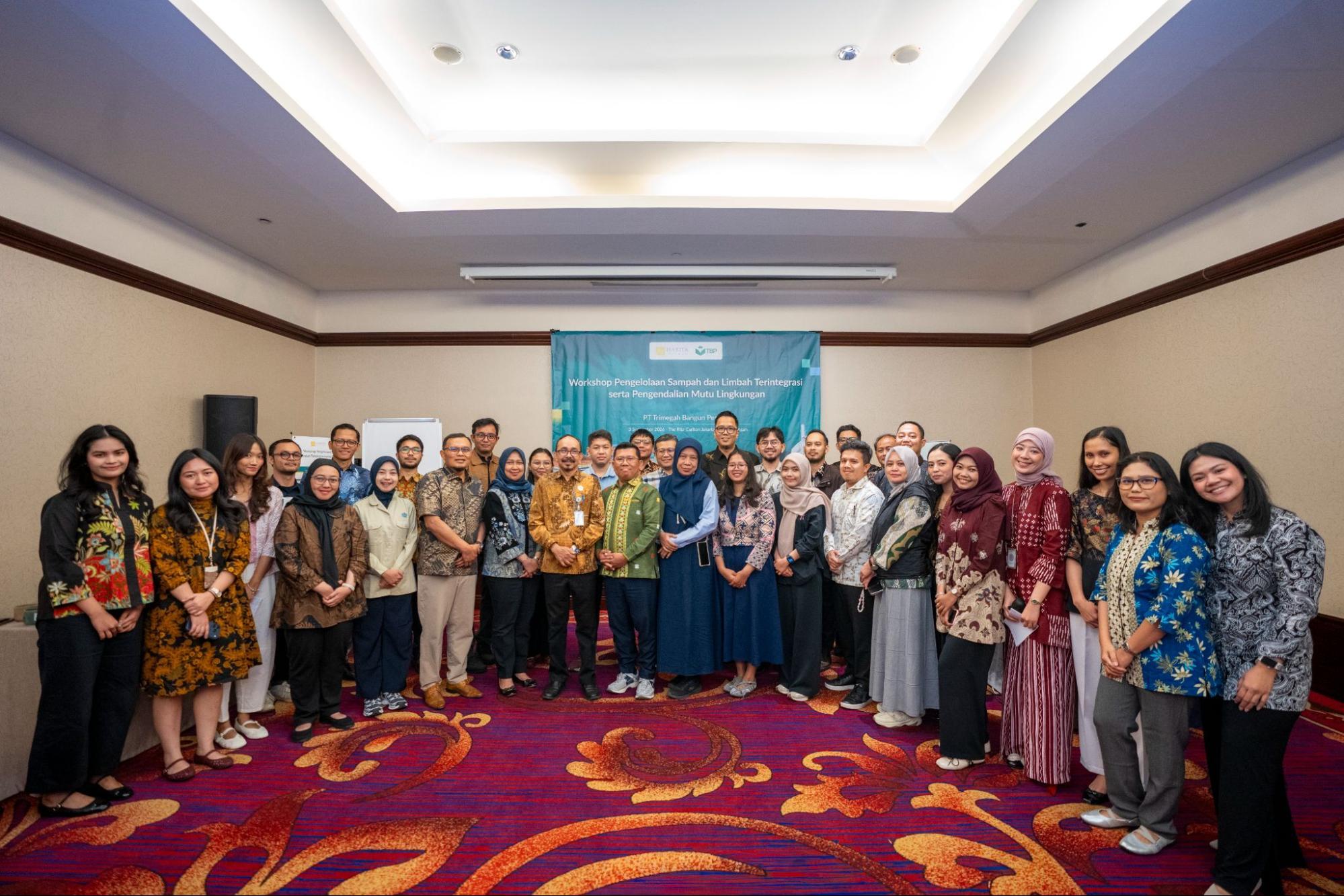
This was the key message conveyed at the *Integrated Waste and Residue Management and Environmental Quality Control Workshop*, held in Jakarta on Thursday, 3 September. The forum brought together Harita Nickel’s Health, Safety, and Environment (HSE) team and the Ministry of Environment / Environmental Control Agency (KLH/BPLH). During the event, Harita Nickel presented its circular economy innovations and received direct input and guidance from the regulator.
The workshop opened with remarks from Tonny H. Gultom, HSE Director of Harita Nickel, who emphasized that processing residue management is a strategic priority for the company. He also highlighted Harita Nickel’s continued efforts to encourage innovation in finding ways to reuse these materials.
Representing KLH, Drs. Sayid Muhadhar, M.Si., Director of Pollution and Environmental Damage Control in Coastal and Marine Areas at KLH/BPLH, stressed the importance of open communication between the government and industry. He also highlighted the role of appropriate environmental quality monitoring instruments, including SPARING, in ensuring that environmental performance data can be measured and properly accounted for.
The forum continued with opening remarks from Iwan Syahroni, Executive Vice President of Environmental Affairs at Harita. “Processing residue management on Obi Island is carried out based on circular economy principles. Through this approach, materials that were previously considered unusable can be put to use and given economic value,” Iwan explained.
Circular Innovations in Processing Residue Utilization
The session then moved to a presentation on Harita Nickel’s integrated processing residue management roadmap. Since 2017, the company has established controlled disposal systems in former mining areas. It subsequently expanded its dry tailings storage facilities while gradually developing innovations to shift its focus from controlled storage toward material utilization.
“Our plant capacity continues to grow, which also means an increase in the volume of processing residues. That is why we continue to innovate, so that former mining areas and the materials generated from our operations can regain their value,” said Aladin Sianipar, Vice President of Sustainable Product Development at Harita Nickel.
One type of processing residue that has found potential for reuse is *dry tailings*. Based on characterization tests, this material, generated from the processing of nickel limonite through the high-pressure acid leaching (HPAL) method, contains more than 43% iron.
This composition opens up two potential applications currently being developed by the company. The first is the production of *iron oxide pigment* for the ceramics industry, which has already been applied in paving block products used in operational areas. The second is the production of ferrous sulfate (FeSO₄), which can support water treatment processes. Its potential application is also supported by laboratory testing conducted in collaboration with the Bandung Institute of Technology (ITB).
Circular economy principles have also been applied to nickel slag products. Generated through the Rotary Kiln-Electric Furnace (RKEF) process, this material has been utilized by the company as a raw material for concrete bricks and as a soil amendment in reclamation activities, in accordance with SNI 9420:2025.
A similar approach is applied to domestic waste management. In the company’s operational areas on Obi Island, two Integrated Waste Processing Facilities (TPST) are in operation. Harita Nickel uses these facilities to implement technology-based waste sorting through magnetic separation, composting, odor control, and leachate treatment. These efforts focus on recovering and reusing materials, including converting waste into organic fertilizer and materials for fuel mixtures or construction products.
From Waste Management to Resource Management
Amsor, S.T., Director of Hazardous and Non-Hazardous Waste Management at KLH, also attended the forum. Responding to Harita Nickel’s presentation, he explained that waste is generated by all industrial activities, not only mining. However, industrial players must continue to take environmental considerations into account. This is where the circular economy can play a role.
“We appreciate the innovations presented by Harita Nickel. They represent one of the efforts to address existing challenges. The Minister’s direction is to ensure that every business activity generates benefits, with a portion of those benefits also allocated to the environment. Efforts like these are positive and should continue, while maintaining due consideration for environmental aspects,” Amsor explained.
Harita Nickel continues to support stronger collaboration between industry and regulators. This discussion forum reflects the company’s efforts to ensure that every initiative to utilize processing residues remains aligned with applicable regulations and can be implemented responsibly, with a continued commitment to improvement.