A recent study by researchers from the Faculty of Fisheries and Marine Sciences of Khairun University (FPIK Unkhair) Ternate shows that fishing activities on Obi Island continue to be active amid the development of the nickel mining and processing industry. This finding illustrates that coastal communities in Obi continue to adapt and be empowered in the midst of regional economic changes.
This research was conducted in June 2025, through observations and interviews with communities in Kawasi and Soligi Villages, two coastal villages that are in the operational circle of Harita Nickel.
Prof. Dr. Janib Achmad, S.Pi., M.Sc., Professor of FPIK Unkhair, said that observation is important to understand the socio-economic aspects of the community. "Fisheries are an important natural resource in South Halmahera, North Maluku. This observation is important to know the current condition of the company's presence on fisheries resources and coastal communities," he said.
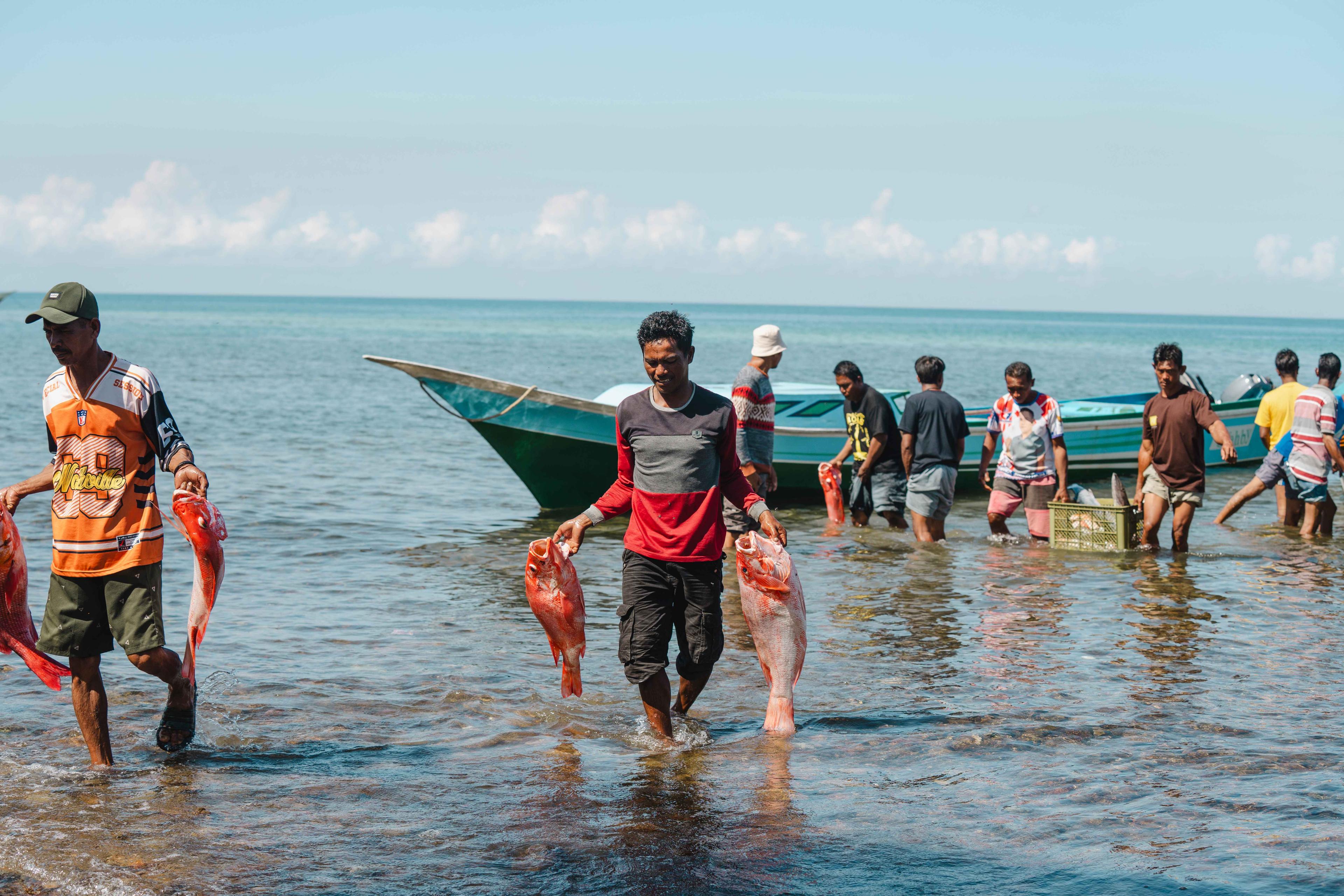
The observation revealed that fishing activities in Kawasi and Soligi are still active. In Soligi Village, for example, there is a Tunas Mandiri fishermen group consisting of 16 full-time fishermen who are active at sea every day, and 59 part-time fishermen. Meanwhile, in Kawasi, there are 23 people who make a living as fishermen. The fish catch is quite abundant, with a variety of species.
"What fishermen in Soligi Village catch are tuna and skipjack. Tuna can reach 40 kg per trip, and skipjack up to 7 kg per trip. While in Kawasi Village, the types of fish caught are mackerel, caesio, trevally, grouper, and cockatoo," explained Dr. Nebuchadnezzar Akbar, S.Pi., M.Si., Researcher at the Faculty of Fisheries and Marine Sciences, Unkhair.
One of the fishermen from Soligi Village, Musahati, confirmed that fishing activities have continued and even become more supported since the collaboration with the company began.
“Before the company came, we sold our fish wherever we could. But often, part of our catch was rejected and sent back. After the company arrives, whenever there is a request — even for a small amount, like one ton or 200 kilograms — they take everything and pay immediately. So, automatically, our economy has improved,” said Musahati in an interview with academics from Unkhair and Telapak.
In addition to fishing activities, the observation of the research team from Unkhair also found Harita Nickel's initiative through Salam Kawasi, which succeeded in increasing the income of local fishermen by developing freshwater fish farming.
"Communities that previously relied solely on marine products have now also begun to develop freshwater fish farming businesses with tilapia and catfish. The results are sold to the company and the surrounding community," said Prof. Janib.
The observation of the Unkhair research team reported that coastal communities on Obi Island continue to adapt in the midst of industrial growth. Fishermen remain active at sea, while freshwater fish farming is an additional source of income.
The result of this observation confirms Harita Nickel's commitment to building open and constructive relationships with surrounding communities. The company also ensures that industrial progress can go hand in hand with improving the welfare of coastal communities.
For reference, the Marine and Coastal Environmental Study conducted by researchers from the Faculty of Fisheries and Marine Science, Khairun University Ternate, can be accessed through this link.