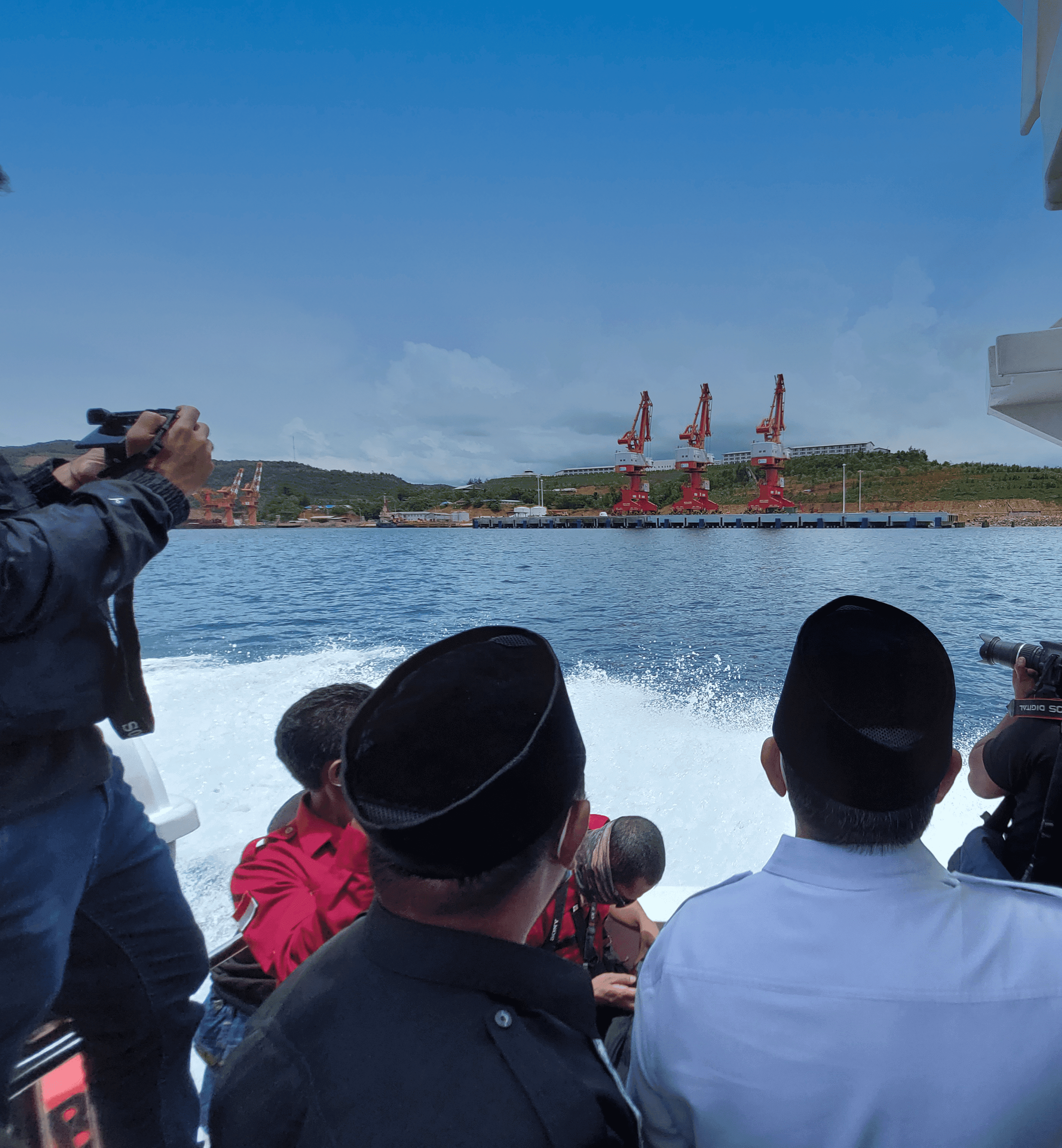

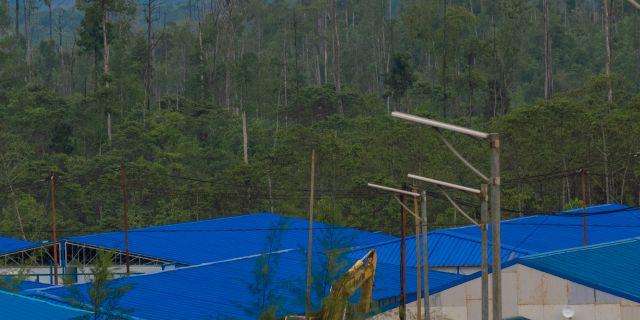
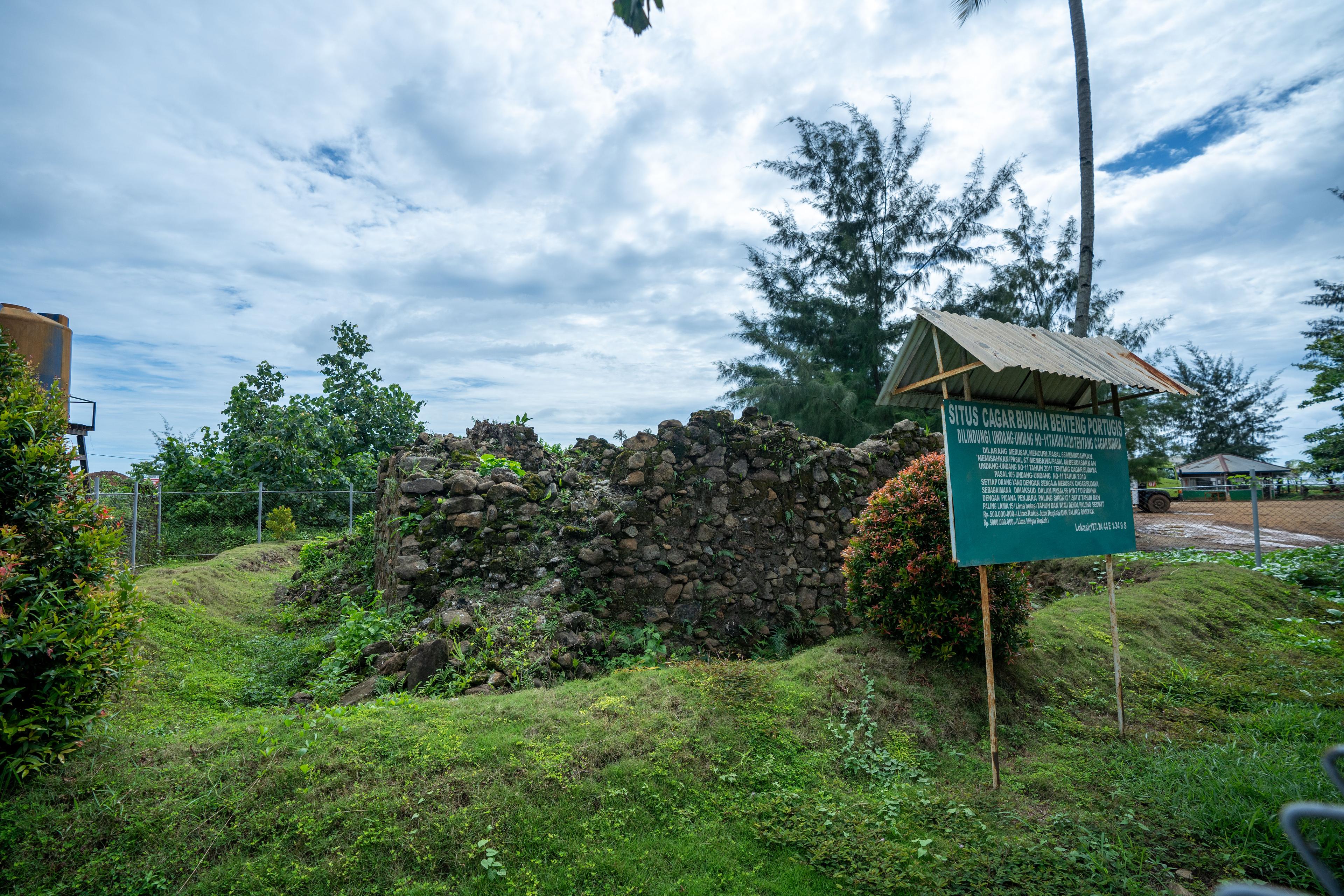
In the midst of the bustling, magnificent nickel downstream industry in the Obi Industrial Zone, a historical legacy continues to be maintained with full commitment by Harita Nickel: Fort De Brill. This ancient fort is not just a monument; it's tangible proof of how history can be preserved amidst the wave of modernization.
According to the Atlas of Mutual Heritage, Fort De Brill—also known as Fort Den Brill—is a Dutch colonial relic built in 1674. Initially made of wood, the fort was fortified with stone in 1678. Its purpose was to protect the spice monopoly from other European traders, who at the time were under the rule of the Bacan Sultanate.
According to W. Ph Coolhas (1923), the fort's location on the west coast of Obi Island allowed the Dutch East India Company (VOC) to monitor every ship sailing towards the Banda Sea. From there, they could observe movements from the directions of Bacan, Sula, and the Banda Sea. At that time, spices like cloves and nutmeg were worth more than gold—commodities that were the primary reason European nations competed to control the Nusantara archipelago.
From Neglected Ruin to Protected Heritage
The condition of Benteng De Brill when it was rediscovered in 2007 was concerning. According to the Jakarta Architectural Documentation Center (PDA), only a few sides of the fort remained intact. The rest were just stone ruins.
Tonny Gultom, Director of Health, Safety, and Environment (HSE) at Harita Nickel, echoed this sentiment. He revealed that when the company first started mining activities on Obi Island in 2010, they stumbled upon the Benteng De Brill. They then sought information about the fort's history from local residents.
"When it was first found, it was covered in thick, overgrown trees, and the local residents were afraid to go there. But we cleared the area and maintained it by adding a protective fence," Tonny said.
After the discovery, Fort De Brill was then registered as a Cultural Heritage site under the management of the Cultural Preservation Agency (BPK) Region XXI of North Maluku Province.
"Fort De Brill has been recorded in our database as a preserved cultural heritage site since 2010. In its implementation, we collaborate with Harita Nickel as the area's manager," explained Irwansyah, a Cultural Attendant at BPK XXI.
Preserving Heritage Amidst Future Projects
Today, Fort De Brill remains in its original location on the west coast of Obi Island. Its position is strategic, situated near the port that serves as the main entry point for Harita Nickel's employees and guests. The employees call it the South Coast (Pansel) Port, given its location on the south side of Kawasi beach, where Harita Nickel's site is located.
Instead of viewing the ancient fort as an obstacle, Harita Nickel saw it as an opportunity to demonstrate its commitment to social and cultural responsibility. The company not only cleaned up the fort's area but also built a protective fence and installed information signs to educate both the public and its employees about the site's historical value.
Although only ruins remain, the fort is estimated to have dimensions of 6x6 square meters with a height of about 3 meters. Inside, a recess believed to have been a cannon emplacement is still visible. Benteng De Brill is one of over 40 forts scattered across North Maluku, but its preservation within an industrial zone makes it truly special.
"Preserving cultural heritage sites within this mining area is part of our commitment to conducting responsible and sustainable mining operations," Tonny asserted.
Harita Nickel’s actions show that economic development and the preservation of historical sites can go hand in hand. Amid Indonesia's great ambition to become a key player in the global nickel industry, the story of Benteng De Brill on Obi Island is a crucial reminder that future progress must stand on the foundations of the civilizations that have shaped the nation's identity.