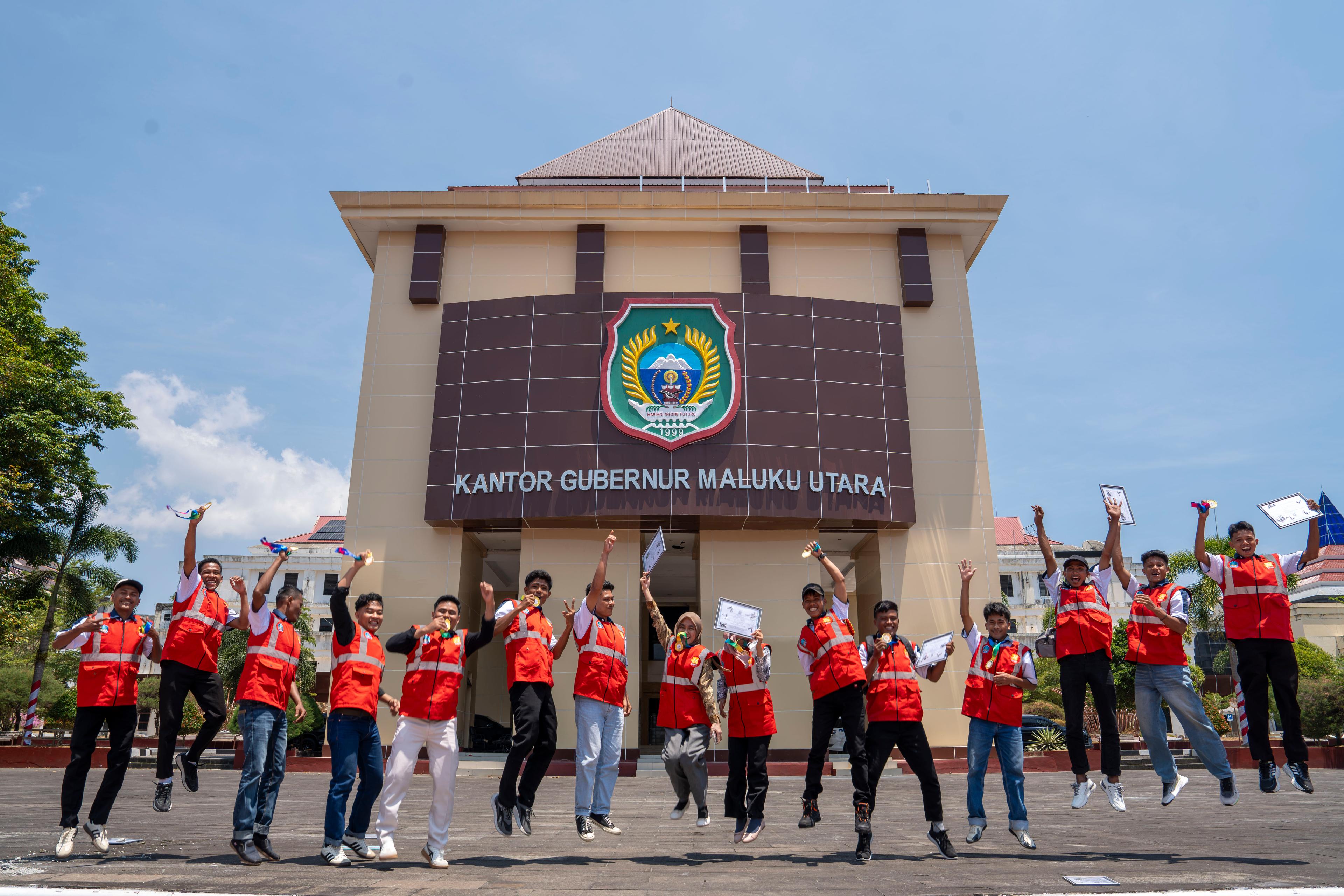
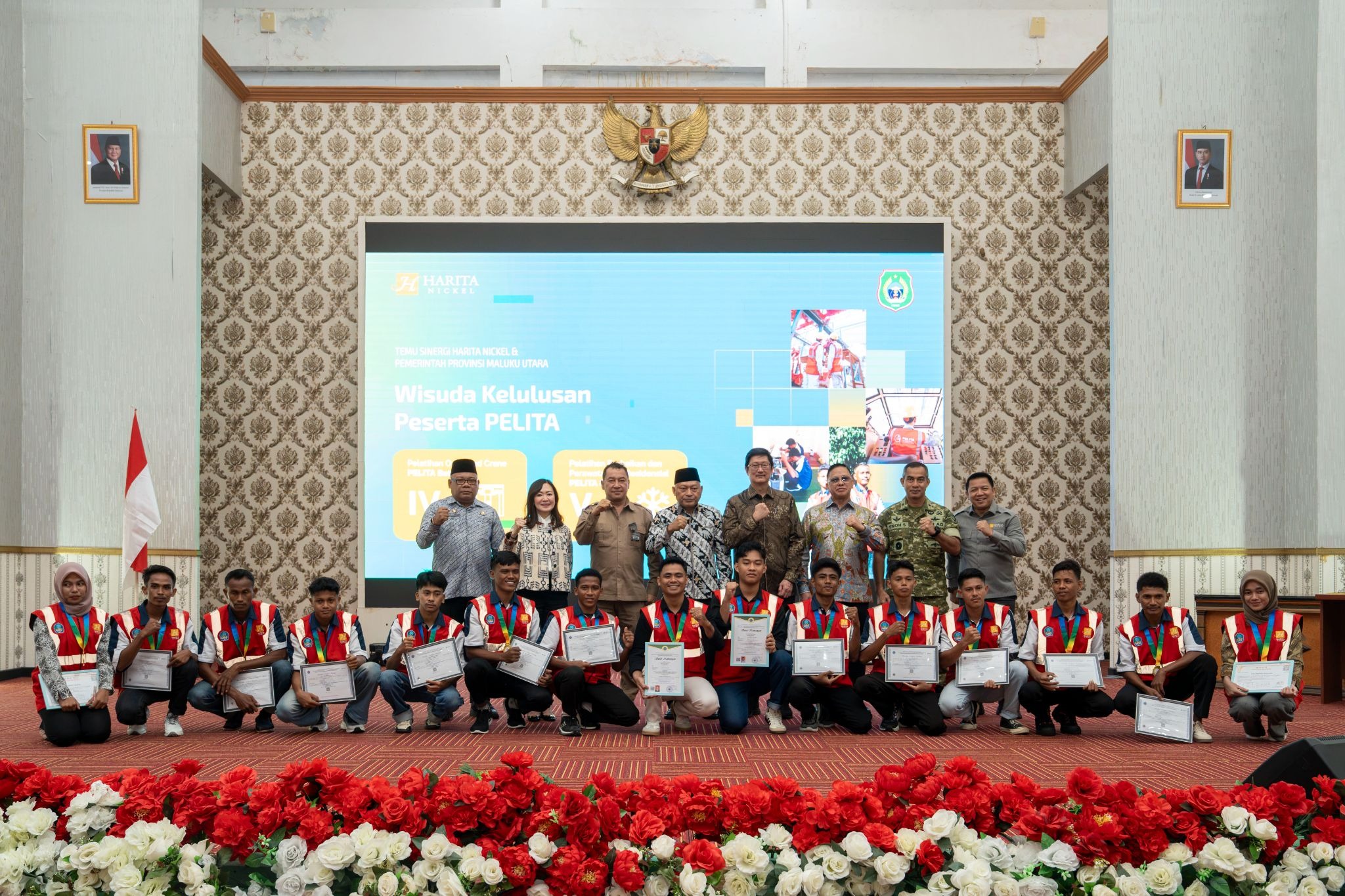
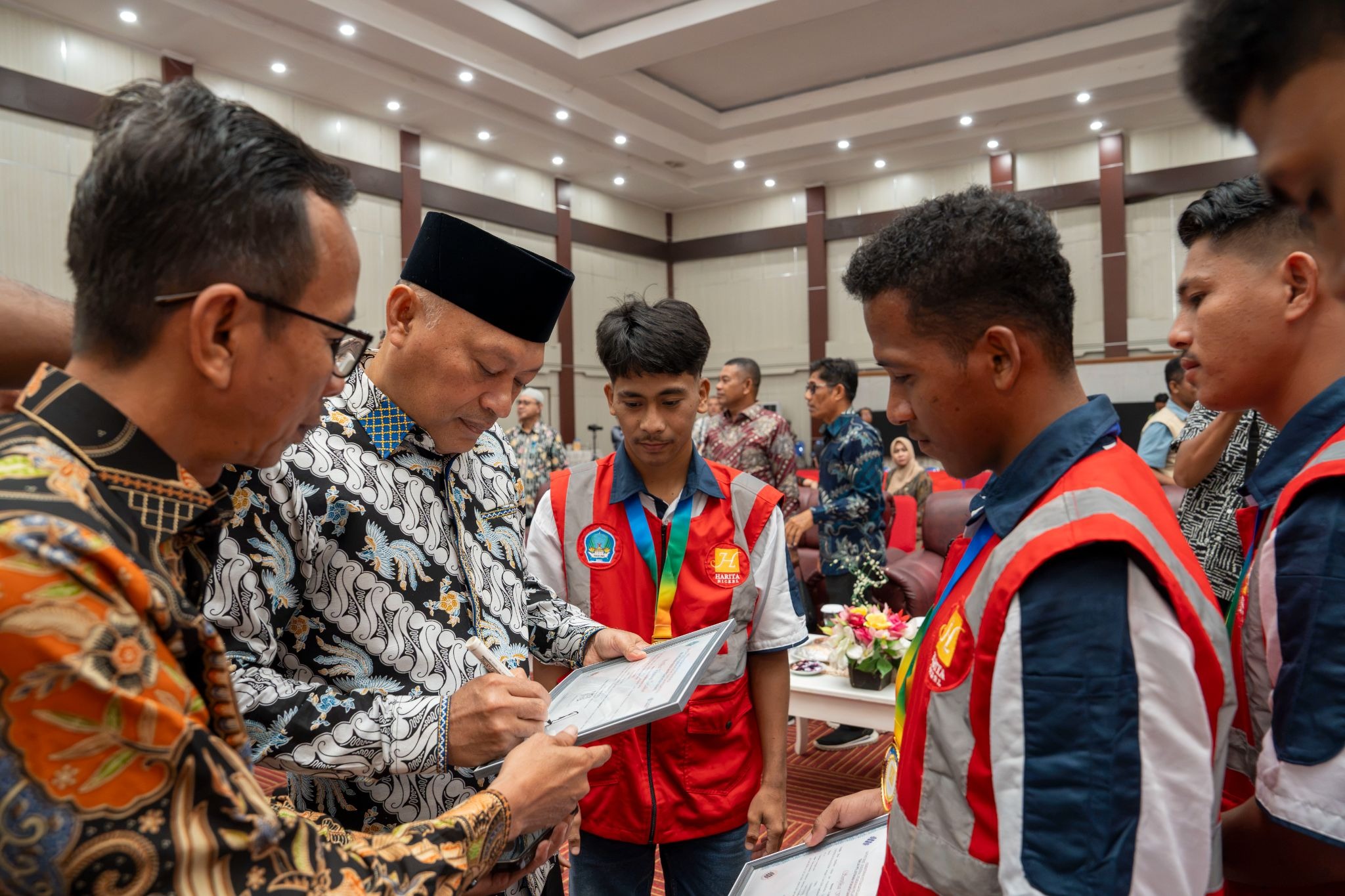
On a morning in late August 2026, dozens of young people from Obi Island stood before representatives of the North Maluku Provincial Government. They had just completed the fourth and fifth batches of the Youth Skills Training Program (Program Pelatihan Keterampilan Pemuda or PELITA).
For them, the PELITA graduation ceremony marked the completion of one stage of their journey. For some, however, the training was also the beginning of new opportunities to enter the workforce, develop their skills, and build a future in their home region.
Through its fifth batch, PELITA has graduated 122 young people from communities surrounding Harita Nickel’s operational areas. The program offers various vocational competencies, ranging from heavy equipment operation and Mandarin language training to air conditioning (AC) maintenance.
The initiative has also received recognition from the North Maluku Provincial Government. Attending the graduation ceremony, North Maluku Vice Governor Sarbin Sehe highlighted the importance of partnerships between the government and private sector in strengthening the capabilities of the younger generation and creating more opportunities for local communities.
Opening Pathways to Employment
For 19-year-old La Difan Rifai, PELITA provided an opportunity to acquire new skills. Having previously helped his parents with farming, he now has the qualifications to work as a residential AC technician after completing training in collaboration with the Ternate Vocational Training and Productivity Center (BPVP Ternate).
“After completing this training, I hope to work for a company or start my own AC repair business,” he said.
A different journey comes from Syifa Sahbila, a graduate of PELITA’s third batch. After choosing Mandarin language training, she is now undertaking an internship in the HRGA Department of PT Halmahera Jaya Feronikel. She applies the skills she acquired to translate documents and support communication in the field.
“I am happy to have this opportunity because I can put what I have learned into practice,” she said.
The experiences of La Difan and Syifa demonstrate how vocational training can create meaningful opportunities to continue learning, gain practical experience, and explore career prospects.
Beyond Job Readiness
Talent development also continues through the Mechanic Talent Pool Program (MTPP), which provides local youth with opportunities to acquire mechanical skills before entering the workforce.
Mulyono La Hasima is one of its participants. After completing five months of mechanical training, he and nine other young people from Obi were given the opportunity to work as mechanics at PT Trimegah Bangun Persada, Harita Nickel’s mining operating unit.
Today, Mulyono works as an Auto Electrician, handling the electrical systems of heavy equipment.
“Skills are important. When we have the right expertise, we have more opportunities to work and grow,” he said.
Development opportunities do not end once individuals secure employment. Several local workers who previously held non-skilled positions and participated in heavy equipment operator training through PELITA’s first and second batches have since had the opportunity to work as certified operators.
Similar opportunities for career advancement are also available through the Green Development Program (GDP) at PT Halmahera Persada Lygend. The program provides upskilling opportunities for non-skilled employees, strengthening their technical competencies and understanding of workplace safety. Some participants have subsequently progressed in their careers, advancing to positions such as foreman and supervisor.
These journeys demonstrate that developing local talent goes beyond preparing individuals to enter the workforce. It requires a continuous process of strengthening competencies, expanding experience, and creating opportunities for long-term growth.
The future of Obi’s industry is not built solely through investment and production facilities. Behind this growth are people who need to be equipped with the right skills, given opportunities, and continuously supported in their development.
When young people in Obi have the skills and opportunities to grow, they become more than just part of the industry. They become an integral part of their region’s future.
This Articles can be Acessed to Magazine Bentala Halmahera Q3