
Modern mining is no longer focused solely on production. Increasingly, the industry is placing greater emphasis on managing natural resources in a more measured, efficient, and responsible manner. One approach gaining importance is the use of exploration data to support more effective and sustainable mine planning.
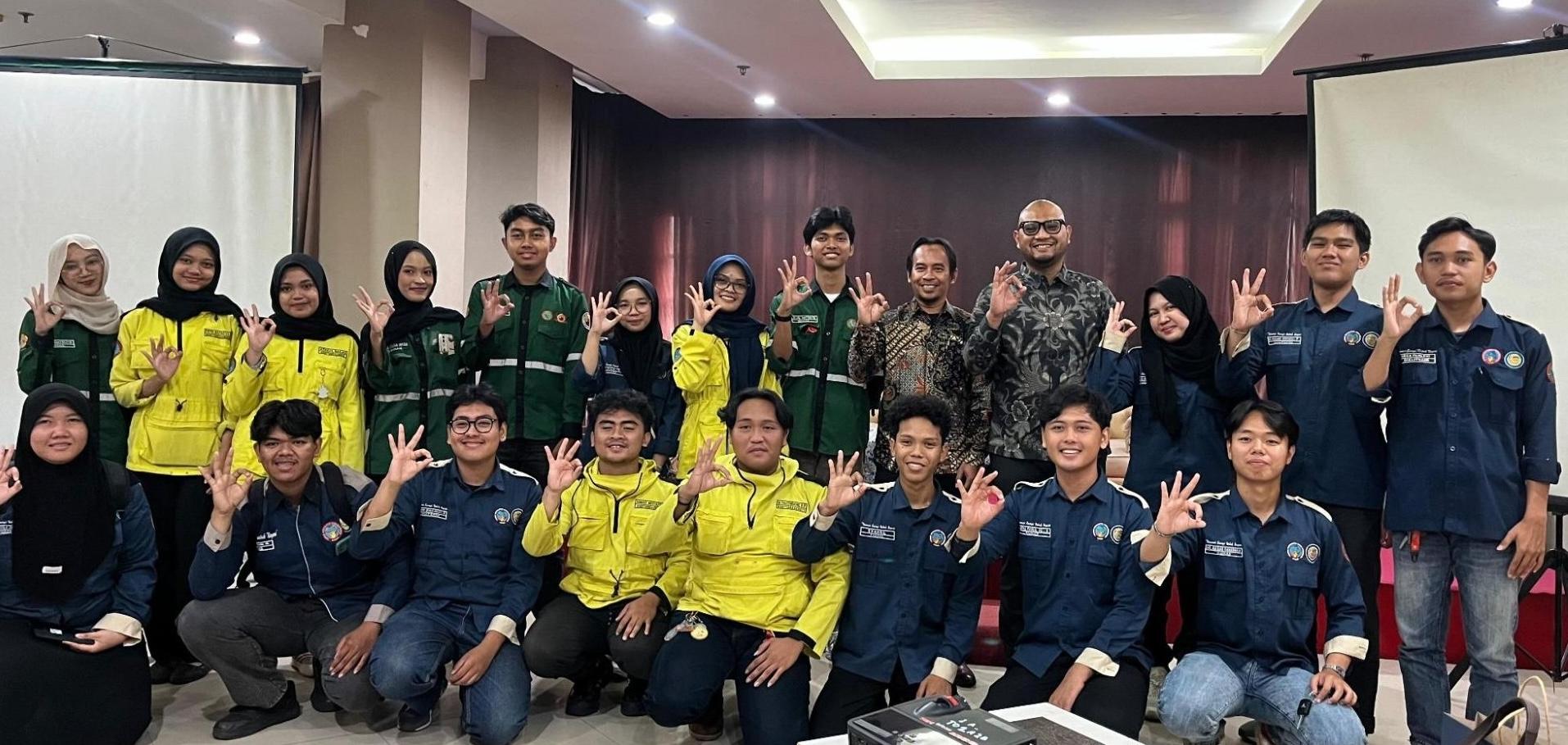
Harita Nickel shared this perspective during a Geology Seminar with students from the Geological Engineering Department of Sriwijaya University (Unsri) in Palembang on Friday, May 16. Through the seminar, titled “Exploration and Geological Characteristics of Laterite Nickel Deposits to Support Sustainable Resource Utilization,” students gained insights into how geological data is utilized throughout the exploration and mine planning process.
The seminar featured presentations from Harita Nickel’s Brownfield Strategic Mine Planning Manager, M. Branata Wibowo, and Exploration & Technical Assessment Superintendent, Tri Hadi Nugraha.
During his presentation, Tri explained that exploration serves as a critical foundation for mining operations, as it determines the quality of information used in mineral resource management.
According to him, the exploration process begins with mapping areas that show potential for laterite nickel deposits, followed by soil and rock sampling to assess the characteristics, thickness, and distribution of nickel ore beneath the surface.
“Effective exploration planning enables companies to gain a more accurate understanding of mineral resource characteristics, allowing mining operations to be managed more efficiently and systematically,” said Tri.
The resulting exploration data is then integrated into the mine planning process. Branata explained that technical teams utilize a range of analytical approaches—including topographical, geotechnical, and hydrological assessments—to develop more precise mine designs.
He noted that a data-driven approach plays a vital role in supporting responsible mining practices, particularly in operational decision-making.
“Every stage of mine planning is interconnected. Accurate data therefore serves as a critical foundation for ensuring mining activities are carried out in an optimal and measurable manner,” Branata said.
Beyond discussing the technical aspects of exploration, Harita Nickel also introduced its implementation of Good Mining Practice principles across its operations. Through this approach, mining activities are conducted with careful consideration of production performance, occupational safety, environmental stewardship, and social sustainability.
These principles are applied throughout the mining lifecycle, from exploration and mine planning to the long-term management of operational areas.
For the students, the seminar provided a valuable opportunity to see how geological theories are applied in real-world mining operations. The interactive discussion covered a range of topics, including exploration challenges, geological data management, and the implementation of sustainable mining practices in the field.
Through this initiative, Harita Nickel continues to strengthen collaboration with academic institutions while introducing the next generation of professionals to modern mining practices that leverage data-driven approaches and sustainability principles.